







Introduction — Blinkit Drops 10-Minute Delivery Tag
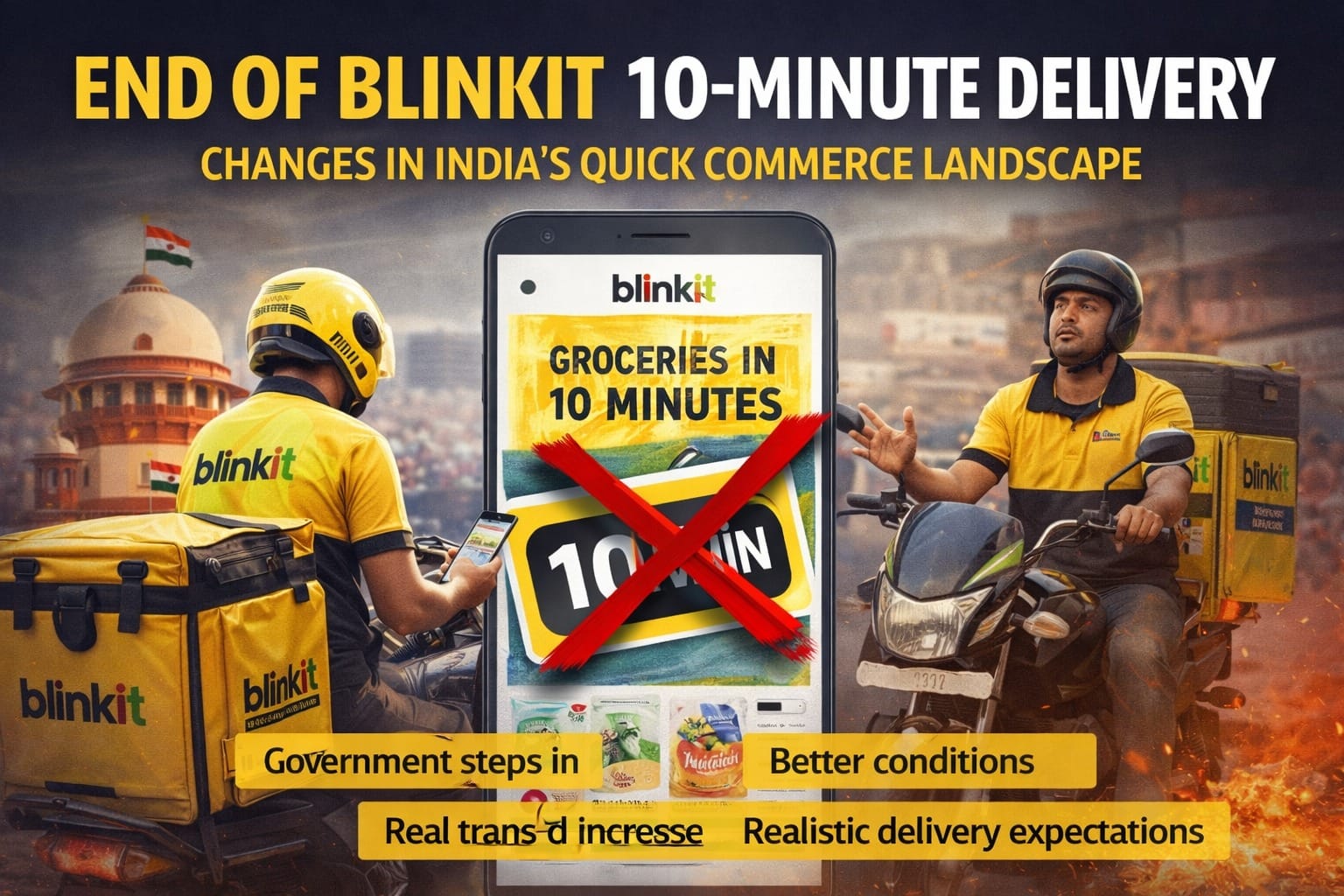
In a major development in India’s quick-commerce sector, Blinkit — one of the pioneers of ultra-fast grocery delivery — has officially dropped its famous “10-minute delivery” claim following a government directive focused on gig worker safety and sustainable logistics. This move marks the end of a high-pressure delivery era and signals a shift in how quick commerce platforms balance convenience and worker welfare.
What Was the 10-Minute Delivery Promise?
Blinkit — formerly known as Grofers, and now part of Eternal Limited — revolutionised Indian online shopping with its ambitious 10-minute delivery promise, claiming groceries could reach a user’s doorstep in less than ten minutes.
This tagline became a core marketing identity, helping Blinkit and rivals like Zepto and Swiggy Instamart stand out in India’s fast-growing quick commerce (Q-commerce) market. The idea was simple: deliver essentials like milk, vegetables, or snacks faster than traditional online grocery services.
However, as recent news shows, that promise was more branded perception than universal reality — with delivery times often longer during peak hours.
Why the 10-Minute Tag Was Scrapped
Government Intervention Over Worker Safety
The decisive turning point came after rising concerns about gig worker safety, stress, and working conditions. The Union Ministry of Labour, led by Mansukh Mandaviya, engaged with major quick-commerce platforms including Blinkit, Swiggy, and Zepto, urging them to drop 10-minute delivery claims that could place undue pressure on riders.
The ministry’s directive was backed by feedback from unions and lawmakers, highlighting dangerous driving behaviours and unrealistic expectations placed on delivery partners. AAP MP Raghav Chadha even participated in protests and symbolically took up a delivery rider’s role to spotlight these issues.
Industry Response and Brand Revision
Following these discussions:
- Blinkit removed “10-minute delivery” from its branding, replacing it with a more general tagline, such as “30,000+ products delivered at your doorstep”.
- Platforms agreed that delivery times should reflect real-world factors like traffic, store proximity, order volume, and safety considerations.
This change does not completely eliminate fast delivery services. Instead, it shifts focus from enforced time targets to quality, realistic service expectations.
What Changes for Customers?
Expectations vs Reality
For many users, the most obvious question is:
Will my order take longer?
Industry insights suggest the answer is generally no — but with caveats:
- In areas with dense dark store networks, deliveries may still be very fast.
- In outer or congested areas, delivery could take longer than ten minutes — and that is now considered acceptable.
Dark stores — compact local fulfilment centres — remain central to quick commerce’s efficiency, enabling pick-and-pack times as short as a few minutes even if the overall delivery window varies.
Some regular customers have already voiced that patience with delivery times will rise now that rigid time claims are gone, especially since riders no longer face the implicit pressure of a strict countdown.
Also read – Iran Protest Latest Updates: People Killed & History of Freedom Before 1979
Impact on Gig Workers
Relief and Reduced Pressure
Gig workers have largely welcomed the move. Many riders expressed relief that the removal of the ten-minute promise could:
- Reduce stress and unsafe riding practices
- Lower pressure from impatient customer expectations
- Improve working conditions without fear of rating penalties or complaints
One rider shared that prior to the change, he once had a minor accident due to pressure to deliver quickly, underscoring how time-bound expectations affected safety on the roads.
Unions and Worker Advocacy
Worker unions celebrated what they called a victory for gig and platform workers, who had participated in nationwide protests and strikes seeking better pay, safety protections, and recognition of their challenges.
Industry Outlook and Future Trends
Other Platforms Likely to Follow
Blinkit’s change sets a precedent — with competitors like Zepto, Swiggy Instamart, and Zomato’s offerings expected to revisit their marketing claims and delivery practices as well.
Analysts also believe the move could be positive for the sector’s long-term sustainability, as firms focus on efficient logistics, better worker conditions, and realistic customer service models over catchy but potentially harmful marketing timelines.
Balancing Convenience and Safety
The shift highlights a broader industry challenge:
How to balance ultra-convenience with worker welfare and ethical business practices?
By dropping time-bound claims, quick commerce is now being nudged toward a model that emphasises:
- Employee well-being
- Safety and regulatory compliance
- Sustainable operations
rather than just speed alone.
Conclusion — A New Phase in Quick Commerce
Blinkit’s decision to drop the 10-minute delivery promise may look like a small branding change at first glance, but it represents a significant evolution in India’s quick commerce landscape — one driven by labour concerns, government intervention, and shifting consumer expectations.
Rather than being just a marketing gimmick, the ten-minute delivery era now serves as a case study in how rapid digital convenience must adapt to human realities on the ground — especially in a landscape where gig workers provide the backbone of instant services nationwide.
SUBSCRIBE TO OUR YOUTUBE CHANNEL THE LOGIC STICK FOR MORE VIDEO INSIGHTS