







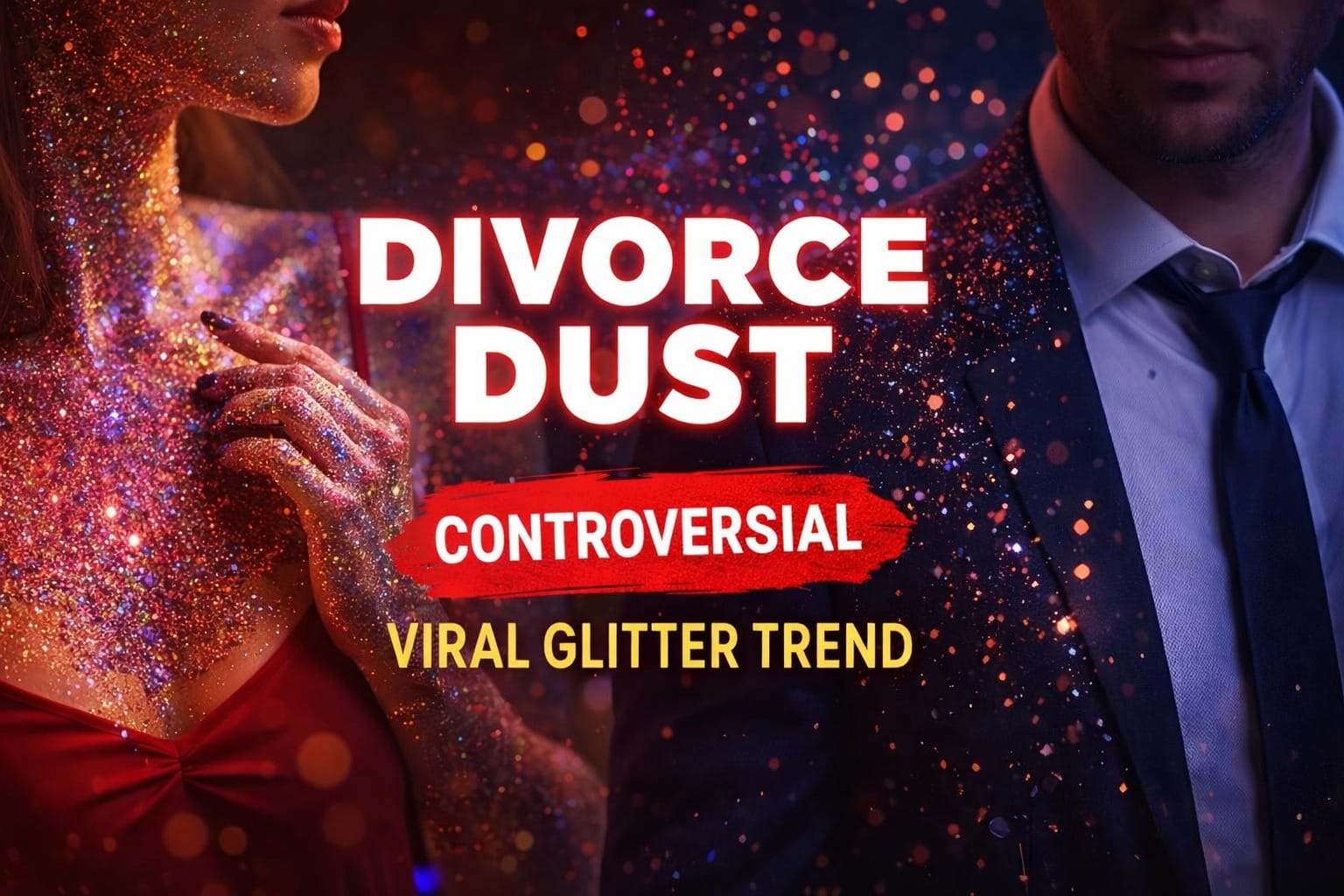
In early 2026, a peculiar social-media phenomenon exploded across Instagram, TikTok and Facebook: “Divorce Dust.” Buzzwords like married-man repellent, cheater check and glitter trap started trending online as social accounts posted videos and reels of a trend involving women applying full-body glitter — ostensibly to expose partners who may be covertly in relationships while dating others.
The term Divorce Dust quickly went viral, appearing in multiple Instagram reels tagged with #DivorceDust, #CheaterCheck and #DatingCulture, sparking widespread attention, bewilderment, and debate.
What Exactly Is “Divorce Dust”?
“Divorce Dust” refers to the use of heavy glitter or reflective body glitter applied to the skin — often before a first date or meetup — with the idea that a partner who is secretly involved with someone else won’t be able to ignore traces of glitter that might transfer onto them.
The concept makes use of glitter’s physical properties:
- Glitter sticks easily and is notoriously hard to remove
- It spreads onto surfaces and people through simple contact
- It is visible under normal lighting
Because of these characteristics, some users jokingly or seriously claimed that if someone you’re meeting tries to conceal prior interactions or infidelity, visible glitter remnants on their clothing or person could be “evidence” they were not being fully honest.
ALSO READ – APPLE IPHONE 18 PRO LEAKS AND THE LATEST FEATURES
How the Term Spread on Social Media
The trend seems to have gained traction through short-form videos on platforms like Instagram Reels and Facebook videos where influencers and creators shared clips either applying glitter or reacting to the idea of “Divorce Dust.”
Social posts associated with the trend used captions such as:
- “Cheater check worn like armour”
- “Glitter trap on first dates”
- “Married man repellent”
This combination of playful language, eye-catching visual glitter, and the emotionally charged theme of relationship trust helped the trend spread quickly among digital audiences.
Is the Trend Real or a Meme?
A major question around Divorce Dust is whether it’s:
- A legitimate (if unusual) social strategy
- An ironic or humorous meme
- A commentary on modern dating culture
- A marketing opportunity for beauty brands
Some commentators have noted that the idea of “Divorce Dust” comes from larger conversations about transparency and trust in relationships, packaged in a visually playful way. Using glitter as a sort of deterrent for deceit is less about evidence-based practice and more about internet symbolism and satire — especially given how impractical glitter is to wear and remove.
Indeed, the trend appears to have more cultural traction as a meme or commentary on dating anxieties than as a scientifically effective tool. The fact that this concept spread largely online — rather than through traditional media reporting — suggests it is driven more by viral humor and social commentary than by real-world usage.
Why It Went Viral: A Mix of Psychology, Humor, and Dating Pressures
Analysts of social-media trends have highlighted several reasons why “Divorce Dust” resonated:
1. Dating Anxiety and Relationship Trust Issues
Modern dating culture is rife with:
- Online personas
- Catfishing fears
- Cheating anxieties
- Ghosting and breadcrumbing dynamics
In that environment, a trend promising a literal way to expose deception can be both amusing and emotionally resonant. Many users responded with laughter, while others treated the trend more seriously.
2. Visual Novelty
Glitter is inherently eye-catching on camera, especially when used in exaggerated fashion. Short videos capturing sparkling body glitter under lights make for compelling scroll-stopping content — a key ingredient in viral trends.
3. Memetic Commentary
Humor, exaggeration and irony are central to internet culture. “Divorce Dust” embodies:
- A playful exaggeration of dating paranoia
- A symbolic gesture of don’t mess with me
- A way to engage audiences with humorous social commentary
4. Potential Marketing Opportunity
Some social commentators have noted that beauty brands could use this viral trend as a marketing lever. Glitter body products have historically been associated with makeup trends, performance artistry and festival culture; the new context of Divorce Dust creates a fresh angle for campaigns.
Criticism and Concerns Around the Trend
Despite its visual appeal and internet traction, the “Divorce Dust” trend has drawn its share of criticism from commentators and audiences alike.
1. Reinforcing Distrust
While the trend is humorous on the surface, critics argue it reinforces suspicion as a baseline expectation in relationships, potentially normalising distrust rather than honest communication.
2. Objectification Risk
Some reactions to the trend reflect concerns about how bodies and personal presentation are used in social and romantic signalling — especially in ways that may trivialise mutual respect and consent.
3. Impracticality
From a practical perspective, glitter is messy and difficult to remove — often sticking to clothing, hair, and surfaces long after it was applied. This undercuts any notion that it could be an effective relationship tool.
How People Are Reacting Online
Reactions to “Divorce Dust” have been varied and often humorous:
- Some users shared selfies covered in glitter with joking captions about catching cheaters.
- Others mocked the trend, suggesting more practical ways to build trust in relationships.
- A subset amplified the trend with sarcastic spin-offs like “relationship glitter” or “truth powder” memes.
The trend has inspired both light-hearted engagement and thoughtful commentary on how digital culture reflects modern relationship dynamics.
Is “Divorce Dust” a Social Trend Worth Taking Seriously?
In the broader context of internet trends, Divorce Dust is not unique — it combines elements that have driven other viral phenomena:
- Visual spectacle
- Emotional resonance
- Humor and satire
- Dating and romance cultural themes
While the concept itself is not likely to become a standard dating practice, its viral spread highlights how social media can turn even whimsical ideas into mass participation moments.
At the same time, the fact that so many people are drawn to content about relationship trust, fidelity, and deception underscores how pervasive these anxieties are in modern digital dating cultures.
The Bigger Picture: What “Divorce Dust” Says About Modern Dating Culture
“Divorce Dust” is more than a glitter meme — it reflects broader shifts in how people approach intimacy, loyalty, and visibility in relationships.
1. Online Lives and Real-World Trust
With so much initial interaction happening through screens, dating dynamics often involve:
- Image curation
- Lack of in-person verification
- High expectations without evidence
This sets the stage for trends that play directly to the unknown and unofficial aspects of relationships.
2. Humor as Coping Mechanism
Many social media trends use humor to cope with anxiety — whether about dating, work, or personal identity. Divorce Dust embodies this by turning a serious topic into something absurdly shiny.
3. Social Media as Trend Amplifier
Platforms like Instagram and TikTok are powerful amplifiers — enabling tiny ideas to reach millions within days. A concept that might once have stayed local now competes for global attention instantly.
Conclusion: Glitter, Gossip, and the Social Mirror
“Divorce Dust” is an intriguing example of how digital communities transform cultural anxieties into shared visual language. While it may not offer real solutions to complex relationship challenges, the trend provides:
- Humor
- Engagement
- Commentary on trust dynamics
- A momentary cultural snapshot
As social media continues to shape how people think about love, fidelity, and identity, trends like Divorce Dust remind us that sometimes the most viral ideas reveal more about our collective insecurities and hopes than about the behaviors themselves.
SUBSCRIBE TO OUR YOUTUBE CHANNEL THE LOGIC STICK FOR MORE VIDEO INSIGHTS