





How the focus shifted from the Epstein Scandal to Iran Conflict
Introduction
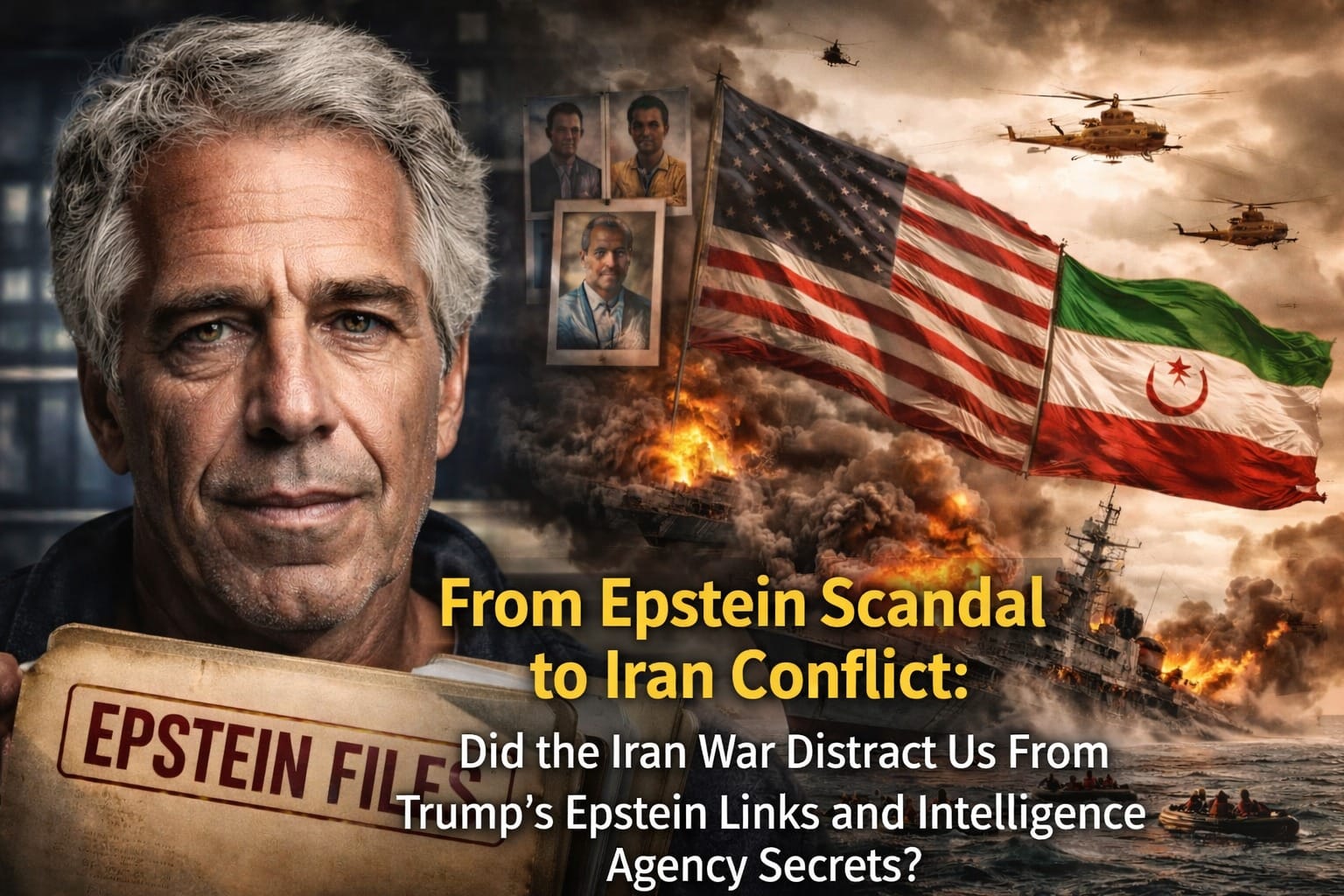
In early 2026, global media and political discourse were heavily focused on the newly released Epstein files, a massive collection of documents shedding light on the network and connections of convicted sex offender Jeffrey Epstein. The revelations sparked intense debate, with questions emerging about Epstein’s ties to powerful elites, intelligence agencies, and global political figures.
However, within weeks, global attention dramatically shifted toward the escalating war involving Iran, Israel, and the United States. Analysts say that the outbreak of the war significantly reduced public discussion of the Epstein documents and the questions surrounding them.
The sudden change in narrative has raised a troubling question: Can global conflicts and geopolitical crises divert attention from scandals involving powerful individuals?
The Epstein Files: A Global Political Shockwave
The release of the Epstein files in late 2025 and early 2026 triggered one of the largest political controversies in recent history.
The documents, released under the Epstein Files Transparency Act, included millions of pages of emails, testimony, and investigative material related to Epstein’s activities and his extensive network of influential contacts.
The revelations sparked investigations and political fallout across several countries. The documents exposed communications between Epstein and diplomats, politicians, business leaders, and financial elites. In some cases, the files triggered resignations and formal investigations into public officials who had maintained contact with Epstein.
For weeks, the story dominated global news cycles, social media debates, and political discourse.
But that focus did not last long.
Analysts Say Attention Dropped After Iran War Began
Political analysts observed that public interest in the Epstein files dropped sharply once the Iran war began.
Commentary on the issue suggests that scandals involving powerful figures often lose momentum when major geopolitical crises dominate the news agenda. One analysis argued that scandals can sometimes become spectacles that distract from deeper structures of power and accountability.
As war coverage intensified—covering missile strikes, naval battles, and geopolitical tensions—media attention shifted away from the Epstein revelations.
The timing raised questions among commentators and critics about whether political narratives can be reshaped by major international events, intentionally or unintentionally.
Intelligence Agency Links: The New Epstein Discovery
One of the most controversial elements emerging from the latest Epstein documents involves possible links between Epstein and intelligence networks.
Recent investigations and media reports have highlighted speculation that Epstein may have had connections to intelligence agencies or geopolitical actors.
Some documents and emails referenced relationships between Epstein and individuals connected to Russian networks or government insiders.
The revelations fueled speculation among analysts and lawmakers about whether Epstein may have been gathering compromising information on powerful figures.
Some theories suggest Epstein’s network could have been used as a form of political leverage or intelligence gathering, though definitive proof remains contested.
In some discussions, Epstein has even been alleged to have been connected to Western intelligence services or to foreign intelligence networks—claims that remain under investigation and are widely debated among analysts.
The Global Network Around Epstein
The Epstein files revealed the vast reach of Epstein’s social and financial network.
Emails and communications in the documents show Epstein interacting with:
- International diplomats
- Financial elites
- Political figures
- Tech leaders
- Academics and researchers
The scandal also spread beyond the United States. Investigations were launched in Europe after new information suggested that Epstein had connections with political figures and diplomats across the continent.
In Norway, for example, authorities opened corruption investigations involving individuals connected to Epstein following the release of new documents.
These revelations reinforced the belief that Epstein’s influence extended across global political and financial circles.
Media Attention and the Politics of Distraction
Political analysts often refer to the phenomenon of “agenda diversion” or “politics of distraction.”
When scandals threaten powerful institutions or individuals, major events—such as wars, economic crises, or security threats—can rapidly dominate media coverage.
In the case of the Epstein files, the shift in global focus toward the Iran conflict illustrates how quickly public attention can change.
Once the war began dominating headlines, discussions about Epstein’s network and the implications of the documents faded from mainstream coverage.
This does not necessarily imply intentional manipulation. News cycles naturally prioritize immediate crises such as war, national security threats, and humanitarian emergencies.
However, critics argue that such shifts can reduce accountability for powerful individuals involved in scandals.
The Human Cost of Power and Secrecy
Beyond the political implications, the Epstein scandal also raises profound humanitarian concerns.
At its core, the Epstein case involved the exploitation and trafficking of young women and girls, many of whom spent years seeking justice and recognition.
For victims, the sudden shift in attention from the Epstein files to global conflicts can feel like the world moving on before full accountability is achieved.
The case highlights a troubling reality of modern power structures:
When powerful individuals are involved, justice often becomes slow, complex, and uncertain.
The global outrage surrounding the Epstein files was driven by a demand for transparency and accountability.
But if attention fades too quickly, those demands risk being forgotten.
Why the World Should Be Concerned
The Epstein scandal and the shifting attention toward global conflicts raise deeper questions about how power operates in the modern world.
Three key concerns stand out:
1. Influence of global elites
The Epstein files showed how a single individual could build relationships with some of the most powerful people on Earth.
2. Lack of transparency
The complexity and scale of the documents mean that many details remain unclear and continue to be debated.
3. Fragility of public attention
Public focus can shift rapidly due to new crises, potentially reducing pressure for accountability.
A Warning About Power and Accountability
The Epstein story is not just about one individual.
It is about the systems of power, influence, and secrecy that allow individuals to operate in elite circles with limited oversight.
The sudden shift from the Epstein scandal to the Iran war serves as a reminder that global narratives can change quickly.
But the questions raised by the Epstein files—about power, exploitation, intelligence networks, and political accountability—remain unresolved.
And for many observers, that is precisely why the story continues to matter.
Conclusion
The release of the Epstein files in 2026 sparked worldwide outrage and raised serious questions about the relationships between powerful individuals and controversial networks.
Yet within weeks, global attention shifted toward the escalating war involving Iran, Israel, and the United States.
Whether intentional or coincidental, the shift highlights the fragile nature of public attention in the modern media landscape.
The Epstein scandal ultimately reminds us that the actions of powerful individuals can have profound consequences, and that accountability should not disappear simply because the world’s focus moves elsewhere.
For many observers, the real question is not just what happened in the Epstein network—but whether the world will continue to seek the truth.
SUBSCRIBE TO OUR YOUTUBE CHANNEL THE LOGIC STICK FOR MORE VIDEO INSIGHTS