







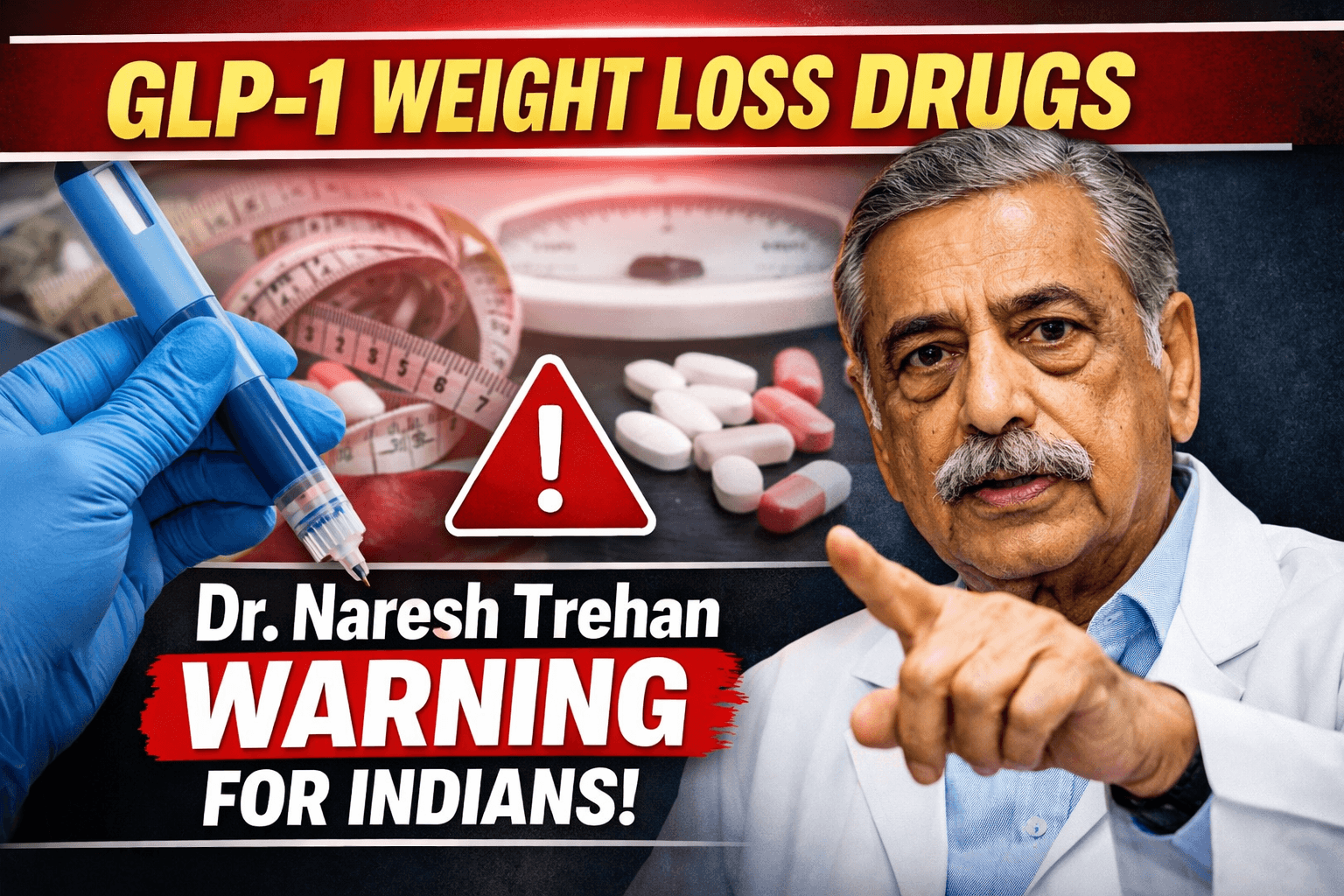
GLP-1 Drugs Risks for Indians Explained: Medanta Founder Flags Safety Concerns Amid Rising Trend
The rising popularity of GLP-1 weight loss drugs in India has sparked serious concerns among healthcare experts, regulators, and policymakers. What was once a diabetes treatment has now turned into a global weight-loss phenomenon, driven by social media trends, celebrity endorsements, and the promise of rapid fat loss.
However, leading Indian cardiac surgeon and founder of Medanta, Dr Naresh Trehan, has issued a strong warning: these drugs were primarily developed for Western populations, and their widespread, unsupervised use in India could pose significant health risks.
As India witnesses a surge in demand—fueled further by cheaper generic versions entering the market—the debate around GLP-1 drugs risks for Indians is becoming more urgent than ever.
What Are GLP-1 Drugs and Why Are They Trending?
GLP-1 (Glucagon-Like Peptide-1) receptor agonists are medications originally designed to treat Type 2 diabetes. These drugs mimic a natural hormone that helps regulate blood sugar levels and appetite.
Over time, researchers discovered that GLP-1 drugs also:
- Reduce hunger
- Slow down gastric emptying
- Promote significant weight loss
This led to their rebranding as anti-obesity drugs, with global brands like semaglutide-based medications gaining massive popularity.
However, experts stress that these drugs were never intended to be used as cosmetic weight-loss shortcuts.
Dr Naresh Trehan’s Warning: ‘Made for the US, Not India’
Dr Naresh Trehan’s key concern is rooted in population differences.
According to him, GLP-1 drugs were:
- Developed based on Western body compositions
- Tested primarily on non-Indian populations
- Prescribed within structured healthcare systems
This raises critical questions about their effectiveness and safety for Indian patients, whose:
- Body fat distribution differs
- Metabolism is different
- Dietary patterns are unique
Moreover, Indians are known to have higher visceral fat levels and different metabolic risks, which may alter how these drugs behave in the body.
Read more on the Drug war here.
Why India Is Seeing a Surge in GLP-1 Drug Usage
The sudden boom in GLP-1 drug consumption in India can be attributed to several factors:
1. Entry of Cheap Generic Versions
After patent expirations, Indian pharmaceutical companies introduced low-cost alternatives, making these drugs widely accessible.
2. Social Media Influence
Weight-loss injections are being promoted as “magic solutions,” especially among young adults and influencers.
3. Easy Availability Without Prescription
Authorities have found that many of these drugs are being sold without proper medical supervision.
4. Rising Obesity in India
India is facing a growing obesity crisis, pushing people toward quick fixes instead of sustainable solutions.
Government Crackdown on GLP-1 Drug Misuse
Recognizing the risks, Indian regulators have begun taking strict action.
Key Measures Include:
- Inspection of 49 clinics and pharmacies for illegal sales
- Crackdown on misleading advertisements and promotions
- Proposal to restrict prescriptions to specialist doctors only
The government has also warned against surrogate marketing tactics, where companies disguise promotions as awareness campaigns.
Major Health Risks of GLP-1 Drugs for Indians
While GLP-1 drugs can be effective, their misuse can lead to serious health complications—especially when taken without medical guidance.
1. Gastrointestinal Issues
The most common side effects include:
- Nausea
- Vomiting
- Diarrhea
- Constipation
These effects are reported in a large number of users.
2. Muscle Loss and Nutritional Deficiency
Rapid weight loss can lead to:
- Loss of lean muscle mass
- Weakness and fatigue
- Nutritional imbalances
Dr Trehan specifically warns that losing weight without maintaining muscle mass can harm long-term health.
3. Risk of Pancreatitis
Experts caution that unsupervised use may increase the risk of:
- Pancreatitis (inflammation of the pancreas)
This is a potentially serious condition requiring immediate medical attention.
4. Bone Health Concerns
Recent studies suggest a slight increase in:
- Osteoporosis
- Bone density loss
- Gout risk
This is especially concerning for long-term users.
5. Weight Regain After Stopping
One of the biggest drawbacks is that:
- Most users regain 50–70% of lost weight after stopping the drug
This raises concerns about dependency and sustainability.
6. Risk of Self-Medication
Perhaps the most dangerous trend is people taking these drugs:
- Without doctor consultation
- Without proper diagnosis
- For cosmetic reasons
Dr Trehan warns that self-medication could lead to severe health consequences.
Are GLP-1 Drugs Really a ‘Magic Pill’?
Despite their popularity, experts strongly reject the idea that GLP-1 drugs are a quick fix.
Global health experts emphasize that:
- These drugs work best when combined with
- Proper diet
- Exercise
- Medical supervision
- They are intended for:
- Obesity (BMI ≥ 30)
- Patients with metabolic disorders
Using them casually for aesthetic weight loss is considered unsafe.
Why Indians Need a Different Approach to Weight Loss
India’s unique health profile requires a different strategy.
Key Differences:
- Higher insulin resistance
- Greater abdominal fat accumulation
- Vegetarian-heavy diets in many regions
This means:
- Western-developed drugs may not deliver the same results
- Side effects could be amplified
Dr Trehan’s warning highlights the need for India-specific medical guidelines.
Expert Recommendations: Safe Use of GLP-1 Drugs
Doctors and health authorities suggest the following:
Only Use Under Medical Supervision
Consult:
- Endocrinologists
- Physicians
- Obesity specialists
Avoid Self-Prescription
Do not rely on:
- Online advice
- Influencers
- Gym trainers
Combine with Lifestyle Changes
GLP-1 drugs should be paired with:
- Balanced diet
- Strength training
- Regular physical activity
Monitor Health Regularly
Patients must undergo:
- Blood tests
- Nutritional assessments
- Follow-ups
The Future of GLP-1 Drugs in India
The Indian weight-loss drug market is expected to grow rapidly, potentially reaching massive scale in the coming years.
However, the future will depend on:
- Strong regulation
- Ethical prescribing practices
- Public awareness
The government’s current crackdown signals that India is taking this issue seriously.
Conclusion: A Powerful Tool, But Not Without Risks
The conversation around GLP-1 drugs risks for Indians is not about rejecting these medications—it’s about using them responsibly.
Dr Naresh Trehan’s warning serves as a critical reminder:
- These drugs are not designed for indiscriminate use
- They are not a shortcut to fitness
- They require strict medical supervision
As India navigates this new wave of weight-loss solutions, one thing is clear:
There is no substitute for sustainable health habits.
GLP-1 drugs may offer benefits—but without caution, they could become a serious public health concern.