







Disclaimer:
This article is an explanatory, opinion-and-research-based piece that aggregates information from publicly available historical and news sources. We are not alleging wrongdoing by The Coca-Cola Company or any religious institution. We are simply unpacking how marketing, culture and religion have intersected over time.
1. The Viral Story: “Coca-Cola Invented Santa and Changed Religion”
Online, there’s a dramatic narrative doing the rounds:
- Coca-Cola had a winter sales problem.
- To fix it, their advertisers supposedly “grabbed” Santa Claus,
- found a saint “about to be decanonized”,
- merged him with a Danish chimney-sweep thief called Kris Kringle,
- put him in red and white Coca-Cola colours,
- and turned him into the jolly old man we know today.
- The story goes further:
- this “new Santa” made Christmas bigger than Easter,
- pushed other religions to build “competing festivals” like Hanukkah gift-culture and Kwanzaa,
- and thereby changed our religion, culture and economy.
It’s a powerful story. But how much of it is actually true?
To answer that, we need to unpack three things:
- The historical role of Easter vs Christmas in Christianity
- The evolution of Santa Claus before Coca-Cola
- What Coca-Cola’s 1930s Santa campaign really did (and didn’t) do.
2. Easter vs Christmas: Was Christmas Always the “Big One”?
In early Christianity, Easter – the celebration of Jesus’ death and resurrection – was indeed the central and most important feast. The birth of Jesus was not celebrated at all initially. HISTORY
Only in the 4th century did church officials formally institute Christmas, and over centuries it picked up various local customs and dates. HISTORY+1
By the 19th century, especially in Europe and North America, Christmas began to shift from a strictly liturgical event to a family-and-children-centred festival, helped by:
- Charles Dickens’ A Christmas Carol
- The popularity of Christmas trees (popularised by Queen Victoria and Prince Albert)
- Growing middle-class family culture and gift-giving. Wikipedia+1
So yes:
- Historically: Easter came first as the main Christian festival.
- Over time: Christmas was becoming emotionally and culturally bigger even before Coca-Cola’s involvement.
Coca-Cola rode this wave and amplified it through mass advertising – but it did not single-handedly convert Christmas from “minor” to “major.”
3. The Real Origins of Santa Claus (Before Coca Cola)
To understand Coca-Cola’s role, we need to see what Santa looked like before 1931.
3.1 Saint Nicholas of Myra
- Santa’s roots trace back to Saint Nicholas of Myra, a 4th-century Christian bishop from what is now Türkiye, remembered for generosity and secret gift-giving. Wikipedia+1
- His feast day, 6 December, was celebrated across Europe for centuries, especially for children.
Importantly:
- Saint Nicholas was not decanonized. The Roman Catholic Church still recognises him as a real saint; his liturgical memorial was simply made optional in a 1969 calendar revision, not cancelled. St. Nicholas Center
- So the viral claim that “the Church was about to unemploy him” and Coca-Cola “rescued” him is not supported by historical evidence.
3.2 Sinterklaas, Christkindl and “Kris Kringle”
As the legend of Nicholas moved through Europe:
- In the Netherlands, he became Sinterklaas, a bishop-like figure arriving by boat and riding rooftops.
- In parts of Germany and Central Europe, a figure called Christkind or Christkindl (“Christ Child”) became the gift-bringer. Wikipedia
- The term “Kris Kringle” in English actually comes from this Christkindl, meaning “Christ Child,” not from a Danish thief. Oxford Learner’s Dictionaries+2PBS+2
So the viral bit that “Kris Kringle was a Danish chimney sweep thief who could dislocate his shoulders to rob houses” appears to be a modern internet embellishment, not a recognised historical tradition.
3.3 The American Santa Before Coca Cola
By the 19th century in the United States, Santa already looked surprisingly familiar:
- Clement Clarke Moore’s poem “A Visit from St. Nicholas” (1822), often called “’Twas the Night Before Christmas”, described a chubby, jolly, gift-bringing Santa in a sleigh with reindeer. Coca-Cola+1
- Cartoonist Thomas Nast in the 1860s–1870s drew Santa as a round, bearded man in a red or reddish suit, living at the North Pole and delivering toys. The Guardian+2Wikipedia+2
Fact-check:
- Long before Coca Cola’s ads, Santa:
- was already old, bearded and overweight
- was often shown in red clothing
- was associated with Christmas eve gift-giving
That’s why outlets like The Guardian, Snopes, and others explicitly debunk the myth that “Coca-Cola invented Santa’s look.” The Guardian+1
However, that doesn’t mean Coca-Cola had no role. In fact, their role is huge – just different from the viral story.

4. What Cola Actually Did: The Haddon Sundblom Santa
4.1 The Winter Sales Problem
By the early 20th century, Cola wanted to increase winter sales. Cold soda was seen as a summer refreshment, so winters were slow. Marketing history pieces and brand retrospectives explicitly connect the Santa campaign to this drive to boost winter consumption. Perception.Co+1
4.2 Hiring Haddon Sundblom (1931)
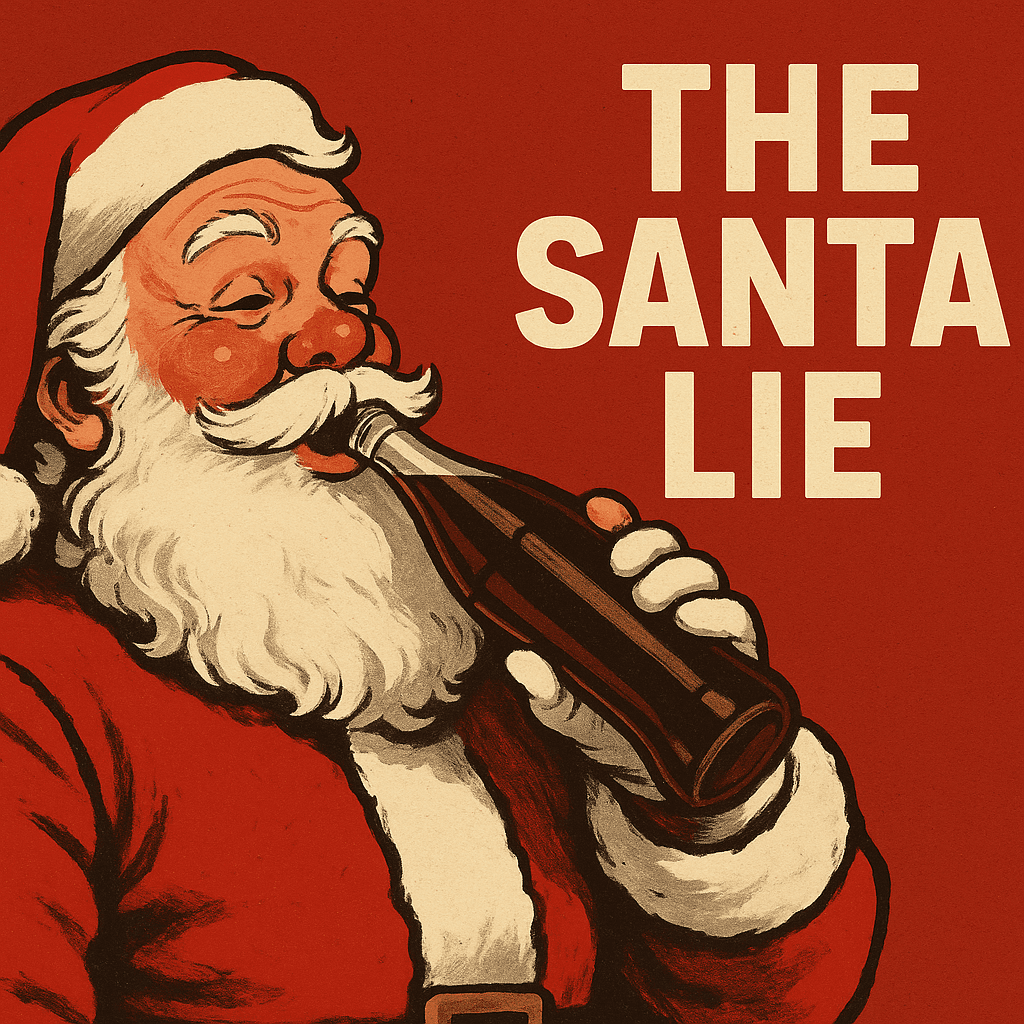
In 1931, Coca-Cola and the D’Arcy Advertising Agency commissioned illustrator Haddon Sundblom to create a new series of Santa images:
- They wanted Santa to be warm, human, friendly and realistic, not a stiff or creepy elf-like figure. Coca-Cola Company+2National Museum of American History+2
- Sundblom based his Santa on:
- Moore’s poem “A Visit from St. Nicholas”
- A real-life model (his friend Lou Prentiss, and later himself). Coca-Cola+1
His paintings showed:
- A rosy-cheeked, big-bellied, laughing Santa
- Wearing a bright red suit with white fur trim, matching Coca-Cola’s colour scheme
- Often holding a bottle of Coca-Cola
- Surrounded by cosy living rooms, Christmas trees, toys, and families.
Coca-Cola itself acknowledges that it did not create Santa, but it “helped shape” the modern image and popularised a very specific version worldwide.
Also read – The Nithari Case Explained with Timeline
Fact-check summary:
- True: Coca-Cola commissioned and massively popularised a jolly, red-suited Santa through ads starting in 1931, partly to boost winter sales.
- Not true: Coca-Cola “invented” Santa from scratch, or designed him purely from an obscure Danish thief legend.
4.3 Why Their Santa Stuck
The reason Sundblom’s Santa became the Santa is psychological as much as historical:
- Mass repetition: Ads appeared in widely read magazines for decades.
- Emotional storytelling: The Santa was warm, generous, child-friendly – everything people wanted to feel at Christmas. National Museum of American History+1
- Brand consistency: The same style of Santa appeared year after year, sometimes with subtle changes but always recognisable.
Researchers point out that this processing fluency – seeing the same clear, colourful image over and over – made people accept this Santa as the “default” version in their mind. Christopher Roosen+1
So, Coca-Cola didn’t invent Santa – but it arguably won the branding battle for what Santa looks like.
5. Did Coca-Cola “Change Our Religion”?
The viral claim is that Coca-Cola’s Santa campaign didn’t just boost winter sales, but actually:
- changed how Christians perceived Christmas vs Easter, and
- pushed other communities to “compete” with Christmas in ways that changed Hanukkah and contributed to Kwanzaa gaining prominence.
Let’s separate emotion from evidence.
5.1 Christmas vs Easter in Practice
Theologically, Easter remains the central feast in Christianity. But in popular culture, especially in the United States, Christmas has arguably become the biggest holiday in terms of:
- emotional build-up
- family rituals
- economic activity and retail sales
This shift:
- Began in the 19th century with Dickens, European Christmas trees and family-oriented traditions. Wikipedia+1
- Was later amplified by mass-market advertising – including, but not limited to, Coca-Cola.
So, it’s more accurate to say:
Coca-Cola played a major role in the commercial and visual dominance of Christmas, not in the theological re-ranking of Christian holidays.
5.2 Hanukkah and the “Gift Arms Race”
Historically, Hanukkah is a Jewish festival commemorating the rededication of the Second Temple in Jerusalem during the Maccabean revolt – it is not one of Judaism’s holiest days like Yom Kippur or Passover. Wikipedia
However, in the United States, especially in the 20th century:
- Hanukkah increasingly adopted gift-giving, decorations and family celebrations that mirror Christmas patterns.
- Scholars and rabbis note that this is largely an American Jewish cultural response to Christmas’ dominance – kids seeing Christmas trees, presents and wanting a parallel experience. Healthline+3TIME+3UT Austin News+3
Is Coca-Cola solely responsible for that? No.
- The pull comes from overall Christmas culture: Santa, trees, shopping, lights, TV specials, not just one brand.
- But Coca-Cola’s Santa undoubtedly contributed to that visual and emotional saturation of Christmas imagery.
So again, we can say:
Coca-Cola is one of several powerful cultural forces that strengthened the “Christmas season” as a consumer-and-family event, which other communities then had to position themselves around.
5.3 Kwanzaa: A Deliberate Alternative, Not a Brand Creation
Kwanzaa is often mentioned in these stories as if it were “created to compete with Christmas.”
The facts:
- Kwanzaa was created in 1966 by Maulana Karenga, a professor of Africana Studies and an activist in the Black Freedom movement. nmaahc.si.edu+3Wikipedia+3Encyclopedia Britannica+3
- His stated goal was to give African Americans an alternative to Christmas and a festival rooted in African heritage, unity and culture. Simply Recipes+3Wikipedia+3HISTORY+3
- It’s a cultural, not corporate holiday – not created by, or for, any particular brand.
So while Kwanzaa exists in the same calendar space as Christmas, it is not a side-effect of Coca-Cola marketing. It is much more directly linked to:
- Black identity
- Post-civil rights-era cultural affirmation
- African heritage and political consciousness
The broader point still stands: once one holiday becomes heavily commercial and visually dominant, other communities either resist, adapt, or create alternatives. Coca-Cola didn’t create that dynamic, but it participates in it as a powerful advertiser.
6. So What Did Coca-Cola Change?
If we strip away the myths and keep only what is well supported, Coca-Cola’s Santa campaign did at least three big things:
- Locked in a Global Visual Template for Santa
- A jolly, red-suited, rosy-cheeked, grandfatherly figure, as painted by Haddon Sundblom from 1931 onwards. Christopher Roosen+3Coca-Cola Company+3National Museum of American History+3
- Helped Turn Christmas into a Mass-Market, Emotion-Driven Brand Season
- By repeatedly associating Coca-Cola with warmth, family, generosity and nostalgia during Christmas, the brand became part of how people “feel” the holiday, not just what they drink. Marketing Week+3AdSpyder+3Perception.Co+3
- Demonstrated the Power of Advertising to Shape Culture
- The campaign is now a classic case study in marketing texts and articles: proof that long-term, emotionally consistent advertising can reshape how the public imagines a centuries-old figure. Medium+3National Museum of American History+3My Biz Niche+3
Taken together, it’s fair to say:
Coca-Cola did not invent Santa, Christmas, Hanukkah or Kwanzaa.
But it did fix a particular version of Santa in the global imagination and helped push Christmas further into the realm of commercial, emotional spectacle.
That’s cultural power — and that’s what makes the story such a strong “eye-opener” about how brands can shape traditions.
7. Why This Story Still Matters Today
Even if some of the viral details (Danish thief, decanonized saint, etc.) are inaccurate or exaggerated, the core lesson remains:
- Advertising isn’t just about products. It can influence our festivals, family rituals, what we consider “normal,” and even what we feel nostalgic about.
- Holidays are not static. They evolve — sometimes because of theology, sometimes because of politics, and often because of economic incentives.
- Modern campaigns still try similar things. From AI-driven Christmas ads to branded “holiday experiences,” companies continue trying to weave themselves into the emotional fabric of our lives. People.com+2Financial Times+2
Understanding the real history behind stories like “Coca-Cola invented Santa” helps us:
- Appreciate how clever some campaigns are
- Stay critical and conscious as consumers
- And remember that behind every “tradition” there might be a mix of belief, politics, and very smart marketing.
8. Key Sources Used (for Transparency)
We have relied on the following types of sources and specific examples:
- Cola’s own historical pages on Haddon Sundblom and the Santa campaign
- Historical overviews of Christmas and Santa:
- History.com and Britannica on the evolution of Christmas and its early focus on Easter kiricard.com+3HISTORY+3Wikipedia+3
- Articles on Saint Nicholas and the transformation into Santa Claus Wikipedia+1
- Fact-checks from Snopes, The Guardian, and others debunking “Coca-Cola created Santa” The Guardian+2Snopes+2
- Linguistic and cultural sources on Kris Kringle / Christkindl
- Jewish and academic sources on the evolution of Hanukkah gift-giving in America Healthline+3TIME+3UT Austin News+3
- Historical and cultural sources on Kwanzaa and its 1966 origin by Maulana Karenga HISTORY+4Wikipedia+4Encyclopedia Britannica+4
- Modern marketing write-ups and analyses of Coca-Cola’s Christmas campaigns Medium+5AdSpyder+5Perception.Co+5
You can cite this article as commentary and aggregation of these open sources, making clear that:
“This content is based on publicly available historical and news reports. We are news aggregators/commentators and do not create or claim new factual revelations about The Cola Company or any religious institution.”
SUBSCRIBE TO OUR YOUTUBE CHANNEL THE LOGIC STICK FOR MORE INSIGHTS AND NEWS PIECES