




Critical Hormuz Crisis Talks: India Joins Global Effort to Secure Energy Routes and Maritime Stability
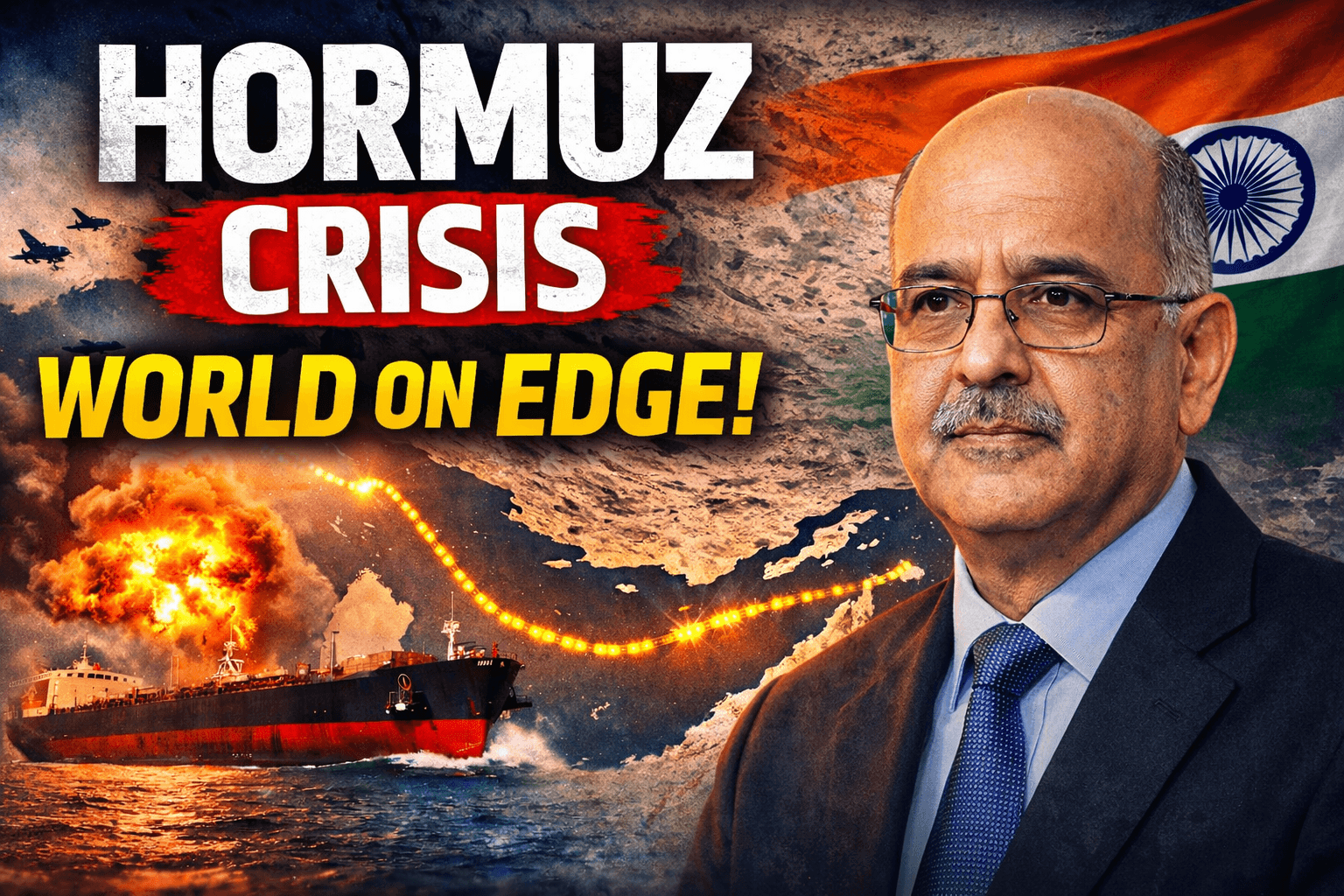
India has stepped into a crucial diplomatic role amid the escalating Strait of Hormuz crisis, with Foreign Secretary Vikram Misri representing the country in a high-level UK-led international meeting aimed at restoring maritime security and ensuring uninterrupted global energy supply.
The development highlights the growing seriousness of the crisis in West Asia, where rising tensions linked to Iran have disrupted one of the world’s most critical oil transit routes. For India one of the largest crude oil importers globally—the stakes are exceptionally high.
What Happened: UK-Led Global Talks on Hormuz Crisis
India participated in a virtual international meeting hosted by the United Kingdom to address the worsening situation in the Strait of Hormuz.
However, there is a key factual clarification:
- Some reports (including Times of India) describe the meeting as involving “over 60 countries.”
- Other verified reports (including Reuters) indicate participation from around 35–40 countries.
Fact-check conclusion:
The exact number varies by source, but it was a large multilateral meeting involving dozens of nations, not necessarily a confirmed 60+ participant summit.
The purpose of the meeting was clear:
- Reopen the Strait of Hormuz
- Ensure freedom of navigation
- Protect global energy and trade flows
Why the Strait of Hormuz Is So Critical
The Strait of Hormuz is one of the most important maritime chokepoints in the world.
Verified global data:
- Accounts for over 20% of global oil and petroleum consumption flows
- Handles more than one-quarter of global seaborne oil trade
- Connects major oil producers like Saudi Arabia, UAE, Iraq, and Iran to global markets
Any disruption here directly impacts:
- Oil prices
- Shipping costs
- Global supply chains
- Inflation in energy-importing countries like India
What Triggered the 2026 Hormuz Crisis
The current crisis is part of a broader escalation involving:
- Iran
- Israel
- The United States
Key developments include:
- Attacks on commercial vessels
- Rising security threats in the Gulf
- Reduced shipping movement
- Increased insurance risks
Important fact correction:
It is not fully verified that Iran has formally declared a complete blockade.
However, there are significant disruptions and restrictions in maritime movement, creating a de facto crisis.
India’s Stand: Clear Push for Free Navigation
At the meeting, Foreign Secretary Vikram Misri emphasized:
- Unimpeded transit through international waters
- Freedom of navigation under international law
- Immediate reopening of the Strait of Hormuz
India aligned with global calls to stabilize the situation through diplomatic means.
Human Cost: India’s Key Concern
One of the most important points raised by India was the loss of Indian seafarers.
- India has reported casualties among its mariners in recent maritime incidents linked to the crisis
- This gives India a direct humanitarian stake, beyond economic concerns
This is a verified and significant point, and distinguishes India’s position from many other nations.
Energy Security: Why This Crisis Hits India Hard
India imports:
- Over 80% of its crude oil requirements
This makes it highly vulnerable to disruptions in Hormuz.
Immediate risks include:
- Rising fuel prices
- Increased inflation
- Supply chain disruptions
- Economic pressure on industries
Recent developments have already shown:
- Increase in jet fuel prices
- Rising LPG costs
Read more on Kash Patel Firing.
India’s Strategic Response: A Balanced Approach
India is following a multi-layered strategy:
1. Diplomatic Engagement
Participating in global talks to push for a resolution.
2. Direct Communication with Iran
India is in contact with Iranian authorities to ensure safe passage for its vessels.
3. Maritime Safety Measures
India is monitoring shipping routes and ensuring protection for its interests.
4. Energy Diversification
- India now imports oil from around 40 countries
- Nearly 70% of imports come from routes outside Hormuz
Fact-check note:
Diversification reduces risk, but does not eliminate exposure to global price shocks.
Global Strategy: Diplomacy First, Not Only
The international response is currently focused on diplomacy.
However, correction needed:
- It is incorrect to say military options are completely absent
- Reports indicate future discussions may include naval and security measures
So the accurate position is:
- Diplomacy is the immediate priority
- Security/military options remain under consideration
Economic Impact: Already Visible
The crisis is already affecting global markets:
- Rising crude oil prices
- Increased shipping insurance
- Supply chain disruptions
- Inflationary pressures
India is already experiencing:
- Higher fuel costs
- Increased import expenses
Geopolitical Shift: A Multipolar Response
A key global development:
- The United States was not part of this specific UK-led meeting
- This has led to a more distributed international response
Countries like:
- India
- UK
- European nations
- Gulf countries
are taking a more active role in shaping the response.
What Happens Next: Three Possible Scenarios
1. Diplomatic Resolution
- Shipping resumes
- Oil prices stabilize
2. Prolonged Disruption
- Continued economic pressure
- Supply chain instability
3. Escalation
- Higher geopolitical risk
- Severe global economic consequences
Conclusion: A Defining Moment for India and the World
The Strait of Hormuz crisis is a global economic and geopolitical flashpoint, not just a regional issue.
Fact-based conclusion:
- India is actively participating in international efforts
- It is advocating diplomacy, maritime safety, and free navigation
- Its concerns are driven by energy dependence and human losses
While uncertainties remain—especially regarding the scale of participation and the next phase of action—one thing is clear:
India is positioning itself as a key diplomatic player in one of the most critical global crises of 2026.