





India’s Draft IT Rules 2026 Could Expand Oversight of News and Current Affairs Content on Social Media
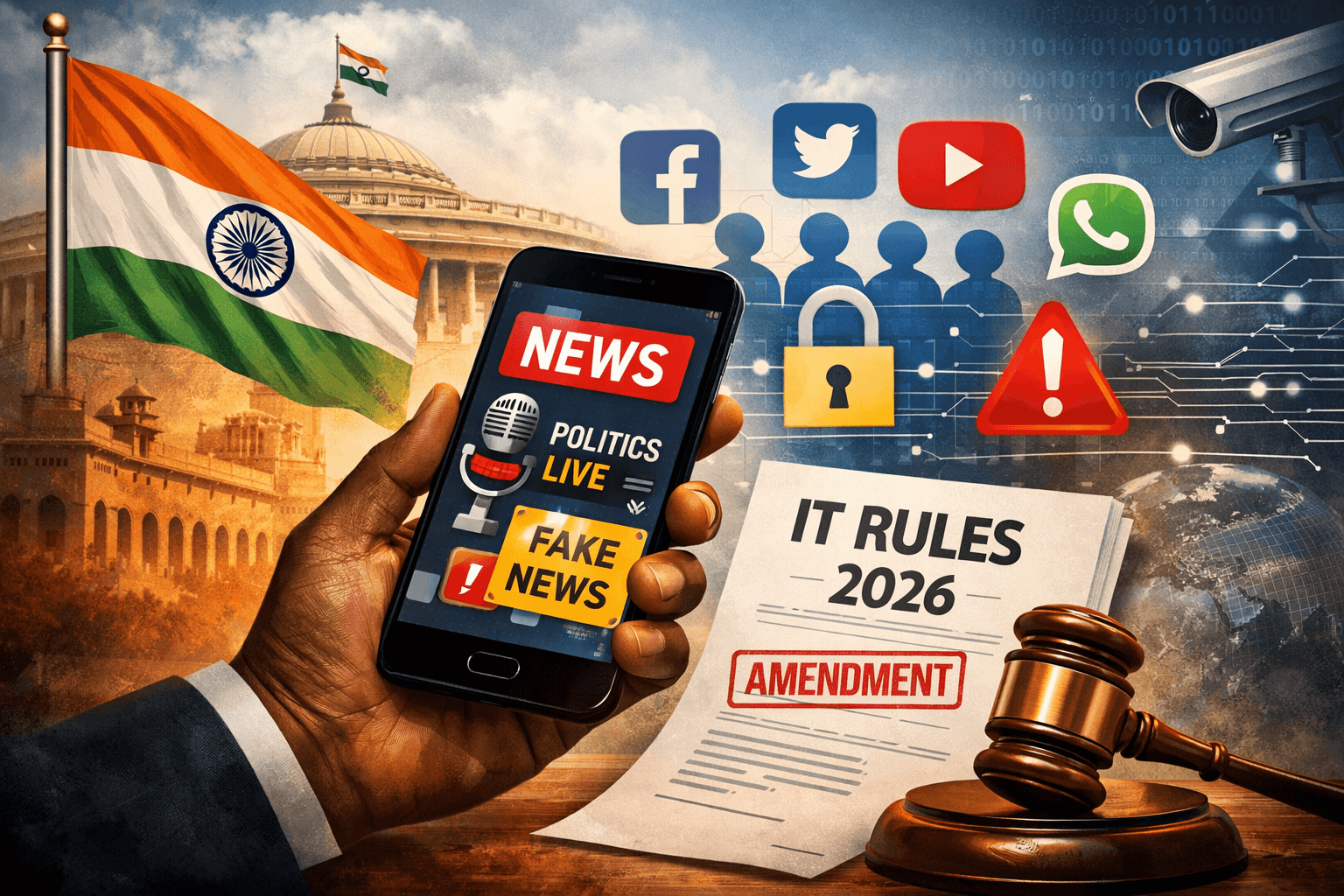
India has proposed fresh amendments to its Information Technology Rules that could widen government oversight of online speech, especially where social media platforms host or carry news and current affairs content shared by users who are not registered publishers. The proposal is not yet law. It was issued by the Ministry of Electronics and Information Technology on March 30, 2026 as a draft for public comment, with an initial deadline of April 14, 2026 for stakeholder feedback.
That distinction matters because some headlines have framed the move as if India has already imposed final rules on “news and political posts.” The draft text itself is narrower and more specific. It does not use the phrase “political posts” as the core category. Instead, it refers to “news and current affairs content” hosted or shared on intermediaries’ computer resources by users who are not publishers.
At the heart of the proposal are two major changes. First, the government wants compliance with MeitY-issued clarifications, advisories, orders, directions, standard operating procedures, codes of practice and guidelines to become part of an intermediary’s due diligence obligations under Section 79 of the IT Act. Second, the draft would extend the applicability of certain enforcement provisions under Part III of the 2021 IT Rules to intermediaries and to news and current affairs content shared by non-publisher users.
To understand why this is controversial, it helps to understand what Section 79 does. Section 79 provides the legal basis for the well-known safe harbour protection that usually shields platforms from liability for user-generated content, so long as they follow due diligence requirements. Reuters reported that the new draft would make government advisories and clarifications effectively binding for platforms that want to preserve that immunity. In practice, that would strengthen the government’s leverage over companies such as Meta, Google and X.
The actual text of proposed Rule 3(4) is especially important. It says an intermediary “shall comply with and give effect to” any written clarification, advisory, order, direction, SOP, code of practice or guideline issued by the Ministry in relation to implementation, interpretation or operationalisation of requirements under Part II. It also says compliance with those instruments will form part of the intermediary’s due diligence obligations under Section 79. That means the draft does not merely restate existing guidance; it tries to tie adherence more directly to the legal framework governing intermediary immunity.
The second controversial change sits in Rule 8. The draft says that, for the purposes of Rules 14, 15 and 16, Part III will apply not only to intermediaries but also to news and current affairs content hosted, displayed, uploaded, modified, published, transmitted, stored, updated or shared on intermediary platforms by users who are not publishers. This is a more precise description than saying “all social media users” are now treated as news publishers. The draft does not literally say that. What it does is bring certain kinds of user-shared content within the reach of the Part III machinery for rules 14 to 16.
That nuance is one of the biggest corrections to many early summaries. A broad claim that “ordinary users will now be regulated exactly like publishers” goes beyond the black-letter wording of the draft. However, critics argue that the practical effect could still be sweeping because the category of “news and current affairs content” is broad enough to include independent creators, influencers, podcasters, commentators and citizens sharing public-interest posts. The Economic Times reported that MeitY Secretary S. Krishnan described the amendments as clarificatory and procedural, while critics said the move could make it easier for the government to order takedowns of user-posted news content.
The draft also changes Rule 14, which concerns the Inter-Departmental Committee. Under the proposed amendment, the Committee would hear not only matters arising out of grievances relating to the Code of Ethics, but also matters referred to it by the Ministry. In another change, wording in Rule 14(5) is revised so the Committee can consider “the matter” rather than only “complaints or grievances.” This is significant because it expands the route through which content-related issues may be examined, even where they do not begin with a public complaint.
Read more on Uncharted Island in Antarctica Found by Polarstern Team.
The government’s public notice frames the proposal in more restrained terms. It says the amendments are intended to ensure an “Open, Safe, Trusted and Accountable Internet” and to strengthen intermediary compliance with Ministry-issued directions while improving the effectiveness of digital media oversight. The same notice also describes the proposed changes as “clarificatory and procedural in nature.” That is the government’s official position, and any fair article needs to include it.
But the political and legal criticism has been sharp. Digital rights groups say the amendments could deepen executive control over online speech, especially because platforms facing liability risk are likely to over-comply. Internet Freedom Foundation argued that the new framework could extend oversight beyond formal publishers to users posting or commenting on news content. Industry participants, according to Economic Times, also warned that advisories cannot simply be treated like binding law without proper rule-making safeguards.
The timing of the proposal is also important. It follows India’s already tougher regulatory stance in 2026. Reuters reported in February that India shortened the deadline for social media companies to remove unlawful content from 36 hours to 3 hours, with the change taking effect on February 20, 2026. Reuters also noted that India had already tightened rules around AI-generated content and deepfake labelling. Taken together, the February amendments and the March 30 draft suggest a continued push toward faster platform compliance and stronger government oversight of digital content ecosystems.
Another correction worth making is about scale. Earlier summaries often cited India as having around 800 million internet users, but Reuters described India in February 2026 as a market of over 1 billion internet users. That matters because the regulatory impact of these amendments is not marginal. Any compliance shift affecting large platforms in India has consequences at enormous scale for speech, moderation, advertising, creator ecosystems and platform governance.
So what does this mean for users right now? The most accurate answer is: not immediately, because these are draft amendments, not final notified rules. But if adopted in substantially similar form, the changes could mean that user-shared news and current affairs content on platforms like X, YouTube, Instagram or Facebook may be more vulnerable to formal oversight processes. It could also mean that intermediaries, fearing loss of safe harbour, may respond more aggressively to government directions and advisories.
For independent journalists, political commentators, podcasters and issue-based creators, the concern is less about one dramatic clause and more about the architecture the draft creates. Once written advisories, directions and guidelines become part of due diligence under Section 79, the incentive for platforms shifts toward rapid compliance.
And once user-shared news and current affairs content falls within the orbit of Part III enforcement for Rules 14 to 16, creators may face scrutiny through a system originally associated more clearly with publishers. That is why critics view this as a structural expansion of state influence over online speech, even though the government insists it is only clarifying existing authority.
The fairest bottom line is this: India has not yet enacted final rules banning or directly regulating all political posts on social media. What it has done is publish a draft amendment that would make government-issued compliance instruments more binding on intermediaries and would extend certain digital media oversight provisions to news and current affairs content shared by non-publisher users.
Whether that becomes law, and whether the final version is narrowed or expanded, will depend on consultation, possible revision and final notification. Until then, the real story is not that India has already rewritten the rules of online speech overnight. The real story is that it has formally proposed a framework that could do exactly that if it is enacted in its current form.