



Introduction
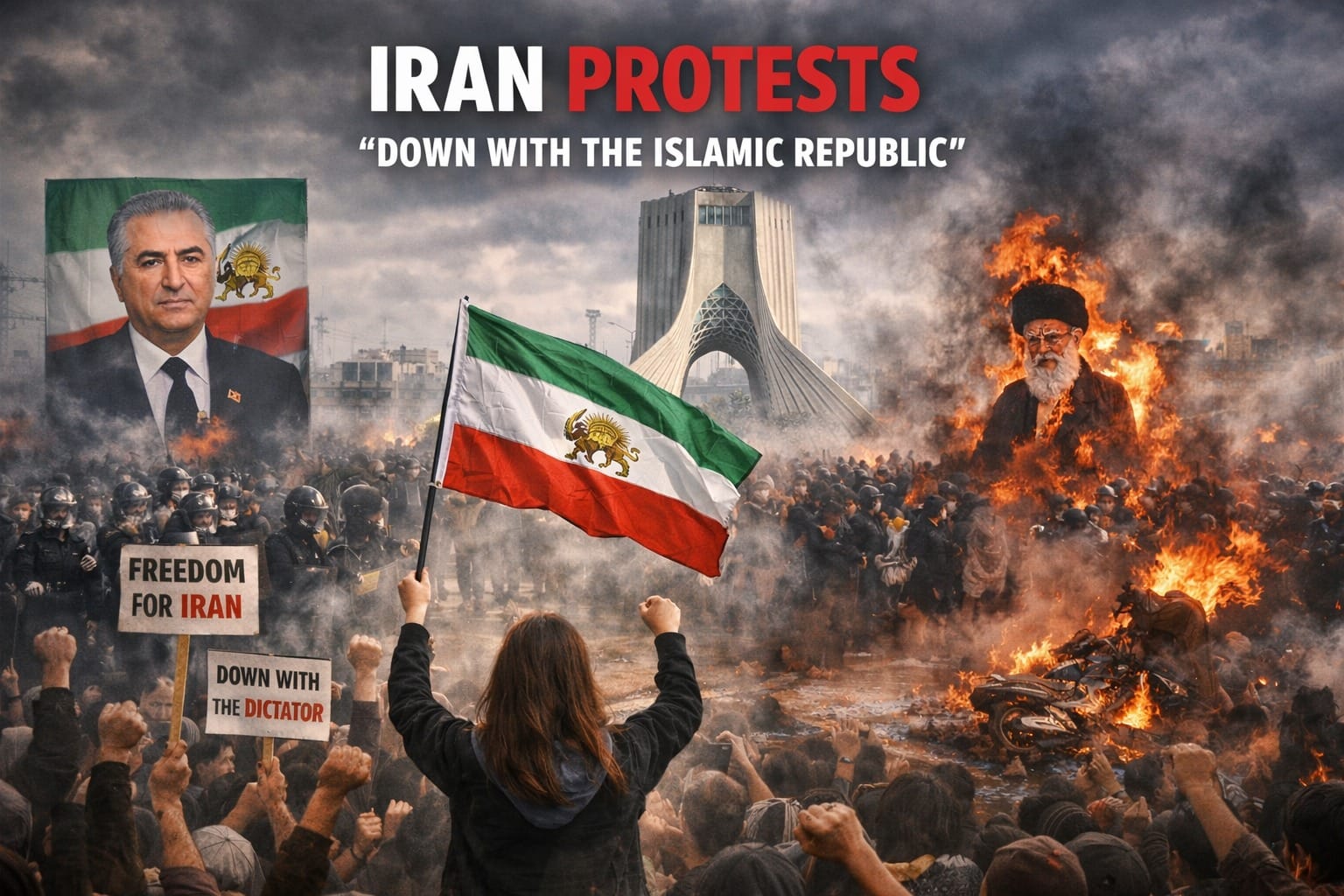
Iran is experiencing one of the most significant protest movements in decades as nationwide anti-Islamic Republic demonstrations escalate across multiple cities. What began as an economic protest has transformed into a broader political challenge to the theocratic rule established in 1979. These protests have drawn millions into the streets, triggered internet and communications blackouts, and placed intense pressure on Iran’s leaders. www.ndtv.com+1
This comprehensive article unpacks the root causes, who is responsible, why the protests are happening now, what people are demanding, and how the government is responding — including the latest developments such as nationwide internet cuts and calls by exiled opposition figures. www.ndtv.com+1
Background: Iran’s Political and Economic Landscape
Iran has been governed by an Islamic theocratic system since the 1979 Islamic Revolution, which overthrew the monarchy and established the Islamic Republic under Supreme Leader Ayatollah Ruhollah Khomeini. Over the past four decades, political power has been concentrated in the hands of clerical authorities and institutions like the Islamic Revolutionary Guard Corps (IRGC), creating a system with limited political freedom, heavy censorship, and limited electoral competition. Wikipedia
Simultaneously, the Iranian economy has suffered persistent challenges:
- High inflation — With inflation rates soaring above 40% in 2025, the cost of living has dramatically increased. Wikipedia
- Plunging currency — The Iranian rial hit record lows against the US dollar, deepening household financial stress. Wikipedia
- Sanctions — Renewed international sanctions related to Iran’s nuclear program have strained trade and foreign investment. Wikipedia
- Regional conflicts — Engagement in costly conflicts, including a 12-day war with Israel in 2025, further stretched state resources. Wikipedia
These long-standing pressures created fertile ground for mass dissent.
Also read – Renee Nicole Good: ICE Shooting in Minneapolis
How the Protests Started: From Economics to Revolution
The protest movement that defines late 2025 into early 2026 began with economic grievances and quickly escalated:
Earliest Incidents
Protests erupted in Tehran and other cities as shopkeepers and bazaar merchants struck over high prices, inflation, and stagnating economic prospects. Students and workers soon joined, calling for structural change. www.ndtv.com
Spread Across Iran
Within days, demonstrations spread beyond Tehran to cities like Isfahan, Shiraz, Mashhad, Hamadan and others, making this movement one of the largest since the 2022–2023 Mahsa Amini protests. Wikipedia
Initially focused on economic hardship, slogans rapidly shifted toward political demands including calls to end clerical rule and, in some cases, revive the monarchy. www.ndtv.com
Root Causes of the Protest Movement
Understanding why these protests evolved requires examining structural and immediate causes:
Economic Hardship and Cost of Living
Inflation placed severe pressure on ordinary Iranians’ finances. Essential goods — especially food and medicine — became increasingly unaffordable, widening public resentment. Wikipedia
Political Repression and Lack of Freedoms
The governing system’s tight controls on political expression, media censorship, and suppression of dissent left many Iranians disillusioned with the prospects for peaceful reform. Wikipedia
Youth Disillusionment
A large share of protest participants are young people who have grown up under economic stagnation and limited freedoms. They no longer feel represented by the clerical establishment and are more willing to openly challenge it. Reuters
Legacy of Previous Uprisings
The 2022–2023 protests following the death of Mahsa Amini highlighted persistent dissatisfaction with the regime and demonstrated a growing pattern of civic mobilization that sets groundwork for renewed waves of protest. Wikipedia
Who is Responsible for the Protests?
Identifying “who is responsible” for the protests requires parsing different influences:
Iranian Citizens and Grassroots Dissatisfaction
The core of the movement stems from ordinary Iranians fed up with rising hardship and political stagnation. Shopkeepers, workers, students, and professionals are central participants. www.ndtv.com
Role of Exiled Opposition – Reza Pahlavi
One key figure gaining attention is Reza Pahlavi, the exiled Crown Prince and son of Iran’s last Shah. After decades of limited influence, he issued a public call for nationwide demonstrations, including coordinated chants at a specific time — an appeal that appears to have mobilized more people onto the streets. www.ndtv.com+1
While his influence within Iran’s closed political environment has historically been limited, the timing of his call has coincided with a marked escalation in protest size and coordination. MPR News
External Influences and Geopolitical Context
Iran’s geopolitical tensions — including conflict with Israel, and hostility with the United States — contribute indirectly to economic deprivations through sanctions and military expenditures. The Iranian government itself blames foreign actors for “instigating” unrest, though independent observers suggest domestic grievances are the primary drivers. AP News
What People Are Demanding
As the movement has grown, so too have protesters’ demands. Although economic complaints sparked the demonstrations, political demands now dominate:
1. Economic Relief
- Stabilizing the currency
- Reducing inflation
- Lowering prices of essential goods
These remain core demands for many participants, especially those directly affected by economic hardship. Wikipedia
2. Political Reform or Regime Change
Protesters increasingly chant against the entire structure of the Islamic Republic — calling for removal of Supreme Leader Ayatollah Ali Khamenei, increased personal freedoms, and in some cases, restoration of constitutional monarchy or other forms of governance. Sky News
3. End to Repression
Many demonstrators are calling explicitly for the end to political repression, censorship, restrictions on personal liberties, and unfair judicial practices. Wikipedia
4. International Support
Some opposition figures, including Reza Pahlavi, are seeking international recognition and assistance — emphasizing human rights and economic stability — though opinions among protesters vary on foreign involvement. www.ndtv.com
Government Response: Crackdown, Internet Blackouts, and Propaganda
The Iranian regime has responded aggressively to the unrest:
Internet and Communication Shutdowns
The government cut internet access and international phone lines nationwide to curb protest coordination and limit reporting. This comprehensive blackout is one of the most severe seen in Iran and mirrors tactics used in past protests. www.ndtv.com+1
Security Crackdowns
State forces, including the IRGC and Basij militia, have used tear gas, live ammunition, mass arrests, and other forceful measures to disperse crowds. Human rights monitors report dozens killed and thousands detained, though exact numbers remain difficult to verify due to restricted information flow. AP News
Government Narratives
Iranian state media blames “foreign enemies,” including the U.S. and Israel, for inciting violence — a narrative aimed at delegitimizing domestic dissent. Officials claim they are targeting only “rioters,” not peaceful demonstrators. AP News
Limited Concessions and Warnings
While some officials have called for restraint or dialogue, there have been no major concessions addressing protesters’ core demands. Senior leadership continues to assert its authority and control over national security responses. Reuters
The Latest Developments: January 2026
As of early January 2026:
- Widespread protests are ongoing across Iran’s 31 provinces, involving thousands of people chanting anti-government slogans such as “Death to the dictator” and “Death to the Islamic Republic.” Sky News
- Internet blackouts have severely hampered communications and coverage. www.ndtv.com
- Security forces have used lethal force, resulting in multiple deaths and significant arrests. AP News
- Protesters have set fire to government buildings and staged strikes in key sectors like the bazaars and oil industry, signaling deepening unrest. The Times of India
- International attention is intensifying, with global leaders condemning crackdowns and discussing potential diplomatic pressure. The Guardian
The situation remains highly fluid, with analysts warning that further escalation — either through intensified government repression or broadening public participation — could reshape Iran’s political landscape.
Conclusion: What Lies Ahead?
Iran’s anti-Islamic Republic protests represent a complex and historic moment:
- Rooted in economic frustration, they have become a broader political movement demanding systemic change.
- Protesters’ diverse motivations reflect disillusionment with both economic mismanagement and political repression.
- The government’s forceful response and shutdowns underscore its determination to retain power — even at great social and economic cost.
- Exiled figures such as Reza Pahlavi have injected renewed energy into the movement, though their long-term influence is uncertain.
- The unrest is likely to continue into 2026, with potential implications for governance, foreign policy, and regional stability.
As developments unfold, monitoring both on-the-ground protests and international reactions will be vital to understanding Iran’s path ahead.