





LPG Petrol Crisis Strait of Hormuz India: Centre Debunks Fuel Price Rumours, Pushes PNG Shift as LPG Supply Strategy Tightens.
The LPG petrol crisis Strait of Hormuz has triggered widespread concern across India, with fears of fuel shortages, rising prices, and disruptions in daily life. However, as the situation unfolds, the Indian government has stepped in with critical clarifications and policy measures to control panic and stabilize supply.
Amid ongoing tensions in West Asia and disruptions near the Strait of Hormuz, India finds itself navigating a delicate balance between real supply challenges and public perception. This article presents a detailed, India-centric breakdown of the crisis—backed by official statements, policy shifts, and ground realities.
What Is the LPG Petrol Crisis Strait of Hormuz
The LPG petrol crisis Strait of Hormuz refers to the disruption in global fuel supply chains caused by escalating conflict in West Asia, particularly affecting tanker movement through the Strait of Hormuz.
This narrow maritime route is critical because:
- It handles a significant share of global oil and LPG shipments
- It is the primary route for fuel imports from Gulf countries
- Any disruption directly affects import-dependent nations like India
With military tensions escalating in early 2026, shipping activity reduced significantly, causing delays, uncertainty, and supply stress—especially for LPG.
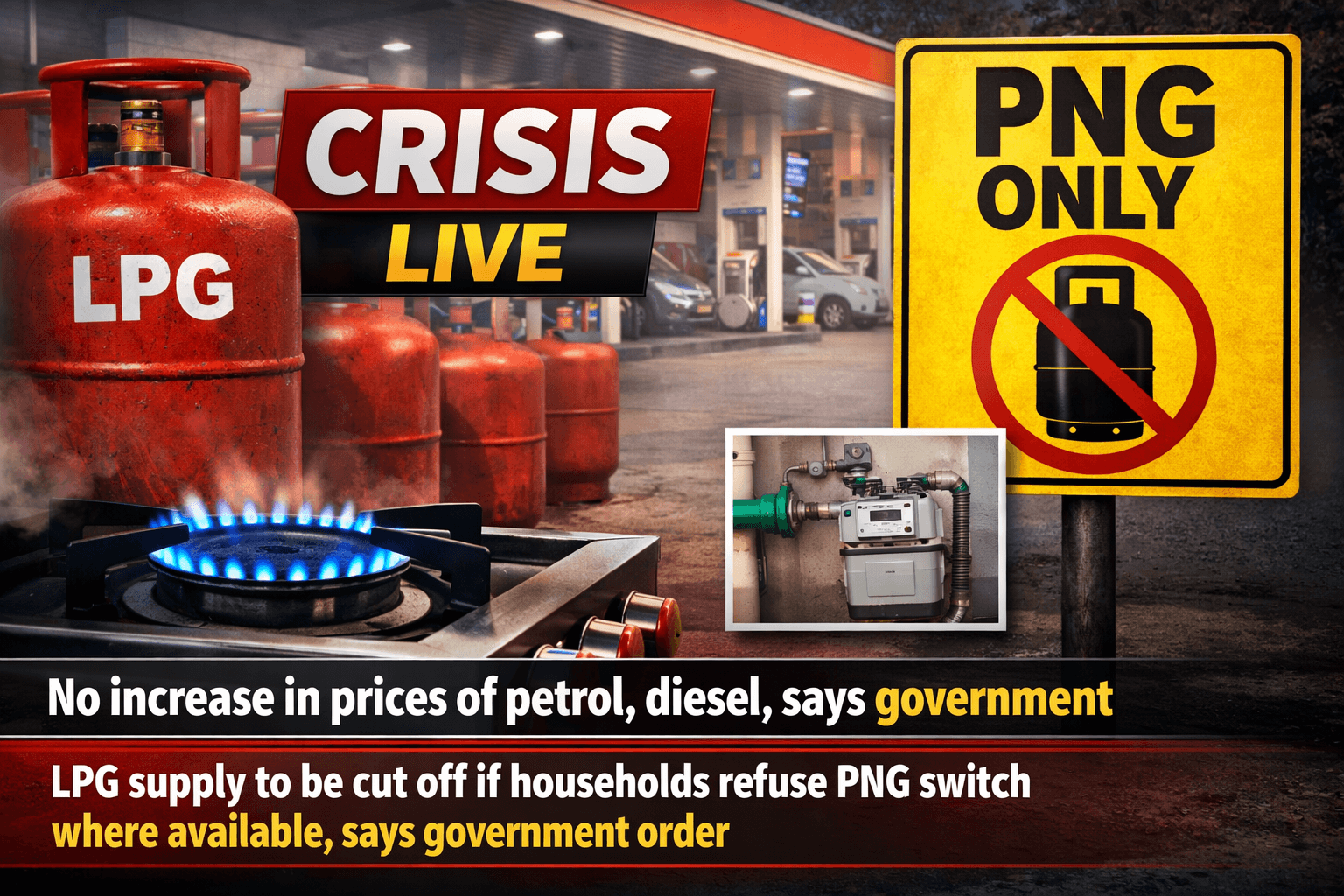
India’s Position: No Petrol or Diesel Price Hike, Says Government
One of the biggest concerns among Indian consumers has been fuel price increases. However, the government has issued a clear and direct statement to counter panic.
Sujata Sharma, Joint Secretary, Ministry of Petroleum and Natural Gas (MoPNG), stated:
- There has been no increase in petrol and diesel prices
- Citizens should not believe in rumours
This clarification is crucial in a time when misinformation spreads rapidly, often leading to panic buying and artificial shortages.
Additionally, the government has emphasized:
- India has sufficient stock of petrol and diesel
- Fuel supply chains remain stable despite global disruptions
This indicates that while the LPG segment is under pressure, petrol and diesel are currently under control.
Read about the latest updates on Iran Israel war here.
LPG Supply Measures: Government Steps In to Stabilize Distribution
While petrol and diesel remain stable, LPG supply has required active intervention.
Key Updates from MoPNG:
- 22,000 tonnes of commercial LPG have been allocated across 26 States
- This is aimed at ensuring continued supply for businesses and industries
This move is significant because:
- It prevents industrial shutdowns
- It reduces pressure on domestic LPG supply
- It stabilizes market demand
The government is essentially redistributing resources strategically to avoid a full-scale crisis.
Push for PNG: A Major Policy Shift in India’s Energy Strategy
One of the most important developments in the LPG petrol crisis Strait of Hormuz is a major policy decision regarding cooking fuel.
New Government Directive:
- LPG supply to households will be discontinued if consumers fail to switch to Piped Natural Gas (PNG) where connectivity is available
This is a bold move with long-term implications.
Why This Policy Matters
1. Reducing Dependence on LPG Imports
India imports a large portion of its LPG from West Asia. By pushing PNG:
- Dependence on imports can be reduced
- Exposure to geopolitical risks decreases
2. Strengthening Domestic Energy Infrastructure
PNG is supplied through pipelines, which:
- Are more stable than tanker-based supply
- Reduce logistics disruptions
- Offer continuous fuel access
3. Long-Term Cost Efficiency
PNG is often:
- Cheaper than LPG
- More efficient for urban households
PNG Expansion: Rapid Growth in Just 25 Days
The government has already started implementing this transition aggressively.
Key Achievement:
- 2.5 lakh new PNG connections have been provided in just 25 days
This indicates:
- Strong policy execution
- Urgency in reducing LPG dependency
- A clear shift toward a gas-based economy
This expansion is one of the fastest in recent times and shows how seriously the government is taking the situation.
Market Reaction: Oil Prices Fall, Stocks Rise
Interestingly, global markets have responded positively to diplomatic developments.
Key Updates:
- Oil prices fell on March 25, 2026
- Stock markets rose
Reason:
- Reports suggest the United States is seeking a one-month ceasefire
- A 15-point plan has been sent to Iran for discussion
What This Means for India
If the ceasefire holds:
- Oil exports from the Persian Gulf may resume
- Supply chains could normalize
- Pressure on LPG imports could reduce
This is a critical turning point in the LPG petrol crisis Strait of Hormuz.
Prime Minister’s Assurance: India Will Navigate the Crisis
In a reassuring statement, the Prime Minister has said:
- India will successfully navigate the energy crisis
- The government is actively managing the situation
This reflects confidence in:
- Strategic reserves
- Policy measures
- Diplomatic efforts
Ground Reality vs Perception: Is There Really a Crisis?
The LPG petrol crisis Strait of Hormuz presents an interesting contrast between perception and reality.
What Is True:
- LPG supply is under pressure
- Imports have been disrupted
- Delivery delays are being reported
What Is Not True:
- No petrol or diesel shortage
- No price hike in petrol/diesel
- No nationwide fuel emergency
What Is Changing:
- Policy shift toward PNG
- Faster infrastructure development
- Strategic diversification
Impact on Indian Households and Businesses
1. Households
- Possible delays in LPG cylinder delivery
- Encouragement to shift to PNG
- Stable petrol prices offer some relief
2. Businesses
- Commercial LPG allocation helps industries
- Restaurants and small businesses remain functional
- Reduced panic in fuel markets
3. Urban Consumers
- Faster access to PNG
- More reliable fuel supply in the long run
The Bigger Picture: India’s Energy Transformation
The LPG petrol crisis Strait of Hormuz is not just a disruption—it is a turning point for India’s energy strategy.
Key Takeaways:
- Overdependence on a single route (Hormuz) is risky
- Diversification is no longer optional
- Infrastructure investment is critical
Shift Towards a Gas-Based Economy
India is now accelerating:
- PNG expansion
- Domestic gas production
- Alternative energy adoption
This crisis may ultimately strengthen India’s energy resilience.
What Happens Next?
The future of the LPG petrol crisis Strait of Hormuz depends on:
1. Ceasefire Developments
If the US-Iran plan succeeds:
- Oil flow may resume
- Supply pressure may ease
2. Policy Execution in India
- Faster PNG rollout
- Efficient LPG distribution
3. Global Market Stability
- Oil prices stabilizing
- Shipping routes reopening
Conclusion
The LPG petrol crisis Strait of Hormuz has created concern across India—but the situation is far from a full-blown fuel emergency.
The government has clearly stated:
- No increase in petrol and diesel prices
- Sufficient fuel stock available
- Active steps being taken to stabilize LPG supply
At the same time, India is using this crisis as an opportunity to transform its energy ecosystem, pushing for PNG adoption and reducing dependency on volatile global routes.
In simple terms:
This is not just a crisis—it is a transition moment for India’s energy future.
And how India responds now will define its resilience in the years to come.