






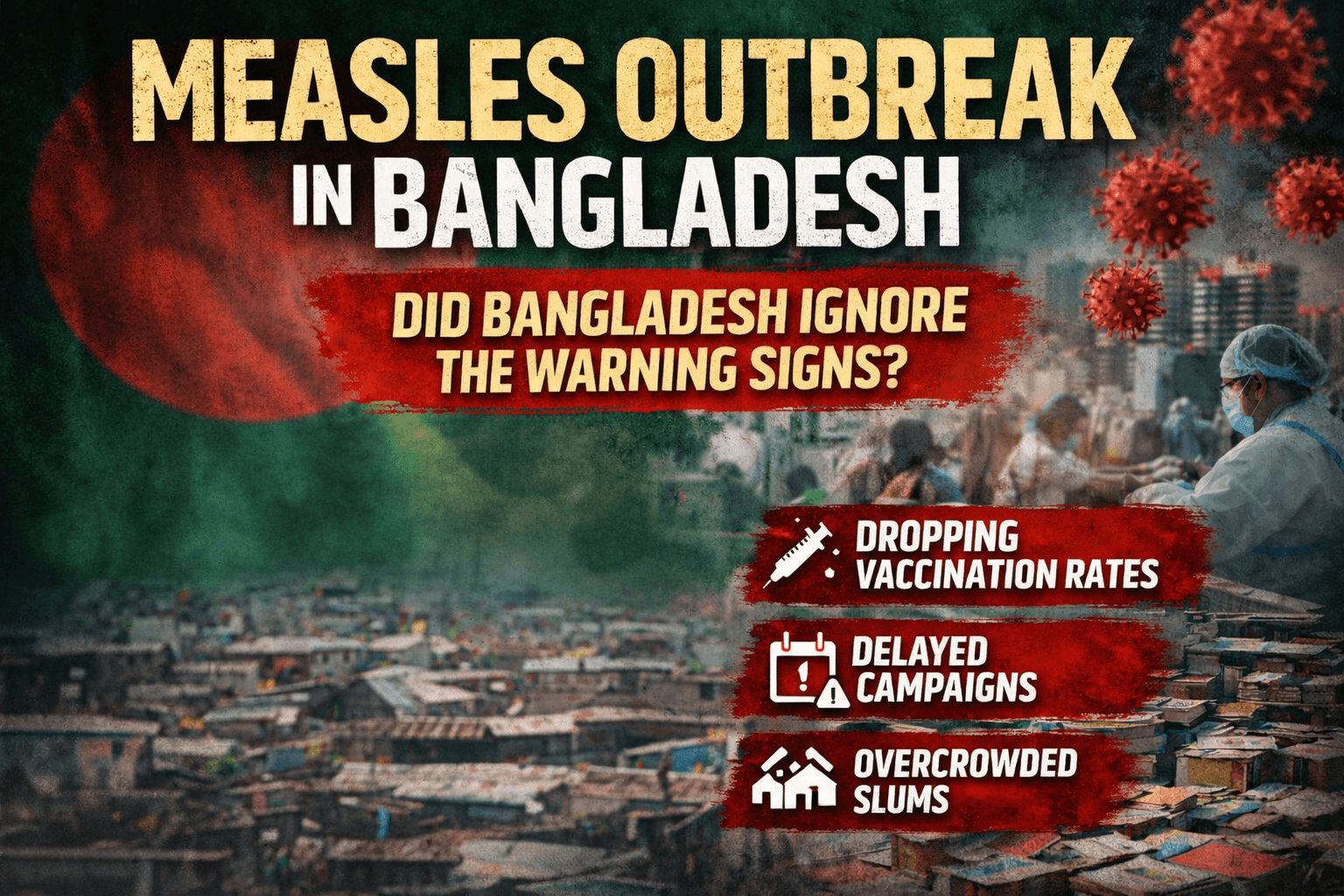
Measles Outbreak in Bangladesh: Did Bangladesh Ignore the Warning Signs?
The measles outbreak in Bangladesh has emerged as a serious public health concern in 2026, raising urgent questions about declining immunisation coverage, delayed interventions, and systemic gaps in healthcare delivery. Once praised for its success in controlling vaccine-preventable diseases, Bangladesh is now witnessing a resurgence of measles cases, particularly among children.
This outbreak has triggered a wider debate: Did Bangladesh ignore the warning signs that pointed to a potential health crisis? Evidence suggests that while the signals were visible, the response may not have been timely or sufficient.
Understanding the Current Measles Outbreak in Bangladesh
Bangladesh has seen a significant rise in suspected measles cases, especially among children under five years of age. Health authorities and international agencies have reported clusters of infections across multiple districts, with hospitals experiencing increased pediatric admissions.
While exact numbers vary across sources and are still being updated, confirmed trends indicate:
- A sharp increase in measles infections compared to previous years
- A concentration of cases among unvaccinated or partially vaccinated children
- Rising pressure on healthcare facilities in urban centers
Importantly, the situation is still evolving, and official data continues to be consolidated. However, the trajectory clearly signals a renewed outbreak rather than isolated cases.
Why Measles Remains a Serious Threat
Measles is one of the most contagious viral diseases known to humans. It spreads through respiratory droplets and can linger in the air for hours, making it extremely difficult to contain in densely populated areas.
Common symptoms include:
- High fever
- Cough and runny nose
- Red eyes
- Characteristic skin rash
However, the real danger lies in complications such as:
- Pneumonia
- Severe diarrhea and dehydration
- Brain inflammation (encephalitis)
- Death in severe cases
Children who are malnourished or have weakened immune systems are especially vulnerable. This makes measles outbreaks particularly dangerous in developing countries.
Declining Immunisation Coverage: The Core Issue
One of the most widely cited causes of the measles outbreak in Bangladesh is the decline in vaccination coverage in recent years.
Bangladesh’s Expanded Programme on Immunisation (EPI) has historically maintained strong coverage. However, recent trends show:
- A gradual decline in full immunisation rates
- Coverage falling below the 95% threshold required for herd immunity
- Regional disparities in vaccine access and uptake
Even a small drop in vaccination rates can significantly increase outbreak risk, as measles spreads rapidly in populations with immunity gaps.
These declining numbers were early warning signs that the country’s protection against measles was weakening.
Impact of Disruptions to Vaccination Campaigns
One of the most critical factors contributing to the outbreak has been the disruption or delay of routine and supplemental immunisation campaigns.
Several factors played a role:
- Political instability affecting large-scale campaigns
- Logistical challenges in reaching vulnerable populations
- Post-pandemic disruptions to healthcare systems
A planned nationwide measles vaccination drive faced delays, which resulted in a growing pool of unvaccinated children. These children became highly susceptible to infection once the virus began circulating.
The Growing Pool of Zero-Dose Children
Health experts have raised concerns about the increasing number of “zero-dose children”—those who have not received even a single vaccine dose.
This group is particularly at risk because:
- They lack any immunity against measles
- They are often concentrated in hard-to-reach or underserved areas
- They contribute significantly to rapid transmission during outbreaks
In Bangladesh, zero-dose children are often found in:
- Urban slums
- Migrant communities
- Remote rural areas
Addressing this group is critical to controlling the outbreak.
Urban Vulnerability and Slum Populations
Contrary to expectations, the outbreak has highlighted lower vaccination coverage in some urban areas compared to rural regions.
This is largely due to:
- High population density
- Migration and lack of health records
- Limited outreach in informal settlements
- Poor awareness among transient populations
Urban slums, in particular, create ideal conditions for measles transmission due to overcrowding and limited access to healthcare services.
Healthcare System Challenges
The measles outbreak has also exposed structural challenges within Bangladesh’s healthcare system.
Key issues include:
- Shortage of trained healthcare workers
- Inconsistent vaccine supply chains
- Limited cold-chain infrastructure in certain regions
- Gaps in monitoring and follow-up systems
These challenges reduce the effectiveness of immunisation programs and increase the likelihood of missed vaccinations.
Rising Risk Among Infants
Another concerning trend is the increasing number of measles cases among infants who are too young to be fully vaccinated.
Typically, the first dose of the measles vaccine is administered at around 9 months of age. However, during outbreaks:
- Younger infants are exposed before they can be vaccinated
- Malnutrition further increases vulnerability
- Mortality risk becomes significantly higher
In response, health authorities sometimes lower the vaccination age temporarily, but this is an emergency measure rather than a long-term solution.
Weak Surveillance and Data Gaps
Effective outbreak control depends heavily on strong surveillance systems. However, Bangladesh faces challenges in this area:
- Lack of real-time digital tracking systems
- Delayed reporting from local health centers
- Limited integration of national health data
These gaps make it difficult to:
- Detect outbreaks early
- Allocate resources efficiently
- Monitor vaccination coverage accurately
As a result, response efforts may lag behind the spread of the disease.
Global Context: Measles Is Making a Comeback
The measles outbreak in Bangladesh is part of a broader global trend.
In recent years:
- Measles cases have increased worldwide
- Several countries have reported renewed outbreaks
- Declining vaccination rates have been identified as the primary cause
The COVID-19 pandemic further disrupted routine immunisation programs globally, creating immunity gaps that are now leading to outbreaks.
Government Response to the Outbreak
The Bangladeshi government has initiated several measures to control the situation:
- Emergency vaccination campaigns in high-risk areas
- Increased monitoring of measles cases
- Deployment of health teams to affected regions
- Public awareness initiatives to encourage vaccination
While these steps are essential, experts emphasize that reactive measures alone cannot fully address the problem.
Did Bangladesh Ignore the Warning Signs?
The central question remains: Did Bangladesh ignore the warning signs?
The answer is complex.
On one hand:
- Declining vaccination rates were visible
- Campaign delays created immunity gaps
- Structural issues in healthcare were known
On the other hand:
- External factors like political instability and global disruptions played a role
- Resource constraints limited the speed of response
However, it is clear that the outbreak is not a sudden event it is the result of gradual systemic vulnerabilities that were not addressed in time.
Read more on GTA Online weekly update.
What Needs to Be Done Next
To prevent future outbreaks, Bangladesh must adopt a long-term, proactive approach:
1. Restore High Immunisation Coverage
Ensure vaccination rates exceed 95% across all regions.
2. Strengthen Healthcare Infrastructure
Improve supply chains, cold storage, and workforce capacity.
3. Focus on Urban Health Gaps
Develop targeted strategies for slums and migrant populations.
4. Invest in Digital Surveillance
Implement real-time tracking systems for vaccines and disease outbreaks.
5. Increase Public Awareness
Educate communities about the importance of timely vaccination.
Conclusion
The measles outbreak in Bangladesh serves as a powerful reminder that public health success requires constant vigilance.
Even small declines in vaccination coverage can undo years of progress. While Bangladesh has made significant achievements in healthcare over the years, the current outbreak highlights the need for stronger systems, better planning, and faster responses.
The warning signs were present. The challenge now is to ensure they are never overlooked again.