







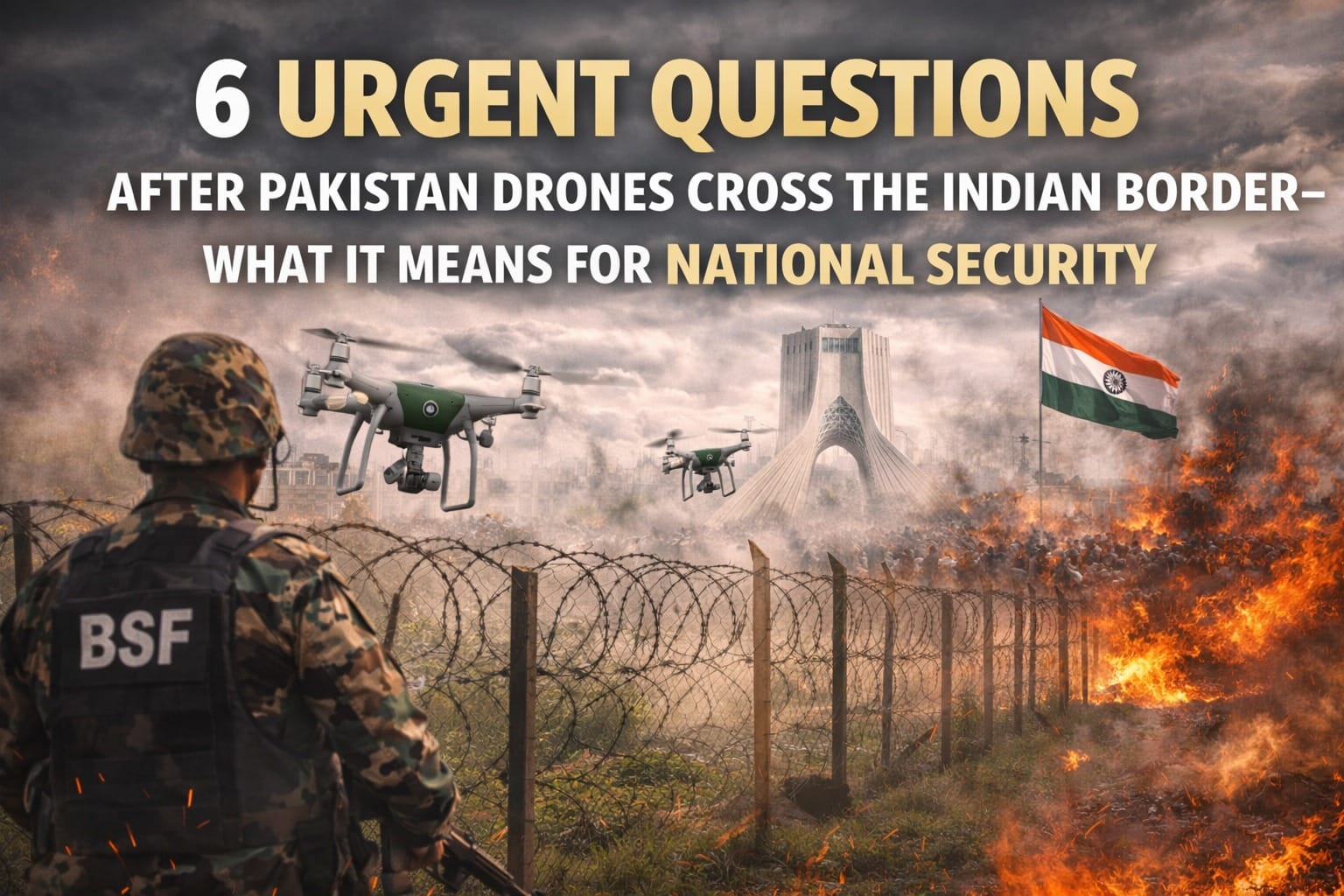
Pakistan Drones Spotted
In recent days, security forces along India’s western border have reported multiple sightings of suspected Pakistan drones hovering near and briefly crossing into Indian territory — particularly in the sensitive Jammu and Kashmir region. These incidents have spurred search operations, heightened military alertness, and renewed discussions about border security and drone threats.
This SEO-centric 1000-word article explores why these drones are appearing, where they have been spotted, the possible motives behind their flights, and how India is responding, including policy and defense measures.
What Happened? Suspected Drones Along the LoC and International Border
On January 11–12, 2026, Indian security forces reported the movement of multiple suspected drones originating from Pakistan over forward areas along the Line of Control (LoC) and the International Border (IB) in Jammu and Kashmir.
The sightings occurred in several districts, including:
- Samba
- Rajouri
- Poonch
According to officials, the drones were observed flying from the Pakistan side, briefly hovering over Indian territory and then returning to Pakistani airspace. Ground search operations were launched to verify whether these drones carried any packages, weapons, narcotics, or surveillance equipment.
Also read – Iran’s Anti-Islamic Protests & Everything You Need to Know
Why Are Drones Being Spotted at the Border?
1. Surveillance and Intelligence Gathering
One likely explanation for drones near the LoC and IB is that they are being used for reconnaissance — providing real-time imagery and intelligence about Indian troop deployments and patrol movements. Drones enable militaries to cheaply map border areas without risking pilots. Research on recent conflicts highlights drones’ growing role in gathering tactical data.
2. Testing Border Defenses and Systems
Repeated drone movements can help adversaries test and probe air defense responses and radar coverage. By sending drones at night or at low altitude, the sender may aim to learn how quickly Indian forces detect and respond, and what technologies are most effective at identification and interception. This is a pattern seen in many contemporary conflict zones.
3. Potential Attempted Drops of Items
Although official sources have not publicly confirmed confirmed drops, Indian authorities have begun search operations to determine if the drones were attempting to drop contraband, weapons, or other equipment into Indian territory. That possibility cannot be ruled out and is routinely investigated after such sightings.
4. Heightened South Asia Tensions
Pakistan and India have had periodic tensions over Kashmir and other security issues. Earlier in 2025, there were reports of drone swarms and aerial engagements during broader conflict episodes between the two nations. While the current incidents do not appear to involve large drone attacks, they occur against a backdrop of historically fragile peace and mistrust.
Where Exactly Were These Drones Spotted?
The most recent reports focus on three districts in Jammu and Kashmir:
1. Samba District
The Samba sector borders Pakistan and has multiple forward posts and villages along the IB. Security forces observed drone movements here and responded with searches to check for any intrusion.
2. Rajouri District
This district near the LoC has long been sensitive due to cross-border infiltrations and militant activities. Suspected drones were detected hovering over forward Indian positions here.
3. Poonch District
Poonch lies close to the LoC and has been a frequent site for border tensions. Reports indicate drones may have briefly entered Indian airspace near this area before returning across the boundary.
What Do Officials Say About the Drones?
Indian security officials have noted that:
- The drones originated from the Pakistan side and briefly hovered over Indian territory before returning.
- Search operations involving ground forces have been launched to ascertain whether these drones dropped any packages or equipment.
- No official confirmation has been made about recovered weapons or contraband.
- Forces remain on high alert along key forward sectors.
The characterization of these sightings as “suspected drones” highlights the precautionary stance of Indian forces — distinguishing between confirmed incursions and preliminary sightings that require investigation.
Could This Signal a Wider Drone Conflict?
While these recent sightings are currently limited in scale, they raise broader questions about the evolving role of unmanned aerial systems (UAS) in the India-Pakistan context.
In 2025, during heightened conflict between the two countries, there were reports of drone swarms and attempted aerial attacks using drones. India’s air defense systems reportedly intercepted and shot down hundreds of drones during those episodes, while Pakistan also claimed to have downed Indian UAVs over its cities.
That history suggests drones are already a part of broader security dynamics between the two nations — and such incidents can quickly escalate if misinterpreted.
India’s Immediate Response and Security Measures
1. High Alert Across Forward Sectors
Indian security forces, including the Border Security Force (BSF) and Indian Army, have been put on high alert in the affected districts. Any unusual aerial movement triggers quick surveillance and search protocols.
2. Ground Search Operations
After drone sightings, commanders have dispatched search teams on the ground to examine likely flight paths and look for any evidence of dropped packages, payload remnants, or indicators of hostile intent.
3. Use of Surveillance and Counter-Drone Measures
Modern border defense increasingly relies on:
- Radar systems that track aerial objects at low altitude
- Night vision optics and thermal cameras to detect drone signatures
- Radio frequency jammers and anti-drone tools to disrupt UAV control signals
India has been boosting its counter-drone capabilities in recent years to counter threats from both Pakistan and non-state actors operating near borders.
4. Integrated Command and Coordination
Local police, BSF, army units, and intelligence agencies coordinate to share information and rapidly notify forces about any detection. India’s layered defense posture helps ensure prompt responses to evolving threats.
Long-Term Strategic Considerations
1. Enhancing Border Surveillance Technologies
India is increasingly investing in advanced surveillance systems, including indigenous and imported UAVs, to maintain persistent monitoring of border zones. Tools such as electro-optical sensors, radar networks, and aerial drones themselves play a dual role in detection and deterrence.
2. Counter-Drone Innovation and Procurement
In light of recent tensions, India’s defense procurement strategy is likely to accelerate counter-UAS technologies — such as jammers, high-powered radars, and laser systems — to neutralize drone threats effectively. These acquisitions are part of broader defense modernization efforts.
3. Diplomatic Engagement and De-Escalation Channels
India continues to pursue diplomatic mechanisms — including communication through established military hotlines and international forums — to prevent misunderstandings from escalating into larger confrontations.
What This Means for Regional Security
While the cases of suspected Pakistani drones so far have been isolated sightings, they underscore a broader trend:
- Drones are becoming a key part of modern border security dynamics.
- India and Pakistan must manage UAV threats alongside traditional military challenges.
- Prompt response and clear communication are essential to prevent escalations.
As technology becomes more accessible, even small drones can raise significant security concerns in disputed border regions. The recent sightings near the LoC and IB remind policymakers and defense planners that aerial security is now an integral part of national defense strategy.
Conclusion
The recent sightings of suspected Pakistani drones at the Indian border have renewed attention on border security, surveillance capabilities, and the evolving nature of aerial threats. While investigations continue into whether these drones attempted to drop payloads or conduct surveillance, India’s response highlights a layered defense posture combining rapid alerts, ground searches, and technological upgrades.
Whether these incursions signify a broader tactical trend or a one-off challenge, the focus now is on preventing escalation, enhancing detection and counter-drone systems, and maintaining strategic stability along one of the most sensitive borders in South Asia.
SUBSCRIBE TO OUR YOUTUBE CHANNEL THE LOGIC STICK FOR MORE VIDEO UPDATES