





Afghanistan-Pakistan War: Pakistani Airstrike, Hospital Attack, 400+ Dead
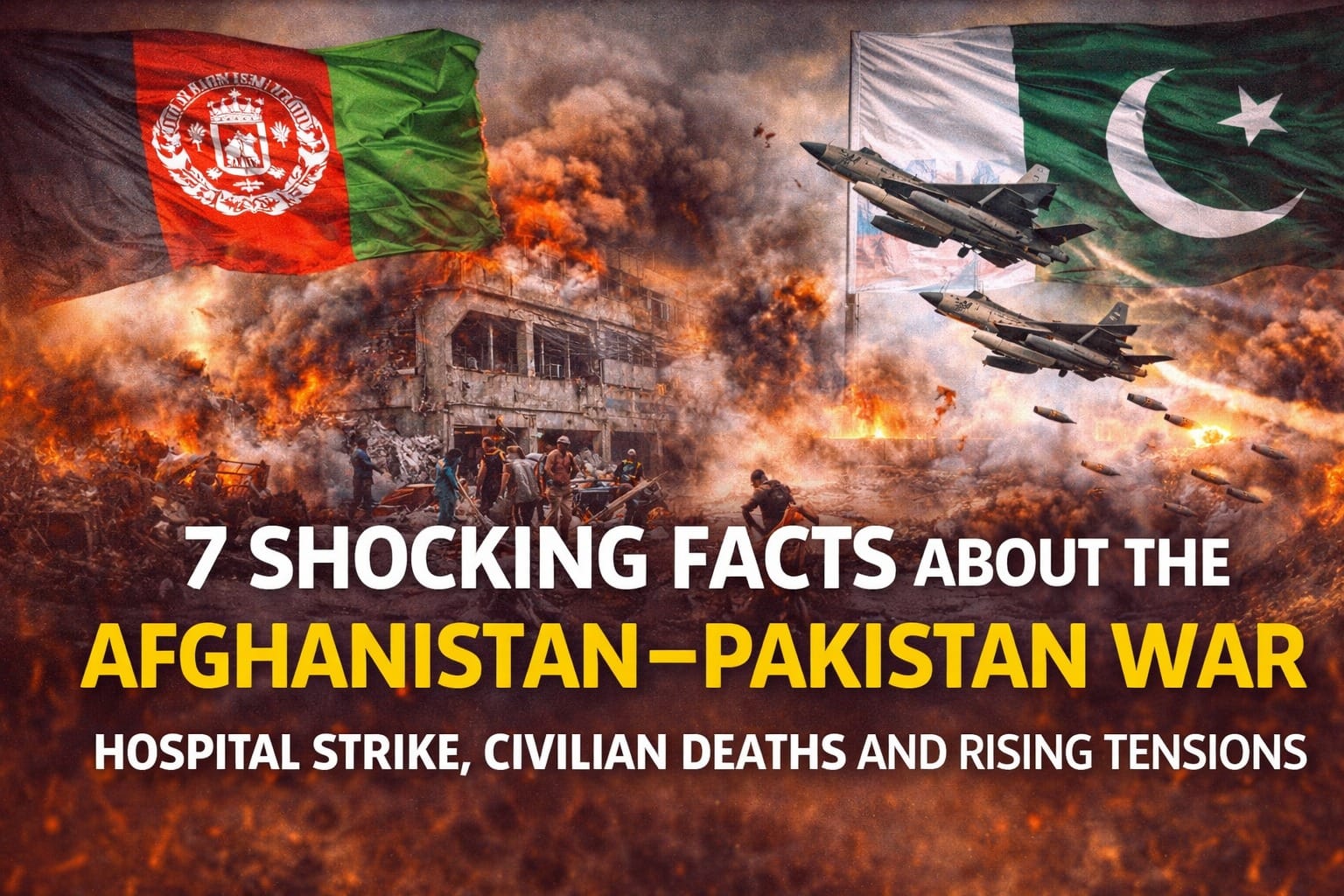
The Afghanistan-Pakistan War conflict of 2026 has rapidly transformed from border tensions into one of the most dangerous regional crises in South Asia. What began as cross-border skirmishes and accusations of terrorism has now escalated into airstrikes, civilian casualties, and large-scale destruction, including a shocking attack on a hospital in Kabul.
The most disturbing development came on March 16–17, 2026, when Afghanistan accused Pakistan of launching an airstrike on a hospital in Kabul, killing hundreds of civilians. The incident has intensified global concern and raised serious questions about war crimes, sovereignty, and regional stability.
This article explains how the Afghanistan–Pakistan war started, what led to the hospital attack, who is responsible according to facts, and where the conflict is heading.
The conflict reached a critical point when Afghanistan claimed that a Pakistani airstrike hit a drug rehabilitation hospital in Kabul, causing massive casualties.
- Over 400 people were reportedly killed
- Around 250 people were injured
- The hospital, which had nearly 2,000 patients, was largely destroyed
Afghan officials described the attack as a “crime against humanity”, stating that the victims were mostly civilians undergoing treatment.
However, Pakistan strongly denied these allegations, claiming that its airstrikes targeted “military installations and terrorist infrastructure” and not civilian facilities.
This contradiction lies at the heart of the conflict — both sides accuse each other of targeting civilians while defending their own actions as necessary for security.
How the Afghanistan–Pakistan War Started
The roots of this conflict go back years, but the latest escalation began in February 2026.
1. Rise in Terror Attacks in Pakistan
Pakistan witnessed a surge in attacks, many of which were attributed to the Tehrik-e-Taliban Pakistan (TTP).
- Suicide bombings and militant attacks killed civilians and security personnel
- Pakistan claimed these groups were operating from Afghan territory
Islamabad repeatedly accused the Afghan Taliban government of harboring terrorists.
2. Pakistan’s Retaliatory Airstrikes
In response, Pakistan launched airstrikes inside Afghanistan, targeting what it described as militant hideouts.
Afghanistan denied these claims and said that civilian areas were being targeted instead.
3. Breakdown of Ceasefire
A fragile ceasefire that had been brokered earlier collapsed.
By mid-March 2026:
- Border clashes intensified
- Drone attacks and artillery shelling increased
- Civilian casualties were reported on both sides
The situation quickly escalated into what many now describe as an undeclared war.
Timeline of Escalation (February – March 2026)
February 2026
- Suicide bombings and militant attacks inside Pakistan
- Pakistan blames Afghanistan-based militants
Late February
- Pakistan conducts cross-border strikes
- Afghanistan condemns violation of sovereignty
March 12–15
- Border shelling intensifies
- Civilian deaths reported in both countries
- Afghanistan claims Pakistan hit civilian zones
March 16–17 (Turning Point)
- Pakistan launches major airstrikes
- Kabul hospital is hit
- Over 400 civilians reportedly killed
This marked the deadliest moment in the conflict so far.
What Happened in the Hospital Strike?
The hospital targeted in Kabul was reportedly a drug rehabilitation center, housing vulnerable patients.
Key details:
- Strike occurred around 9 PM local time
- Large portions of the facility were destroyed
- Rescue teams struggled to pull survivors from rubble
- Fires and explosions engulfed the building
Eyewitness reports described:
- bodies being carried out in the dark
- emergency responders overwhelmed
- widespread panic across Kabul
The scale of destruction has made this one of the most controversial airstrikes in recent South Asian conflict history.
Pakistan vs Afghanistan: Who Is Responsible?
This is where the conflict becomes complex.
Afghanistan’s Position
- Pakistan deliberately targeted a civilian hospital
- The attack is a violation of sovereignty
- It amounts to a war crime
Pakistan’s Position
- No hospital was targeted
- Airstrikes were precise and aimed at militant infrastructure
- Afghanistan is allowing terrorists to operate from its soil
Both narratives are backed by strong political messaging, but independent verification remains limited.
International organizations have called for investigations, but the fog of war makes truth difficult to establish immediately.
Why This Conflict Is So Dangerous
Unlike earlier tensions, this conflict has several factors that make it highly volatile:
1. Two Neighboring States Directly Involved
This is not a proxy war — both countries are directly attacking each other.
2. Presence of Terror Groups
Groups like TTP and ISIS-K add complexity and unpredictability.
3. Weak Diplomatic Channels
Peace talks have repeatedly failed.
4. Civilian Casualties
The hospital strike has dramatically increased international pressure.
Humanitarian Impact of Hospital Attack
The war is already creating a major humanitarian crisis.
Civilian Deaths
- Hundreds killed in airstrikes
- Families displaced from border regions
Healthcare Collapse
- Hospitals damaged
- Medical infrastructure under pressure
Fear and Panic
- Cities like Kabul are under constant threat
- People fear further airstrikes
The hospital attack has amplified global outrage, as medical facilities are protected under international law.
International Reaction
The global community has reacted strongly to the escalation.
United Nations
- Called for restraint
- Urged both sides to prevent civilian casualties
Human Rights Groups
- Demanded independent investigation
- Raised concerns about war crimes
Regional Powers
- China and Gulf countries have attempted mediation
- No breakthrough yet
Despite global concern, no immediate ceasefire has been achieved.
Also read – FACT CHECK: Did Israel Attack the North Korea Embassy?
The Core Issue: Terrorism vs Sovereignty
At the heart of the conflict lies a fundamental disagreement:
- Pakistan says Afghanistan is harboring militants
- Afghanistan says Pakistan is violating its sovereignty
This has created a cycle:
- Terror attack in Pakistan
- Pakistan retaliates with airstrikes
- Afghanistan accuses Pakistan of civilian killings
- Conflict escalates further
Could This Turn Into a Full-Scale War?
Experts warn that the situation is dangerously close to full-scale war.
Possible scenarios:
Continued Airstrikes
More strikes could lead to higher civilian casualties.
Border War
Ground conflict could escalate along the border.
Proxy Expansion
Militant groups could widen the conflict.
International Intervention
Global powers may step in to prevent further escalation.
Why the Hospital Attack Is a Turning Point
The Kabul hospital strike has changed the nature of the conflict.
It has:
- intensified global attention
- increased pressure on Pakistan
- strengthened Afghanistan’s narrative
- raised the stakes diplomatically
Civilian infrastructure being hit often becomes a trigger for global intervention or sanctions.
What Happens Next?
The future of the Afghanistan–Pakistan war remains uncertain.
Key possibilities include:
1. Escalation
Further strikes and retaliation could worsen the crisis.
2. Negotiation
International mediation could push for a ceasefire.
3. Prolonged Conflict
Low-intensity warfare could continue for months.
Conclusion
The Afghanistan–Pakistan war of 2026 is no longer just a border conflict — it has become a humanitarian and geopolitical crisis.
The alleged hospital strike in Kabul, which reportedly killed over 400 people, marks one of the darkest moments in the conflict.
While Pakistan denies targeting civilians, Afghanistan insists that a war crime has taken place. The truth may take time to fully emerge, but the consequences are already clear:
- rising civilian deaths
- growing regional instability
- increasing global concern
As tensions continue to rise, the world is watching closely.
Because what happens next will not just shape Afghanistan and Pakistan —
it could impact the entire region.
Subscribe to our YouTube Channel The Logic Stick for more video insights