







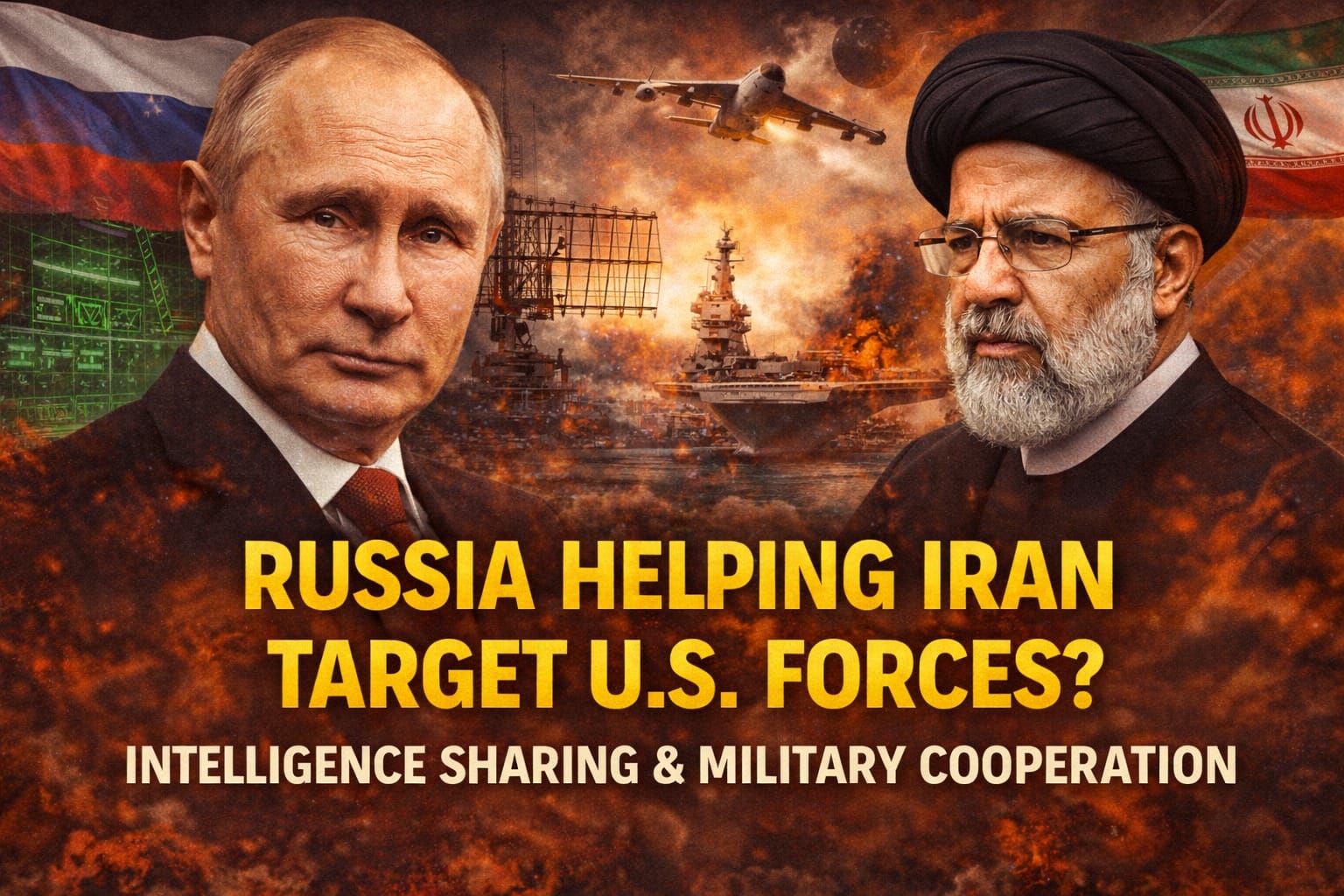
The rapidly escalating conflict between Iran, the United States, and Israel has taken a new geopolitical turn with reports that Russian intelligence may be assisting Iran in identifying and targeting U.S. military assets in the Middle East.
Over the past week, intelligence reports from Western officials have suggested that Moscow may be sharing information about the locations of American warships, aircraft, and other military assets, potentially giving Iran an operational advantage in retaliatory strikes.
While Russia has not officially acknowledged direct involvement in the war, analysts believe that the growing strategic partnership between Moscow and Tehran could significantly influence how the conflict unfolds.
This article examines what has been confirmed so far, the broader Russia–Iran military relationship, and the many ways Russia could support Iran’s operations against U.S. forces.
Breaking Development: Russia Sharing Intelligence With Iran
According to U.S. intelligence officials, Russia has provided Iran with information that could help Tehran strike American military assets, including warships and aircraft operating in the Middle East.
The intelligence reportedly includes targeting data and surveillance insights, potentially allowing Iran to identify vulnerabilities in U.S. deployments across the region.
American officials described the development as the first indication that another major power may be indirectly participating in the conflict.
At the same time, U.S. authorities emphasized that they have not confirmed Russia is directing Iranian attacks, but rather that Moscow may be sharing intelligence that Iran could use independently.
This distinction is important because it allows Russia to maintain plausible deniability while still influencing the battlefield.
Russia and Iran: A Strategic Military Partnership
The relationship between Russia and Iran has evolved dramatically over the past decade.
In 2025, both countries signed a long-term strategic partnership agreement that deepened cooperation in areas such as defense technology, intelligence sharing, and sanctions evasion.
Both governments also share common geopolitical goals:
• challenging U.S. influence in the Middle East
• weakening Western alliances
• building a multipolar global order
These shared interests make cooperation during a regional war increasingly likely.
Also read – Was Mahabharata a Nuclear War
Confirmed Russian Intelligence Assistance
The most credible reports indicate Russia may have provided real-time intelligence about U.S. military assets, such as the locations of:
• aircraft carriers
• naval destroyers
• reconnaissance aircraft
• missile defense systems
Such information could dramatically improve Iran’s ability to plan missile or drone attacks.
For example, intelligence about the location of American naval ships in the Persian Gulf could allow Iranian forces to launch more precise strikes.
Even limited intelligence can significantly increase the effectiveness of Iran’s missile and drone capabilities.
Why Russia Might Support Iran
Russia has several strategic reasons to assist Iran in its confrontation with the United States.
1. Weakening U.S. Global Influence
By helping Iran challenge U.S. military power in the Middle East, Russia can indirectly weaken Washington’s geopolitical dominance.
2. Distracting the United States
Russia remains deeply engaged in its war in Ukraine. A large Middle East conflict could force the U.S. to divert military resources away from Europe.
3. Strengthening Strategic Alliances
Supporting Iran reinforces Russia’s broader alliance network, which includes Syria and several Iranian-backed groups.
4. Challenging Western Sanctions
Both Russia and Iran face heavy sanctions from Western nations, creating strong incentives for cooperation.
Ways Russian Intelligence Could Help Iran Militarily
Beyond sharing intelligence about U.S. forces, Russia could support Iran in several additional ways.
1. Satellite Surveillance
One of Russia’s most powerful capabilities is satellite reconnaissance.
Russia already helped launch Iran’s Khayyam satellite, a high-resolution Earth-observation satellite capable of capturing detailed imagery of the Middle East.
Such satellites can track:
• naval fleet movements
• military bases
• aircraft deployments
• missile launch sites
This information could provide Iran with strategic insights into U.S. military activity across the region.
2. Electronic Warfare Systems
Russia is one of the world leaders in electronic warfare.
Systems such as the Krasukha electronic warfare platform can jam radar, disrupt satellite communications, and interfere with drone control signals.
If deployed by Iran, these systems could:
• blind enemy surveillance systems
• disrupt missile defenses
• interfere with U.S. drones and aircraft
This type of support could significantly reduce the technological advantage of American forces.
3. Cyber Intelligence Operations
Russia is widely regarded as one of the most sophisticated cyber warfare powers.
Cyber capabilities could allow Russia to help Iran by:
• hacking military networks
• disrupting logistics systems
• intercepting communications
• targeting infrastructure
Cyber warfare could become a critical front in the broader conflict.
4. Targeting Data for Missile Systems
Iran possesses one of the largest missile arsenals in the Middle East.
However, missile accuracy depends heavily on intelligence and targeting data.
Russian surveillance systems could provide Iran with:
• coordinates of U.S. military bases
• ship positions in the Gulf
• radar system locations
This could dramatically improve the accuracy of Iranian missile strikes.
5. Air Defense Technology
Russia has supplied Iran with advanced air defense technologies in recent years.
These systems can help protect Iranian infrastructure from airstrikes and could complicate U.S. military operations.
Analysts believe Russia could provide additional upgrades to these systems during the conflict.
6. Drone Warfare Expertise
Iran is already a major producer of drones, but Russia has gained extensive battlefield experience using drones in Ukraine.
The two countries have exchanged drone technology in recent years.
Iran’s Shahed drones, for example, have been widely used by Russian forces in Ukraine.
This technological exchange means both countries have learned from each other’s combat experiences.
7. Intelligence Networks in the Middle East
Russia has maintained a strong intelligence presence in the Middle East, particularly in Syria.
Through its military bases and intelligence networks, Russia could provide Iran with regional intelligence about U.S. and allied operations.
Such information could include:
• troop movements
• air operations
• logistics routes
8. Strategic Coordination With Allied Groups
Russia has also maintained relationships with groups allied with Iran, including Hezbollah.
Military cooperation between Russia and Hezbollah developed during the Syrian war, where the two sides coordinated operations.
This network could help Iran coordinate regional operations against U.S. allies.
The Limits of Russian Support
Despite the growing cooperation, Russia is unlikely to enter the war directly.
Direct involvement would risk:
• escalation with the United States
• a broader global conflict
• additional sanctions
Instead, Russia appears to be pursuing a strategy of indirect involvement through intelligence and technology support.
U.S. Response to the Allegations
American officials have acknowledged the reports but have sought to downplay their impact.
Defense officials say the U.S. military is tracking Russian-Iranian communications and adjusting its operations accordingly.
The Pentagon has also emphasized that U.S. forces maintain overwhelming technological superiority.
However, the possibility of Russian intelligence assistance raises concerns about a widening geopolitical confrontation.
Could This Become a Global Proxy War?
Many analysts fear the Russia-Iran cooperation could transform the Middle East conflict into a larger proxy war involving multiple global powers.
Such a scenario could resemble Cold War-era conflicts where rival powers supported opposing sides without directly fighting each other.
Possible actors include:
• Russia supporting Iran
• the United States supporting Israel and Gulf allies
• China influencing diplomatic outcomes
This dynamic could dramatically increase global tensions.
The Strategic Implications for the World
If Russia continues assisting Iran, several global consequences could emerge:
Rising Energy Prices
Conflict in the Middle East already threatens oil supplies and shipping routes.
Increased Military Escalation
More precise Iranian attacks could lead to stronger U.S. retaliation.
Expanding Global Alliances
The war could strengthen geopolitical blocs.
Conclusion
The reports that Russian intelligence may be helping Iran identify U.S. military targets mark a potentially dangerous new phase in the Middle East conflict.
Even limited intelligence sharing could significantly enhance Iran’s ability to challenge U.S. forces in the region.
Beyond intelligence, Russia possesses numerous capabilities — from satellite surveillance to electronic warfare — that could further strengthen Iran’s position.
While Moscow is unlikely to enter the war directly, its growing partnership with Tehran suggests that the conflict may increasingly resemble a global proxy struggle between major powers.
If that happens, the stakes will extend far beyond the Middle East — potentially reshaping global geopolitics for years to come.
SUBSCRIBE TO OUR YOUTUBE CHANNEL THE LOGIC STICK FOR MORE VIDEO INSIGHTS