







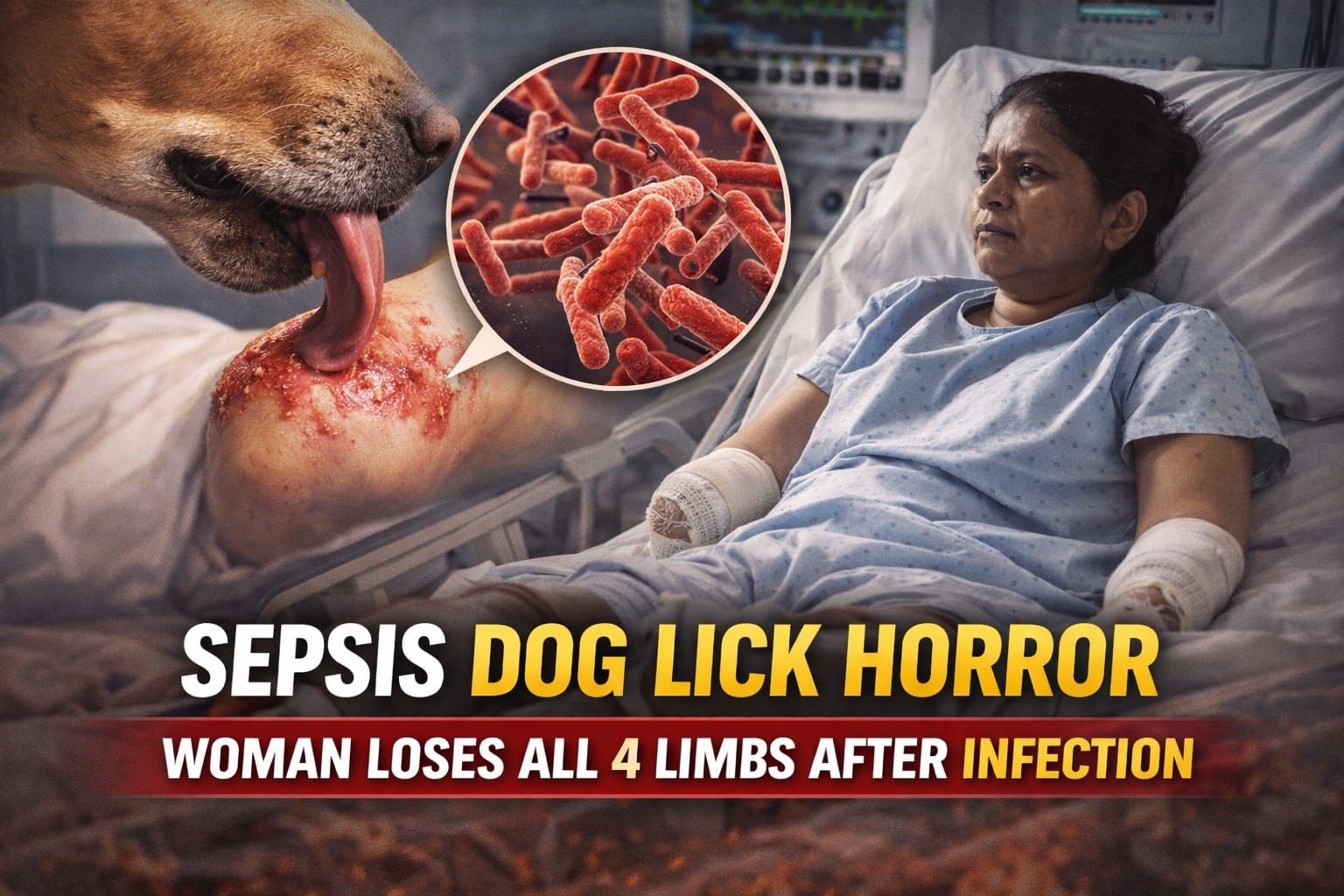
Sepsis Dog Lick Case
Introduction
Pets are widely considered family members, and affectionate gestures like dog licking are often viewed as harmless expressions of love. However, a recent medical case involving a UK woman has shocked the world after a seemingly innocent dog lick triggered a life-threatening infection that ultimately led to quadruple amputation.
The incident has drawn global attention to sepsis, a medical emergency that can escalate rapidly and cause organ failure or death if untreated. The story highlights how bacteria present in pet saliva, usually harmless to animals, can become extremely dangerous when they enter the human bloodstream through even minor wounds.
This article provides a detailed and eye-opening explanation of the entire case, covering:
- The woman’s full story
- When, where, and how the infection happened
- What sepsis is and why it is deadly
- Bacteria involved in dog lick infections
- Symptoms and treatment
- Precautions and prevention strategies
The Woman’s Story: From Normal Day to Medical Emergency
Who she is
The woman at the center of this case is Manjit Sangha, a middle-aged UK resident and pet owner whose life changed dramatically after a routine interaction with her dog.
According to medical reports, doctors believe the infection began when her pet dog licked a small cut or scratch on her body, allowing bacteria from saliva to enter her bloodstream.
When and where it happened
The incident occurred in July 2025 in the United Kingdom. After returning home from work feeling slightly unwell, Manjit’s condition rapidly deteriorated within hours.
By the following day:
- She became unconscious
- Her lips turned blue
- Hands and feet became extremely cold
- Breathing difficulty developed
She was rushed to hospital, where doctors diagnosed severe sepsis.
Rapid deterioration and life-threatening complications
Doctors found that her condition had progressed to septic shock, a stage where infection causes dangerously low blood pressure and organ failure.
During treatment:
- She suffered six cardiac arrests
- Was placed in an induced coma
- Developed pneumonia and clotting complications
- Required dialysis and life support
Ultimately, surgeons had to amputate both legs below the knee and both hands to save her life.
Long recovery journey
Manjit spent 32 weeks in hospital, undergoing multiple surgeries and intensive rehabilitation before returning home.
Her case has since been widely shared to raise awareness about the dangers of sepsis and the importance of early detection.
How a Dog’s Lick Caused Sepsis
The bacteria involved
Doctors suspect that the infection was caused by Capnocytophaga canimorsus, a bacterium commonly found in dog saliva.
Important facts about this bacteria:
- Harmless to dogs
- Usually safe for humans
- Dangerous if it enters bloodstream
- Can cause severe infections in vulnerable individuals
How infection occurs
The bacteria likely entered Manjit’s bloodstream through a minor cut or scratch, triggering infection and systemic inflammation.
This mechanism is medically known as opportunistic infection, where microbes exploit compromised skin barriers.
What Is Sepsis?
Medical definition
Sepsis is a life-threatening condition where the body’s immune system overreacts to infection, damaging tissues and organs.
This immune overreaction causes:
- Widespread inflammation
- Blood clotting abnormalities
- Reduced blood flow to organs
- Multi-organ failure
Septic shock: the most severe stage
Septic shock occurs when:
- Blood pressure drops drastically
- Organs fail
- Oxygen delivery decreases
- Risk of death increases
This stage often requires ICU care and aggressive treatment.
Also read – What is Metabolic Flexibilty
Symptoms of Sepsis
Common symptoms include:
- Fever or low body temperature
- Rapid heart rate
- Shortness of breath
- Confusion or disorientation
- Low urine output
- Extreme fatigue
- Skin discoloration
- Severe pain or discomfort
If untreated, symptoms escalate quickly into organ failure.
Why This Case Is So Alarming
1. Rapid progression
Sepsis can develop within hours, transforming mild illness into a life-threatening emergency.
2. Innocent trigger
A simple dog lick — an everyday interaction — caused severe consequences.
3. Difficulty in early detection
Initial symptoms resemble flu or fatigue, leading to delayed diagnosis.
4. High mortality risk
Globally, sepsis remains a leading cause of death from infection.
How Dangerous Is Dog Saliva?
Dog saliva contains numerous bacteria, including:
- Capnocytophaga
- Pasteurella
- Streptococcus
- Staphylococcus
While usually harmless, they can cause infection if introduced into wounds or compromised immune systems.
Medical literature warns that allowing pets to lick open wounds can result in cellulitis or sepsis.
Who Is at Higher Risk?
Certain groups face higher risk of severe infection:
- Elderly individuals
- People with diabetes
- Cancer patients
- Immunocompromised individuals
- People with liver disease
- Individuals without spleens
- Those with chronic illness
However, cases like Manjit’s show that healthy individuals can also be affected.
Treatment and Cure for Sepsis
Emergency treatment
Sepsis treatment requires immediate hospital care including:
- IV antibiotics
- Fluid resuscitation
- Oxygen therapy
- Vasopressor drugs
- Dialysis (if kidney failure occurs)
- Mechanical ventilation
Surgical intervention
In severe cases, amputation may be necessary to stop infection spread, as happened in Manjit’s case.
Recovery and rehabilitation
Survivors often require:
- Physical therapy
- Prosthetics
- Psychological support
- Long-term medical monitoring
Prevention: How to Stay Safe Around Pets
Key precautions
- Avoid letting pets lick open wounds
- Clean cuts immediately
- Cover wounds with bandages
- Maintain pet hygiene
- Wash hands after pet interaction
- Seek medical help for unusual symptoms
- Ensure vaccinations and vet care for pets
When to Seek Medical Attention
Immediate medical care is necessary if symptoms such as fever, chills, confusion, breathing difficulty, or sudden weakness appear after a possible infection.
Early treatment dramatically improves survival chances.
Psychological Impact of Sepsis Survivors
Beyond physical effects, survivors often face:
- Trauma
- Depression
- Body image challenges
- Reduced independence
- Long rehabilitation journeys
Manjit’s story underscores the emotional toll of sudden life-altering illness.
Broader Medical Lessons From This Case
This incident highlights several key medical insights:
- Minor wounds can cause major infections
- Pet interactions carry rare but real risks
- Sepsis awareness remains low
- Early recognition saves lives
- Hygiene practices are essential
Conclusion
The sepsis dog lick case involving Manjit Sangha is a powerful reminder that even everyday interactions with pets can carry unexpected medical risks. While dogs remain loving companions, this incident underscores the importance of basic hygiene and wound care.
Sepsis remains one of the most dangerous medical emergencies, capable of progressing rapidly and causing devastating consequences if untreated. However, awareness, early detection, and prompt treatment can significantly reduce risk and improve survival.
Manjit’s story is not only a tale of tragedy but also resilience and awareness — a wake-up call encouraging people to respect the seriousness of infections and take preventive measures seriously.
Subscribe to our YouTube channel The Logic Stick for more video insights