





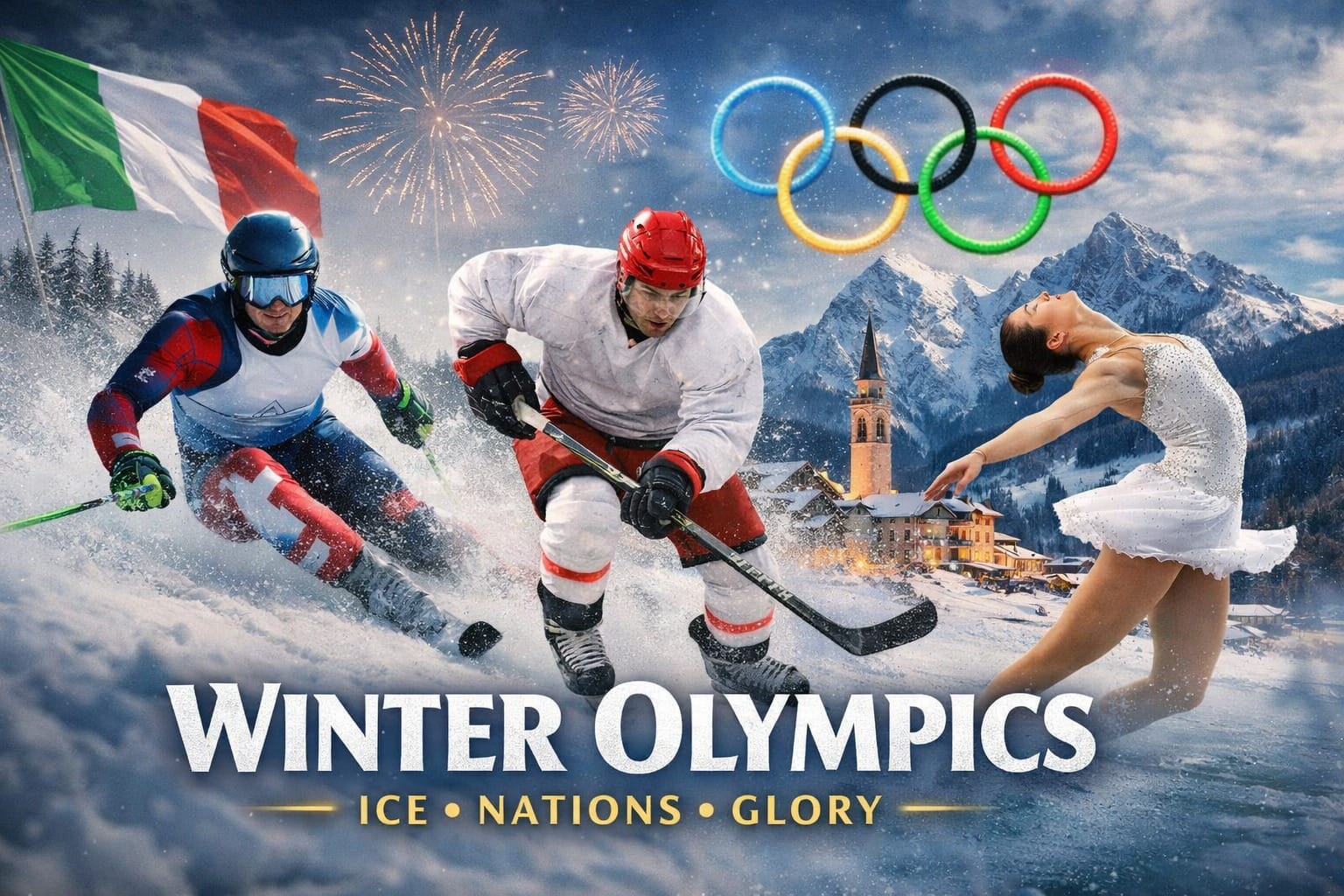
The Winter Olympic Games stand among the world’s most celebrated international sporting events—bringing together elite snow and ice athletes every four years. From its historic foundations in ancient Greece to the world-class competition in Milan-Cortina 2026, this guide covers every essential detail you need to know about the Winter Olympics.
📜 I. The History of the Olympics: From Ancient Greece to Modern Glory
🏛️ Ancient Olympics: The Birth of a Legend
The tradition of competitive sport begins with the Ancient Olympic Games, held in Olympia, Greece. These festivals were staged as early as 776 BCE in honor of the god Zeus and featured athletic competitions among Greek city-states. The Games continued for centuries as a unifying cultural and religious event until their decline in the 4th century CE.
💫 Revival of the Modern Olympic Movement
After centuries without the Games, a renewed passion for international athletics led Baron Pierre de Coubertin of France to propose a global competition. In 1894, the International Olympic Committee (IOC) was formed, and two years later, the first modern Olympic Games were held in Athens, Greece—kickstarting the modern era of Olympic competition.
❄️ II. Origin and Evolution of the Winter Olympics
🌨️ Why Separate Winter Games?
Winter sports like skiing, ice hockey, and figure skating gained popularity in the early 20th century, but they were largely showcased within Summer Olympic programs. The success of winter competitions like Nordic Games (starting in 1901) emphasized the need for a dedicated Winter festival.
🏔️ First Official Winter Games – Chamonix 1924
The first officially recognized Winter Olympic Games were held in 1924 at Chamonix, France, featuring roughly 250 athletes from 16 countries competing in winter disciplines like ice hockey, ski jumping, and speed skating. This marked the beginning of a four-year cycle of winter competitions that has continued nearly every Olympiad since.
🧊 Growth Over Time
Over the decades, the Winter Games expanded from a modest slate of events to a global spectacle with athletes from over 90 nations, dozens of sports, and thousands of competitors. Today, winter competitions include disciplines such as curling, skeleton, biathlon, snowboarding, and more.
🌎 III. What Are the Winter Olympic Games?
The Winter Olympics are a major international multi-sport event featuring sports performed on snow and ice. Held every four years, the Games bring together nations to compete for gold, silver, and bronze medals in a variety of winter disciplines including:
- Alpine & Nordic Skiing
- Figure & Speed Skating
- Ice Hockey
- Snowboarding & Freestyle Events
- Bobsleigh & Luge
- Biathlon & Curling
- Short Track & Cross-Country Skiing
(with new events added regularly)
🇮🇹 IV. Winter Olympics 2026: Host Country & Cities
🗺️ Host Nation: Italy
The 2026 Winter Olympics are hosted by Italy, celebrating the country’s rich winter sports heritage. The Games are officially known as the Milano Cortina 2026 Olympic Winter Games, marking Italy’s third time hosting the Winter edition.
🏙️ Dual Host Cities: Milan & Cortina d’Ampezzo
Unlike traditional Games centered on one city, Milano-Cortina 2026 is one of the most geographically dispersed in history. Events are spread across Milan and mountain resorts like Cortina d’Ampezzo, Bormio, Livigno, and Anterselva, spanning more than 22,000 square kilometers.
This widespread layout promotes a unique blend of urban and alpine experiences—combining Milan’s vibrant culture with the natural beauty of the Italian Dolomites.
🏗️ V. Preparations for Milano-Cortina 2026
🧳 Infrastructure & Venues
Organizers have refurbished existing winter venues and invested in upgraded facilities designed to enhance athlete experience and sustainability. The Games emphasize use of existing infrastructure, reducing environmental impact and cost.
🔥 Security & Operational Planning
Italy has deployed an extensive 24/7 security operation with collaboration from national agencies like Interpol and Europol. Measures include surveillance units, strategic checkpoints, restricted zones, cybersecurity centers, and crowd control systems to ensure athlete and spectator safety.
🕊️ Cultural & Local Representation
Local groups like the Ladins—an indigenous ethnic community in the Dolomites—are advocating for greater cultural recognition during the Games, highlighting the broader social impact of Olympic tourism and celebration.
Also read – The India-EU Trade Agreement Explained: Benefits Indians Will Get
🔥 VI. Torch Relay & Symbolism
The Olympic Torch Relay embodies centuries-old tradition, where the flame is lit in Olympia, Greece, before journeying to the host cities. For 2026, the torch traveled over 12,000 km, visiting Greece, Italy, and Vatican City with 10,001 torchbearers participating in the highlight build-up to the opening ceremony.
🎆 VII. The Opening Ceremony: Milan’s Grand Showcase
📍 Location & Theme
The Opening Ceremony of the 2026 Winter Olympics takes place on February 6, 2026, at the iconic Stadio San Siro in Milan. Titled “Armonia” (Harmony), the ceremony celebrates unity through cultural performances, music, and Olympic tradition.
🎤 Star Performances
International and Italian music icons like Mariah Carey, Laura Pausini, and Andrea Bocelli are scheduled to perform—bringing an unforgettable cultural dimension to the launch of this global event.
🚶 Parade of Nations
In the Parade of Nations, athletes from each country enter the stadium led by their flag bearers. Greece marches first (honoring Olympic origin), with host nation Italy entering last, followed by other delegations in Italian alphabetical order.
🏁 Participation & Scale
The opening ceremony is expected to host thousands of athletes and tens of thousands of spectators, including world leaders, former Olympians, and international dignitaries.
🏆 VIII. Sporting Events & Medal Competitions
📊 Number of Sports and Events
The 2026 Winter Olympics will feature 16 disciplines and 116 medal events, making them one of the most expansive Winter Games in history. New competitions such as ski mountaineering, mixed team Alpine events, and dual moguls expand the diversity of winter competitions.
🌟 Traditional Winter Sports
Key winter sport areas where medals are awarded include:
- Alpine & Nordic Skiing
- Figure & Speed Skating
- Ice Hockey
- Biathlon
- Snowboarding and Freestyle
- Bobsleigh & Skeleton
- Curling
- Luge
Many events also serve as qualifiers for world championships, providing athletes with global rankings and high visibility on the world stage.
🥇 IX. Top Nations & Medal Leaders in Winter Olympic History
🌍 Historical Medal Leaders
Through multiple editions of the Winter Games, certain nations have dominated the medal tables:
- Norway leads all nations historically at the Winter Olympics with the highest combined total of medals and golds.
- United States ranks second in total medals and golds, with consistent podium performances in figure skating, skiing, and snow sports.
- Other strong contenders include Germany, Russia (competing historically as ROC), Canada, and Sweden, especially in ice hockey, speed skating, and Nordic disciplines.
🏅 Memorable Medal Moments
Each Olympiad creates unforgettable moments—like Norway’s record haul of 37 medals at Beijing 2022, Germany’s strong showing in Alpine skiing, and the rise of nations such as the Netherlands in speed skating.
🌐 X. Global Participation & Countries Competing
The Winter Olympics draw participation from 90+ countries, with athletes from across continents. The list includes:
- Traditional winter sport powers such as Norway, USA, Canada, Germany, Sweden
- Alpine nations like Switzerland and Austria
- Emerging contenders from Asia, Oceania, and beyond, such as Japan, South Korea, Australia, and China
(Australia fields one of its largest teams in 2026).
Each country’s Olympic Committee chooses its team based on international rankings, trials, and qualifiers from global winter sport circuits.
📺 XI. Broadcasting & How to Watch
The 2026 Winter Games will be broadcast globally across major networks, with NBCUniversal covering the U.S., BBC in the UK, CBC in Canada, and other national channels sharing curated coverage tailored to local audiences. Streaming options via digital platforms provide live access and on-demand highlights for global fans.
🧠 XII. Fun Facts & Trivia About the Winter Olympics
Here are some engaging Winter Olympic facts that delight sports fans and newcomers alike:
- The Winter Olympics feature sports unique to cold environments—snowboarding, curling, bobsleigh, and skeleton—each with its own global fanbase.
- The Games have expanded from 16 events in 1924 to over 100 events today.
- Women first competed in figure skating and now participate in nearly all winter sports.
🎯 XIII. Legacy and Global Impact
The Winter Olympics go beyond sport—they influence:
- Tourism and local economies
- Winter sport infrastructure expansion
- Youth and grassroots sports participation
- Cultural exchange and global cooperation
For host nations like Italy, the legacy includes improved venues, transport networks, and international visibility that benefit citizens long after the flame is extinguished.
🏁 Conclusion: The Winter Olympics Phenomenon
From Chamonix 1924 to Milano-Cortina 2026, the Winter Olympic Games have grown into a symbol of global unity, athletic excellence, and cultural celebration. With expanding sports, diverse nations, and evolving traditions, each edition writes a new chapter in history—bringing warmth, pride, and competition to the world’s icy arenas.
Whether you’re a seasoned fan or a newcomer to winter sport culture, the Olympics offer unforgettable stories of triumph, resilience, and human spirit.
Subscribe to our YouTube Channel The Logic Stick for more Video insights