







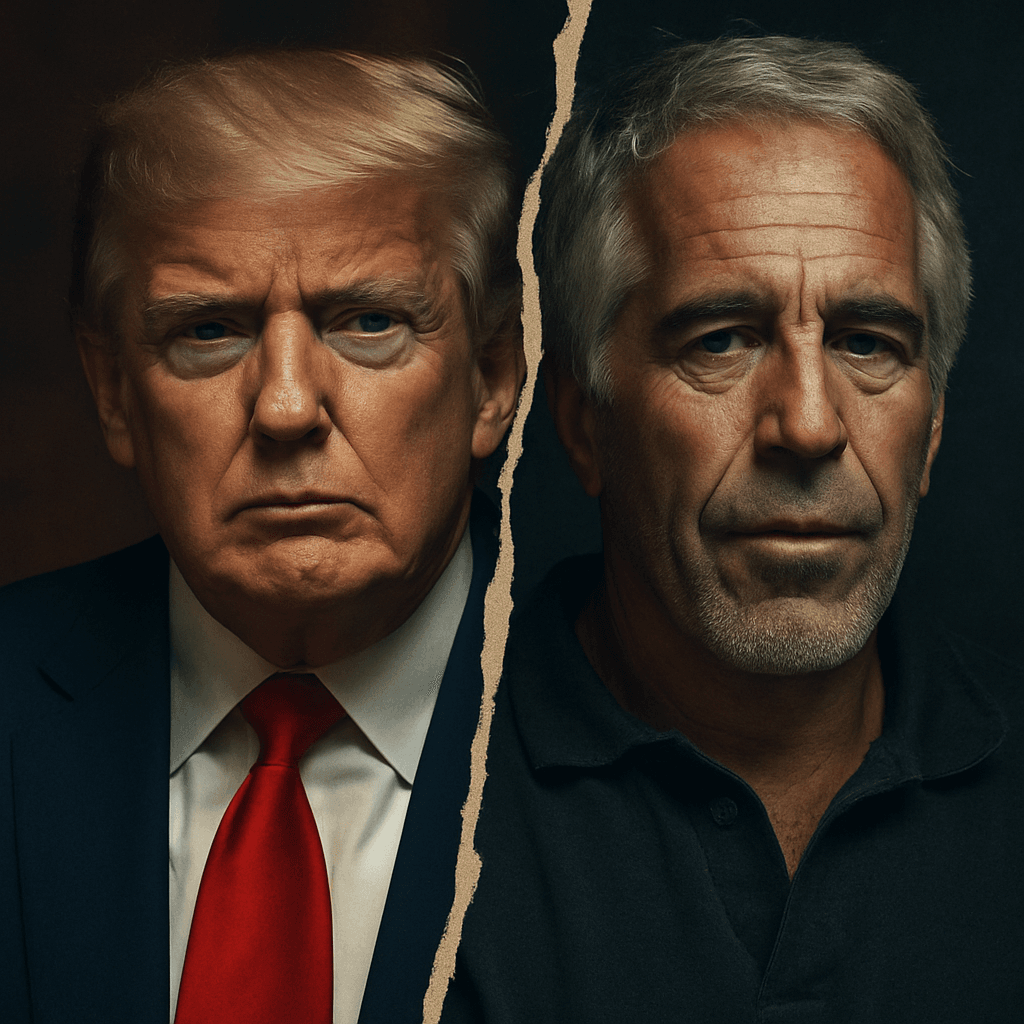
The “Epstein files” and newly surfaced Jeffrey Epstein emails mentioning Donald Trump are dominating headlines again. Between talk of a secret client list, a bipartisan fight in Congress to force more transparency, and emails where Epstein claims Trump “knew about the girls,” it’s hard to separate fact from speculation.
This article walks through:
- What the “Epstein files” actually are
- How much has really been released so far
- A timeline of Trump’s relationship with Jeffrey Epstein
- What the newly revealed emails say – and what they don’t
- How the Trump administration and Congress are now handling the files
- The hard line between allegations, politics, and proven facts
I’ll keep this firmly grounded in what credible outlets, court records, and official documents say, with citations throughout, and I’ll flag clearly where things are disputed or unproven.
1. What Are The “Epstein Files”?
The phrase “Epstein files” is shorthand for the trove of material collected over years of investigations into Jeffrey Epstein and his associates. According to reporting, this includes over 300 GB of records in the FBI’s case system, plus other media. Wikipedia
Broadly, these files cover:
- Flight logs from Epstein’s private jets
- Address books / “black books” with names and contact details
- Bank and financial records
- Court documents from civil and criminal cases
- Emails and correspondence from Epstein and his associates
- Grand jury materials and investigative files (largely still sealed) Wikipedia+1
Epstein’s “little black book” – a contact directory seized in 2005 – has been public in redacted and later unredacted forms. It lists hundreds of names, including Donald Trump, Bill Clinton, Prince Andrew, and others – but being listed there does not automatically mean a criminal relationship; it’s essentially a contact book. Wikipedia+1
Is There A “Client List”?
The idea of a secret “Epstein client list” has become one of the most viral parts of the story. But in July 2025, the U.S. Department of Justice and FBI concluded in a memo that:
- They found no evidence of a blackmail “client list”
- No credible evidence that Epstein was murdered
- No basis to open investigations into uncharged third parties based solely on the files Wikipedia+1
That memo said there is no single list of “clients,” and committed to releasing no further records, a stance that angered both activists and members of Congress across the political spectrum. Wikipedia+1
At the same time, Epstein’s attorney David Schoen has publicly said he does not believe such a client list exists, while other figures (including Alan Dershowitz and Elon Musk at different moments) have implied or claimed knowledge of unreleased names. Wikipedia+1
So far, no verified “master list” of paying clients has been released.
2. What Has Already Been Released?
Pieces of the Epstein files have been emerging for years in waves:
2006–2008: First Investigation & Plea Deal
- Florida authorities and federal prosecutors investigated Epstein in the mid-2000s, leading to a controversial 2008 non-prosecution agreement (NPA) in which Epstein pleaded guilty to state charges but avoided federal sex-trafficking charges. TIME
- That NPA and related documents later became central to public outrage, especially when Epstein was arrested again in 2019.
2019: New Federal Charges & Epstein’s Death
- In 2019, federal prosecutors in New York charged Epstein with sex trafficking of minors.
- He died in jail in August 2019; the official ruling was suicide, though conspiracy theories about his death have never stopped. TIME+1
2020–2024: Ghislaine Maxwell Case & Unsealed Civil Files
- In a defamation case brought by Virginia Giuffre against Ghislaine Maxwell, Judge Loretta Preska ordered a structured unsealing process: anyone named could argue to keep their name sealed until January 1, 2024. Wikipedia+1
- In January 2024, hundreds of pages were unsealed, naming many public figures – among them Trump, Bill Clinton, Prince Andrew, Bill Richardson, Alan Dershowitz, Michael Jackson, Stephen Hawking, and others.
- Most mentions were incidental (e.g., in address books or schedules) and did not accuse those people of crimes. Wikipedia+1
2025: The Trump Administration, DOJ Memo & Backlash
After Trump returned to the presidency, he repeatedly hinted he might “release the Epstein files” and make any client list public. Wikipedia+1
Key developments in 2025:
- February 2025 – Attorney General Pam Bondi, under Trump, releases an initial batch of documents that largely re-package already known materials (flight logs, the black book, prior court filings). The reaction is widespread disappointment from people who expected bombshells. Wikipedia+2TIME+2
- March–May 2025 – According to a letter by Sen. Dick Durbin, the FBI is ordered to put hundreds of staff on around-the-clock review of ~100,000 Epstein records, instructed to flag any document mentioning Trump. Bondi is then briefed that Trump’s name appears in the files among many others, along with “unverified hearsay” and sensitive victim information. Wikipedia+1
- July 2025 – DOJ and FBI publish their memo saying there is no “client list” and no evidence of blackmail or murder, and announcing they will not release further Epstein documents. This angers both right-wing influencers and Democratic lawmakers, who accuse the administration of hiding information. Wikipedia+1
So by mid-2025, a lot of material is public – but many core investigative files, interview transcripts, and internal DOJ/FBI documents remain sealed or heavily redacted.
3. The New Political Fight: “Epstein Files Transparency Act”
Public pressure to “release the list” didn’t stop after the DOJ memo. In Congress, a bipartisan group led by Rep. Thomas Massie (R-KY) and Rep. Ro Khanna (D-CA) sponsored the Epstein Files Transparency Act, demanding that DOJ release all Epstein-related documents within 30 days, with redactions only for victim identities. The Washington Post+1
To force a vote, they used a rarely successful tool: a discharge petition. It needed 218 signatures – a majority of House members.
- In November 2025, newly sworn-in Rep. Adelita Grijalva (D-AZ) became the crucial 218th signature, pushing the petition over the line. New York Post+1
- The petition’s success requires Speaker Mike Johnson to bring the bill to the floor within a set number of legislative days. The Washington Post
- The measure would force DOJ to release all Epstein files, minus identifying details of victims. The Washington Post
Even if it passes the House, it still faces obstacles in the Senate and would need President Trump’s signature. So far, Trump and Senate Majority Leader John Thune have signaled little enthusiasm for it, arguing DOJ has already released “thousands of pages.” The Washington Post
Also read: The Nithari Case Timeline: How Things Turned Out For the Serial Killer Surinder Koli
Meanwhile, the House Oversight Committee has its own ongoing investigation, having already released:
- A large trove (tens of thousands of pages) of investigative records
- Flight logs and appointment lists
- Copies of a “birthday book” signed by prominent figures
- Interview transcripts with key players
But supporters of the discharge petition say this committee process still gives the executive branch too much control over what the public sees. The Washington Post+1
So when people say “everyone is talking about the Epstein files” right now, they’re talking about:
- The DOJ memo denying a client list or cover-up
- The Trump administration’s limited releases and apparent reversal on full transparency
- The House effort to legally force DOJ to release everything
- And now, the newly released emails – which bring Trump into the spotlight even more.
4. Trump And Epstein: A Timeline Of The Relationship
To understand the significance of the new emails, we need the backstory of Trump and Epstein’s relationship as pieced together by court documents and reporting. Wikipedia+1
Late 1980s–1990s: Social Circle In Palm Beach & New York
- Trump and Epstein moved in similar elite circles in Palm Beach and New York. Trump told New York magazine in 2002 he’d known Epstein for about 15 years, describing him as a “terrific guy” who liked “beautiful women” who were “on the younger side.” TIME+1
- NBC and other outlets have aired 1992 footage from Mar-a-Lago showing Trump and Epstein laughing and talking while watching young women dance at a party. TIME
- Businessman George Houraney has described organizing a “calendar girl” party at Mar-a-Lago where Trump and Epstein were effectively the only male guests alongside dozens of women. TIME
- Flight logs from Epstein’s private jet show Trump (along with then-wife Marla Maples and their daughter Tiffany) making several flights in the mid-1990s. These logs were released as part of the DOJ’s document dump in early 2025 but had already been referenced in earlier litigation. TIME+1
2000–2004: Mar-a-Lago, Virginia Giuffre, And Falling Out
- Virginia Roberts Giuffre, later one of Epstein’s best-known accusers, worked at the Mar-a-Lago spa as a teenager and was recruited by Ghislaine Maxwell to work for Epstein around 2000. Wikipedia+1
- Trump has since said he “kicked [Epstein] out” of Mar-a-Lago after Epstein “stole” girls who worked for him – including Giuffre – to be employed by Epstein. Membership records reported by journalists suggest Epstein’s club membership was actually terminated in 2007, which complicates Trump’s timeline but does not definitively resolve exactly when or why the personal break occurred. Wikipedia
- In 2003, Trump allegedly contributed a crude sketch and note to an album for Epstein’s 50th birthday, saying something akin to “may every day be another wonderful secret.” Trump denies writing or drawing this, and has sued Wall Street Journal reporters and News Corp for their reporting on the note. TIME+1
2008–2019: Epstein’s Conviction And Trump’s Distancing
- After Epstein’s 2008 plea deal on sex-related charges, Trump started presenting himself as having been distant from Epstein. By 2019, he said: “I wasn’t a fan” and claimed he hadn’t spoken to Epstein in about 15 years. TIME+1
- Trump has repeatedly said that once he learned about Epstein’s conduct – including allegedly approaching young women at Mar-a-Lago – he banned Epstein from the club. Some details of that story (timing, documentation) remain debated, but lawyers for Epstein’s victims have said Trump told them a version of this story years ago. Wikipedia
2019–2020: Epstein’s Arrest, Death, And Ghislaine Maxwell
- When Epstein was arrested again in 2019 and later died in custody, Trump walked a careful line. He acknowledged knowing Epstein but downplayed the relationship, while at one point publicly wishing Ghislaine Maxwell “well,” comments that drew heavy criticism. Wikipedia+1
5. What The Newly Released Epstein Emails Actually Say
On November 12, 2025, House Democrats on the Oversight Committee released three key emails from Epstein’s estate, spanning 2011, 2015, and 2019. These had been subpoenaed earlier as part of the committee’s ongoing review of roughly 23,000 documents. TIME+2TIME+2
Email 1: 2011 – “The Dog That Hasn’t Barked”
In an April 2011 email exchange between Epstein and Ghislaine Maxwell:
- Epstein referred to Trump as “the dog that hasn’t barked”.
- He claimed that Trump had “spent hours at my house” with a victim whose name is redacted in the public version.
- He noted that despite this, Trump had never been publicly mentioned in connection with Epstein’s crimes. TIME+2Wikipedia+2
The White House later identified the unnamed woman as Virginia Giuffre and pointed out that Giuffre herself has repeatedly said Trump did not abuse her and that he treated her appropriately in their limited interactions. TIME+1
Email 2: 2015 – “Let Him Hang Himself”
In a December 2015 exchange:
- Journalist Michael Wolff told Epstein that CNN planned to ask Trump about his relationship with Epstein in an upcoming debate.
- Epstein asked how Trump should respond if they could help “craft” an answer.
- Wolff suggested that if Trump lied or denied the relationship, Epstein could later use that to either benefit himself or, if it looked like Trump might win, “save him,” thereby creating political leverage. TIME+2TIME+2
This email reads more like media and power-game strategizing than a straightforward confession of a crime – but it does underline that Epstein believed he had potential leverage over Trump.
Email 3: 2019 – “He Knew About The Girls”
A January 2019 email from Epstein to Wolff – written during Trump’s presidency – is the most explosive:
- Epstein again refers to a victim (name redacted) and to “Mar-a-Lago.”
- He claims Trump said he had asked Epstein to “resign” his Mar-a-Lago membership, and then adds that “of course he knew about the girls, as he asked Ghislaine to stop.” TIME+2TIME+2
This line – “he knew about the girls” – is why you’re seeing headlines about “emails where Epstein says Trump knew.”
Crucially:
- This is Epstein’s own characterization, not independent proof.
- It’s not accompanied (in the public record so far) by corroborating documents showing Trump giving such instructions to Maxwell or acknowledging trafficking.
- It is, however, a specific allegation that directly contradicts Trump’s repeated effort to frame himself as distant from Epstein once he understood the scope of his crimes.
6. How Trump’s Team Is Responding
Trump and his White House have pushed back hard on the implications of these emails.
According to reporting from multiple outlets:
- The White House emphasizes that Virginia Giuffre has said Trump never abused her and that he treated her kindly when she briefly met him. TIME+1
- Officials insist that Trump’s interactions with Epstein were limited to social settings and that he had no knowledge of criminal activity. Trump has repeatedly said that once he learned about Epstein’s behavior, he cut him off and banned him from Mar-a-Lago. TIME
- Trump has called the emails politically motivated attacks. At rallies and on social media, he tends to frame the Epstein controversy as a “Democrat hoax” aimed at undermining him while ignoring other powerful figures who knew Epstein. The Washington Post+1
- The White House also leans on the DOJ/FBI memo that found no evidence of a client list or of blackmail targeting “powerful associates,” arguing this shows there was no Epstein-run conspiracy to control Trump or other leaders through secret dirt. Wikipedia+1
Ghislaine Maxwell, in a controversial 2025 interview with the Justice Department’s Deputy Attorney General (who is also Trump’s personal lawyer), said she had never seen Trump in Epstein’s houses in a massage or sexual context and that he was “never inappropriate with anybody.” However, given Maxwell’s own convictions and history of lying about Epstein’s crimes, her comments are widely regarded as self-serving. Wikipedia+1
7. What Do The Emails Actually Prove About Trump?
From a strictly factual standpoint, the new emails show:
- Epstein clearly believed Trump had deeper knowledge of his activities and contacts than Trump has publicly acknowledged. He wrote that Trump “knew about the girls” and had spent “hours” with one of the victims at his home. TIME+2TIME+2
- Epstein and his circle saw Trump as a potential political asset or liability, discussing how to manage public questions about their relationship and how to use Trump’s public narrative for leverage. TIME+1
- Trump and his team continue to deny wrongdoing or detailed knowledge, pointing to Giuffre’s own statements that Trump did not abuse her, to the DOJ memo, and to Trump’s purported decision to bar Epstein from Mar-a-Lago years before the 2019 criminal case. TIME+2Wikipedia+2
What they do not prove (as of now):
- They do not prove that Trump engaged in sex trafficking, rape, or any specific criminal act with Epstein’s victims.
- They do not include direct, contemporaneous evidence (like video, financial instructions related to trafficking, or detailed incriminating admissions from Trump himself).
- They do not overturn the DOJ memo’s conclusion that investigators lacked evidence to charge uncharged third parties based on the files alone. Wikipedia+1
Instead, the emails:
- Intensify the contradiction between Trump’s public effort to minimize the relationship and the picture painted by years of social photos, party footage, flight logs, and now Epstein’s private comments. TIME+1
- Increase political pressure on Trump and DOJ, especially because his own administration has resisted full transparency on the files after promising to release them. The Washington Post+1
8. Where The Timeline Raises The Toughest Questions
Reporters and legal analysts have zeroed in on a few key tension points in the “Epstein files vs. Trump” timeline: Wikipedia+1
- Trump’s changing story about banning Epstein
- Trump has said he barred Epstein from Mar-a-Lago after complaints about his behavior with young women, yet membership logs suggest Epstein remained a member until 2007.
- That doesn’t prove Trump is lying – records can be messy – but it raises doubts about the exact timing and reasons for the “ban.” Wikipedia
- The DOJ memo vs. the push for transparency
- DOJ says there’s no client list and no blackmail scheme and insists further releases would expose victims without providing new answers.
- But the sheer volume of material that remains sealed, plus evidence that officials specifically flagged any Trump-related documents, fuels suspicion of selective transparency. Wikipedia+1
- Epstein’s emails vs. Giuffre’s and Maxwell’s statements
- Epstein’s emails suggest Trump knew more than he let on, even asking Maxwell to “stop” providing him girls – a serious allegation if true. TIME+1
- Giuffre has said Trump did not abuse her; Maxwell claims she never saw Trump in an inappropriate context. Both statements can be true while still leaving open the question of what Trump knew about Epstein’s broader activities. TIME+1
- Trump’s political use of the “Epstein files” narrative
- During prior campaigns, Trump and his allies leaned heavily into speculation about an Epstein “client list” supposedly being hidden by political enemies. Wikipedia+1
- Once in power, Trump’s own DOJ first teased, then dramatically limited, the release of files – a reversal that now looks worse in light of the emails and congressional pressure.
These contradictions don’t equal proof of criminal guilt, but they do explain why public skepticism about Trump’s role – and about the government’s overall handling of the case – remains so intense.
9. Reading The Epstein–Trump Story Without Falling For The Noise
Because the Epstein case touches sex crimes, powerful men, and political tribalism, it’s a magnet for conspiracy narratives. To stay grounded:
- Separate contact from conduct.
Trump undeniably socialized with Epstein – on flights, at parties, in overlapping social circles. That’s well documented. That alone does not prove he participated in Epstein’s crimes. - Treat Epstein’s emails as allegations, not final verdicts.
Epstein claiming Trump “knew about the girls” is important, but it’s still one man’s statement – a man who was a serial abuser and manipulator. The emails need to be weighed alongside other evidence (or lack of it). - Remember DOJ’s position – and its limits.
The DOJ memo concluded there was no prosecutable case against unnamed third parties based on the files as they existed. That doesn’t guarantee there is no damaging information; it means prosecutors did not believe they had enough evidence to bring federal charges. Wikipedia+1 - Notice who is demanding transparency now.
The push for the “Epstein Files Transparency Act” is bipartisan and strongly backed by Epstein’s victims themselves, who argue that sealing records serves powerful people more than it protects survivors. The Washington Post+1 - Be cautious with unverified “lists” or screenshots online.
Many viral images claiming to be “the real client list” are either old documents taken out of context or pure fabrications. Until something is released by a court, DOJ, or a credible outlet, it should be treated skeptically.
10. What Happens Next?
In the near term, three tracks matter most:
- The House vote on the Epstein Files Transparency Act
If the House passes it, the focus shifts to the Senate and then to Trump’s decision whether to sign or veto a bill demanding mass disclosure. The Washington Post+1 - Further releases from the House Oversight Committee
The committee is still processing thousands of pages of materials, including more emails, interview transcripts, and financial records. Additional references to Trump or other high-profile figures could emerge. - Litigation & defamation suits
Trump is already suing outlets over the birthday-book note. More lawsuits could follow over coverage of the new emails, which in turn might force limited discovery or settlement disclosures that shed more light. TIME+1
Bottom Line On Trump And The Epstein Files
- Undisputed:
- Trump and Epstein were part of the same social and business circles for years, appeared together in photos and video, and flew together on Epstein’s jet. TIME
- Epstein saw Trump as someone whose public denials he could potentially exploit, as reflected in the 2015 email with Michael Wolff. TIME+1
- Epstein privately wrote that Trump “knew about the girls,” contradicting Trump’s public attempt to keep the relationship at arm’s length. TIME+2Politico+2
- Also undisputed (by DOJ and the public record so far):
- There is no publicly produced evidence that Trump committed sexual crimes with Epstein’s victims.
- DOJ has not brought charges against Trump in connection with Epstein and says there is no blackmail client list and no basis for new prosecutions based solely on the existing files. Wikipedia+1
- Where the controversy lives:
- Whether Trump knew more than he has admitted.
- Whether his administration has selectively hidden or delayed embarrassing material.
- Whether full release of the Epstein files would fundamentally change the picture, or simply confirm what’s already known.
For now, the new emails deepen the political and moral questions around Trump’s past with Epstein – but they do not, on their own, answer them.
SUBSCRIBE TO OUR YOUTUBE CHANNEL “THE LOGIC STICK” FOR MORE UPDATES AND INSIGHTS
Disclaimer
This article is a news aggregation and analysis piece compiled from publicly available information, credible journalism, official court documents, and verified reporting. It does not make any accusations, legal claims, or determinations of guilt against any individual mentioned. All references to public figures relate solely to information already reported by established news outlets and public records.
Any statements attributed to Jeffrey Epstein, Ghislaine Maxwell, or other third parties reflect their own words as cited in documents or media reports and should not be interpreted as verified fact unless confirmed by legal authority. This content is intended for informational and educational purposes only. The publisher assumes no responsibility for the accuracy of external claims, and readers are encouraged to consult original sources for full context.