







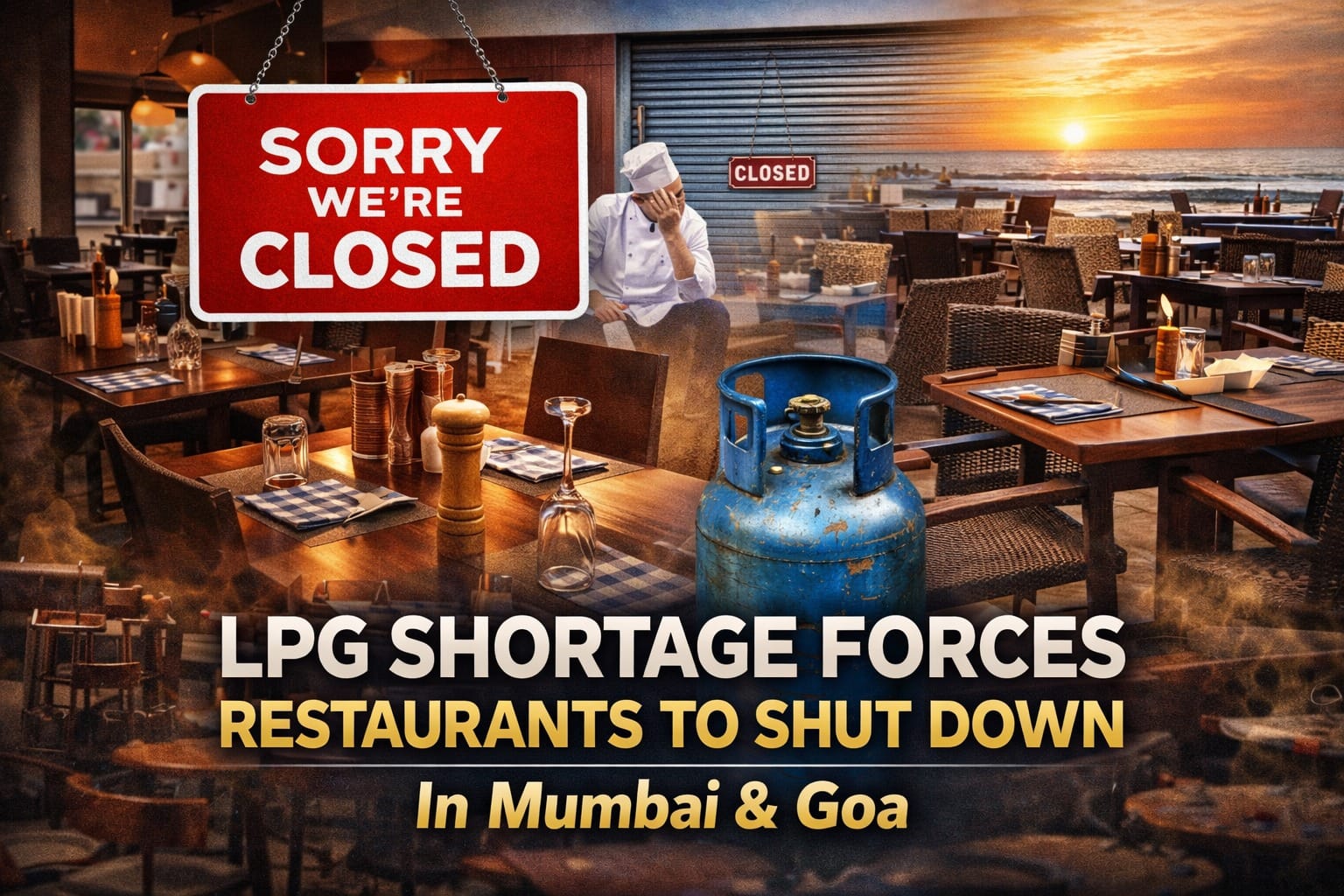
LPG Shortage Forces Restaurants to Shut in Mumbai and Goa on 10th March
India’s restaurant industry is facing an unexpected crisis as a severe shortage of commercial LPG (Liquefied Petroleum Gas) cylinders has begun shutting down kitchens in major food hubs like Mumbai and Goa. Over the past few days, restaurant owners and hospitality associations have warned that if the supply of cooking gas does not improve quickly, thousands of eateries could be forced to temporarily halt operations.
The shortage is already affecting day-to-day restaurant operations, with industry bodies reporting that around 20% of hotels and restaurants in Mumbai have already shut down due to disrupted LPG supply.
Many restaurants that remain open are operating with limited menus or shorter working hours as they try to conserve the little gas they have left.
This crisis has exposed the fragile dependence of India’s food industry on LPG supply chains, and it has raised serious concerns about how geopolitical tensions and supply disruptions can quickly impact everyday businesses.
Why Restaurants in Mumbai and Goa Are Shutting Down
The immediate cause of restaurant closures is the shortage of commercial LPG cylinders, which are essential for cooking in restaurants, hotels, cafés, and roadside eateries.
Unlike households that use smaller domestic cylinders, restaurants rely on large commercial LPG cylinders to operate their kitchens. When these cylinders become unavailable, restaurant kitchens simply cannot function.
Industry bodies have reported that many distributors are unable to deliver new cylinders, forcing restaurants to suspend operations until fresh supplies arrive.
According to the Hotel and Restaurant Association in Mumbai, the supply chain disruption has become severe in the past week, with some areas experiencing a near complete halt in commercial LPG supply.
Restaurants that do not have spare cylinders or alternative cooking systems have had no option but to shut down temporarily.
Mumbai Restaurants Among the Worst Hit
Mumbai, one of India’s largest restaurant markets, has been hit particularly hard by the LPG shortage.
Industry representatives have warned that around 20% of hotels and restaurants in the city have already suspended operations because they cannot obtain LPG cylinders.
Hospitality associations have also warned that up to 50% of restaurants could shut down if the gas shortage continues for several more days.
Popular food hubs across the city — including Dadar, Andheri, and Matunga — have already begun reducing menu items and limiting cooking hours to manage their remaining gas stock.
Many restaurants have removed slow-cooked dishes from their menus because such dishes require long cooking times and consume large amounts of LPG.
Goa’s Hospitality Sector Also Feeling the Heat
The LPG shortage has also begun affecting the hospitality industry in Goa, a state heavily dependent on tourism and restaurants.
Several hotel owners and restaurant operators in Goa have warned that a prolonged LPG shortage could disrupt the entire tourism ecosystem, particularly during peak travel periods.
Restaurants in Goa depend heavily on LPG for cooking seafood, Indian curries, and tandoor dishes that require consistent high heat.
Some hospitality businesses in Goa have already begun installing induction cooktops and electric cooking equipment as a backup measure in case the LPG shortage continues.
However, for large restaurants and hotel kitchens, electric alternatives often cannot fully replace LPG-based cooking systems.
What Caused the LPG Shortage?
The LPG shortage affecting restaurants in India is largely linked to global supply disruptions caused by geopolitical tensions in West Asia.
India imports a significant portion of its LPG from the Middle East. When supply routes are disrupted due to geopolitical conflicts, the availability of LPG in India becomes constrained.
Recent conflicts and tensions in the region have already begun affecting shipping routes and fuel supplies.
Another major factor contributing to the shortage is the government’s decision to prioritise domestic LPG supply for households.
India has more than 1.4 billion people dependent on LPG for cooking at home, and ensuring household supply has been given priority over commercial consumption.
As a result, the hospitality sector has been receiving fewer commercial LPG cylinders.
Also read – The Impact of Iran War on Top 15 Indian Businesses
Restaurants Struggling to Adapt
Restaurant owners across India are trying to adapt to the LPG shortage by implementing several emergency measures.
These include:
Reducing Menu Items
Restaurants are temporarily removing dishes that require long cooking times, such as slow-cooked curries, biryanis, and grilled items.
Shorter Operating Hours
Many eateries are closing earlier in the evening to conserve gas.
Switching to Electric Cooking
Some restaurants are experimenting with induction cooktops and electric stoves.
Using Alternative Fuels
A few kitchens have even started using coal-based tandoors or firewood for cooking.
Despite these adjustments, restaurant owners say that these measures can only offer temporary relief.
Impact on Food Delivery Platforms
The LPG shortage is also beginning to affect food delivery platforms such as Swiggy and Zomato.
As restaurants shut down or reduce their menu offerings, fewer orders are being placed through delivery apps.
Industry observers believe that if the shortage continues for several weeks, food delivery platforms could experience a significant decline in order volumes, which would impact both restaurants and delivery partners.
Industry Bodies Urge Government Intervention
Restaurant associations across India have appealed to the government for urgent intervention.
The National Restaurant Association of India (NRAI) and the Federation of Hotel and Restaurant Associations of India (FHRAI) have urged the government to ensure uninterrupted LPG supply to the hospitality sector.
Industry representatives have argued that restaurants provide an essential service and support millions of jobs across the country.
The restaurant industry in India employs over 8.5 million people, making it one of the largest employment sectors in the country.
Any prolonged shutdown of restaurants could therefore have major economic consequences.
Government Response to the Crisis
The government has acknowledged the concerns raised by the hospitality industry.
Officials have indicated that efforts are underway to stabilise LPG supply chains and ensure that disruptions remain temporary.
Authorities have also invoked provisions under the Essential Commodities Act to monitor supply and prevent hoarding or black-market sales of LPG cylinders.
Oil companies such as Indian Oil, Bharat Petroleum, and Hindustan Petroleum are reviewing distribution patterns to ensure that critical sectors continue receiving gas supply.
However, industry leaders warn that unless commercial LPG distribution improves quickly, restaurants could continue shutting down.
Economic Impact on the Hospitality Industry
The LPG shortage could have significant economic consequences for the hospitality sector.
Mumbai and Goa are among India’s most important food and tourism destinations. Thousands of restaurants, cafés, and hotels operate in these cities.
If the LPG shortage persists, the following impacts could occur:
Loss of Revenue
Restaurants could lose millions of rupees in daily business.
Job Losses
Temporary shutdowns could affect chefs, kitchen staff, waiters, and delivery workers.
Tourism Impact
In tourist destinations like Goa, restaurant closures could affect visitor experiences.
Supply Chain Disruptions
Food suppliers and local vendors could also face reduced demand.
A Warning Sign for the Restaurant Industry
The LPG shortage has also sparked a broader debate about energy dependence in India’s hospitality sector.
Many industry experts believe the crisis highlights the need for restaurants to diversify their energy sources.
Future restaurant kitchens may need to integrate:
- Electric cooking systems
- Induction kitchens
- Hybrid fuel systems
- Energy-efficient cooking equipment
Such diversification could help restaurants become more resilient during energy supply disruptions.
Conclusion
The LPG shortage currently affecting Mumbai and Goa has revealed how vulnerable the restaurant industry can be to disruptions in fuel supply.
With around 20% of restaurants in Mumbai already shutting down and more closures likely if supplies do not improve, the crisis has become a major concern for the hospitality sector.
While restaurants are trying to adapt by reducing menus and switching to alternative cooking methods, the situation remains uncertain.
Unless commercial LPG supply stabilises soon, the shortage could spread further across India’s restaurant industry — affecting businesses, employees, and millions of customers who depend on restaurants for daily meals.
The coming weeks will determine whether this crisis remains a temporary disruption or turns into a deeper challenge for India’s food and hospitality ecosystem.
Subscribe to our YouTube Channel The Logic Stick for more video insights