






Why Iran Hasn’t Lost the War Yet
The ongoing conflict between Iran, Israel and the United States has largely been portrayed as a military confrontation dominated by Israeli air power and American strategic support. Airstrikes, missile interceptions, and military deployments have dominated headlines across the world.
However, many geopolitical analysts argue that Iran has not actually lost the war — and in some ways may even hold a strategic advantage.
While Israel and the United States possess overwhelming military capabilities, Iran has adopted a different strategy. Instead of relying solely on conventional military power, Tehran is using geography, economic pressure, regional diplomacy, and strategic patience to reshape what “victory” means in this conflict.
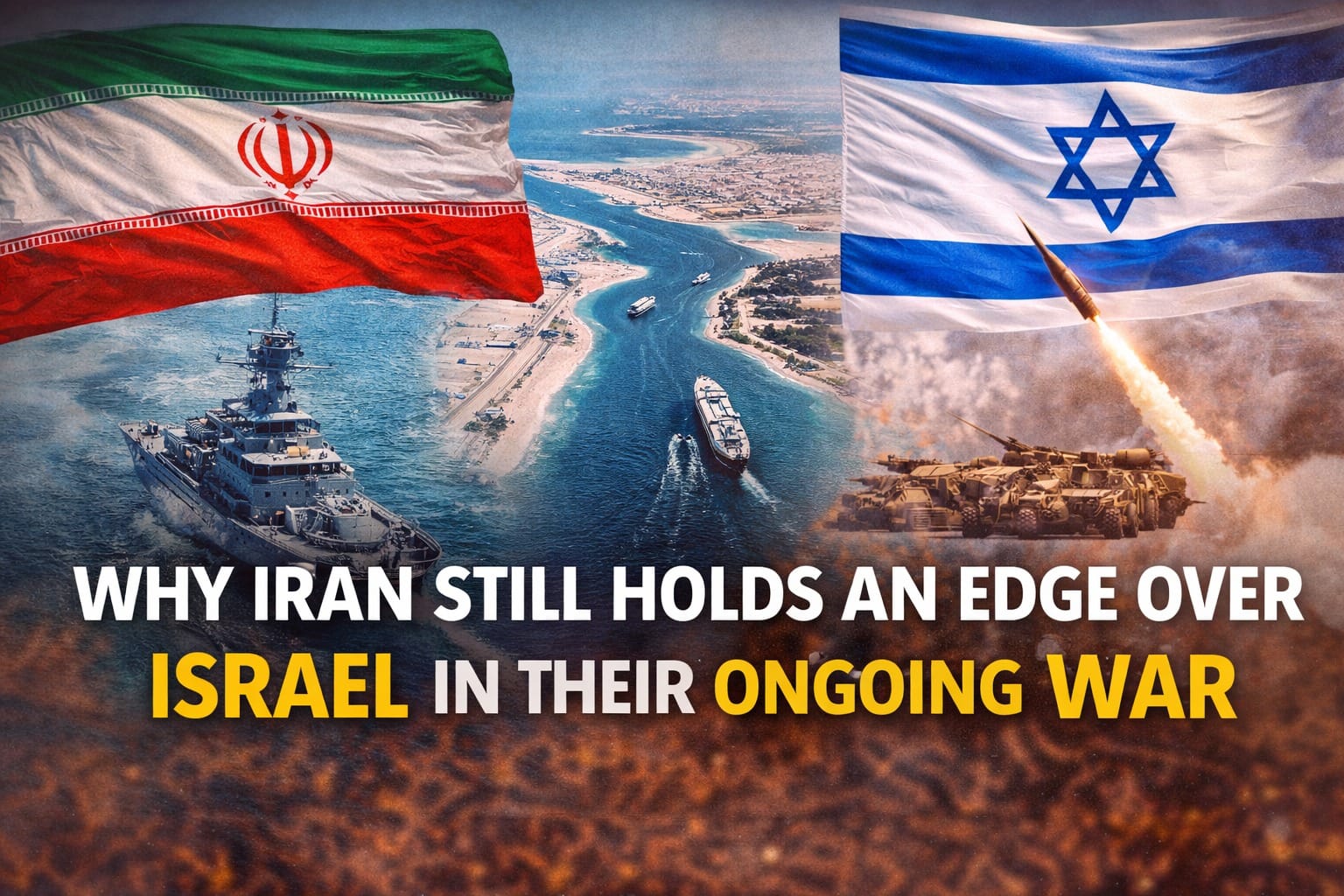
One of the most powerful tools in Iran’s arsenal is not a missile system or fighter jet — it is a narrow waterway known as the Strait of Hormuz.
Understanding how Iran is leveraging this strategic chokepoint, along with its diplomatic maneuvers and defensive strategies, helps explain why the war is far more complex than it appears on the surface.
The Strait of Hormuz: Iran’s Most Powerful Strategic Weapon
The Strait of Hormuz is one of the most important energy corridors in the world.
Located between Iran and Oman, this narrow waterway connects the Persian Gulf to global shipping routes. Every day, nearly 20% of the world’s oil supply passes through this corridor, making it the most critical oil chokepoint on the planet.
Major oil exporters relying on this route include:
- Saudi Arabia
- Iraq
- Kuwait
- Qatar
- United Arab Emirates
- Iran itself
Because so much of the world’s energy supply moves through this narrow passage, even a small disruption can trigger massive consequences for global markets.
Iran’s geographic control over the northern side of the Strait gives it a powerful strategic advantage. In times of conflict, Tehran can threaten shipping routes, inspect vessels, or slow down maritime traffic.
This ability allows Iran to turn energy supply into geopolitical leverage.
In other words, while Israel and the United States may dominate the airspace militarily, Iran can influence global economic pressure points.
Iran’s “Permission System” Strategy
One of the most interesting developments in the conflict has been Iran’s attempt to introduce a form of maritime control system in the Strait of Hormuz.
Reports suggest that Iran has indicated that certain countries may continue oil shipments through the Strait only after obtaining permission or cooperation from Tehran.
While such a system may not be formally institutionalized, the message behind it is clear:
countries that maintain diplomatic engagement with Iran may face fewer disruptions in oil trade.
Countries such as China and India, both major energy importers, have maintained relatively balanced diplomatic relations with Iran. This has allowed them to continue engaging economically even during periods of geopolitical tension.
By signaling that cooperative countries can continue trade while adversarial states face disruptions, Iran is effectively raising the economic cost of opposing it.
This strategy shifts the battlefield from missiles to energy markets and trade diplomacy.
Redefining Victory in Modern Warfare
Traditionally, victory in war is measured through territorial gains or military dominance.
Iran appears to be redefining victory in a different way.
Instead of attempting to defeat Israel militarily — which would be extremely difficult given Israel’s advanced technology and American backing — Iran is focusing on changing the strategic environment of the conflict.
This includes:
- increasing the financial cost of prolonged war
- creating pressure on global energy markets
- forcing diplomatic negotiations
- strengthening regional alliances
If the war becomes too expensive or politically costly for its adversaries, Iran can claim strategic success without necessarily winning militarily.
This approach reflects a broader doctrine known as asymmetric warfare, where a weaker military power offsets the strength of its opponent through unconventional strategies.
Iran’s Diplomatic Ceasefire Strategy
Another strategic move by Iran has been its approach to ceasefire negotiations.
Rather than simply calling for a halt to hostilities, Iranian leadership has proposed ceasefire terms that are intentionally difficult for Israel and the United States to accept.
These conditions reportedly include:
- Reparations for damage caused during the conflict
- Guarantees that future aggression against Iran will not occur
- Recognition of Iran’s sovereign right to pursue its nuclear program within agreed frameworks
Such demands serve a diplomatic purpose.
If Israel or the United States reject these terms, Iran can argue on the global stage that it attempted diplomatic resolution while its opponents refused.
This shifts the narrative of the conflict in international forums.
In diplomatic warfare, perception often matters as much as battlefield outcomes.
Raising the Cost of War for the United States
Another key element of Iran’s strategy is to increase the cost of continued military operations for its adversaries.
Modern warfare is incredibly expensive.
Air campaigns, naval deployments, and missile defense systems cost billions of dollars to maintain.
By sustaining prolonged tensions in the region, Iran forces the United States to keep military assets deployed across the Middle East.
This includes:
- aircraft carrier strike groups
- missile defense systems
- air bases across the Gulf
- intelligence and surveillance operations
Each day that the conflict continues, the financial burden grows.
At the same time, Iran’s own strategy relies heavily on relatively inexpensive missile and drone systems, which are much cheaper to deploy.
This economic imbalance allows Iran to sustain pressure while forcing its opponents to spend far more resources.
Iran’s Regional Influence
Another reason Iran remains strategically relevant in the conflict is its network of regional allies and influence groups.
Iran has long cultivated relationships with organizations and political actors across the Middle East.
These include groups in:
- Lebanon
- Syria
- Iraq
- Yemen
While these alliances are controversial and often criticized by Western governments, they provide Iran with strategic depth.
Instead of fighting a single front, Iran’s adversaries must consider multiple potential theaters of escalation.
This regional network acts as a deterrence mechanism, complicating any attempt to isolate Iran militarily.
Also read – Unbelievable Mossad Operations in Iran
Defensive Strategies Inside Iran
Despite facing advanced airstrikes, Iran has invested heavily in defensive infrastructure designed to withstand prolonged conflict.
These measures include:
Underground Military Facilities
Iran has built extensive underground missile bases and nuclear facilities designed to survive air attacks.
These installations are often buried deep inside mountains or reinforced bunkers.
Missile Deterrence
Iran possesses one of the largest ballistic missile arsenals in the Middle East.
These missiles serve primarily as deterrence tools, signaling that any attack on Iran could trigger retaliation.
Drone Warfare
Iran has become a global leader in affordable drone technology.
These drones are capable of surveillance, targeting, and offensive strikes.
Cyber Warfare
Iran has also invested heavily in cyber capabilities, allowing it to disrupt infrastructure and digital networks of its adversaries.
Together, these defensive strategies make Iran a difficult target for conventional military campaigns.
The Global Energy Dimension
The war’s impact extends far beyond the Middle East.
Any disruption in the Strait of Hormuz immediately affects global oil prices.
Countries heavily dependent on imported oil — including India, China, Japan, and many European nations — closely monitor developments in the region.
If shipping routes become unstable, oil prices could surge dramatically.
Higher energy costs lead to:
- inflation
- higher transportation costs
- increased manufacturing expenses
- economic slowdowns
This global economic pressure increases the incentive for diplomatic resolution.
The Role of Global Diplomacy
Iran’s strategy also involves appealing to international audiences.
By presenting itself as open to negotiation while highlighting economic disruptions caused by the conflict, Tehran attempts to build diplomatic sympathy in parts of the world.
Countries that rely heavily on Middle Eastern energy often advocate for de-escalation rather than prolonged war.
This international pressure can influence how long major powers remain involved in the conflict.
Why Israel Still Holds Military Superiority
Despite Iran’s strategic advantages, Israel still maintains clear military superiority in several areas.
Israel’s strengths include:
- advanced air force capabilities
- sophisticated missile defense systems
- intelligence superiority
- strong military support from the United States
These advantages mean Israel can conduct precision strikes and maintain technological dominance.
However, military superiority does not always translate into strategic victory in complex geopolitical conflicts.
The War of Narratives
Another battlefield in the conflict is information.
Both sides are attempting to shape the global narrative around the war.
Iran portrays itself as defending sovereignty against foreign aggression.
Israel frames its operations as necessary for national security and regional stability.
Public perception plays a significant role in determining how international actors respond.
Where the War Could Be Headed
Several scenarios could unfold in the coming months.
Prolonged Strategic Standoff
The conflict could continue as a series of limited strikes and economic pressure tactics.
Diplomatic Negotiations
International mediation could eventually lead to renewed nuclear negotiations.
Regional Escalation
If additional actors become involved, the war could expand across the Middle East.
The outcome will depend on both military developments and diplomatic engagement.
Conclusion
The ongoing conflict between Iran, Israel, and the United States is far more complex than a simple military confrontation.
While Israel possesses overwhelming technological and military capabilities, Iran is leveraging geography, energy markets, regional alliances, and diplomatic strategy to reshape the dynamics of the war.
Control over the Strait of Hormuz, one of the most critical energy routes in the world, provides Iran with a powerful strategic lever that can influence global economics.
By increasing the cost of prolonged conflict and redefining the meaning of victory, Iran has demonstrated that wars in the modern era are not fought only on battlefields — they are fought through economics, diplomacy, and strategic patience.
For this reason, despite the ongoing airstrikes and military pressure, many analysts argue that Iran has not lost the war — and may still hold a strategic edge in the broader geopolitical contest.
Subscribe to our YouTube Channel The Logic Stick for more video insights