







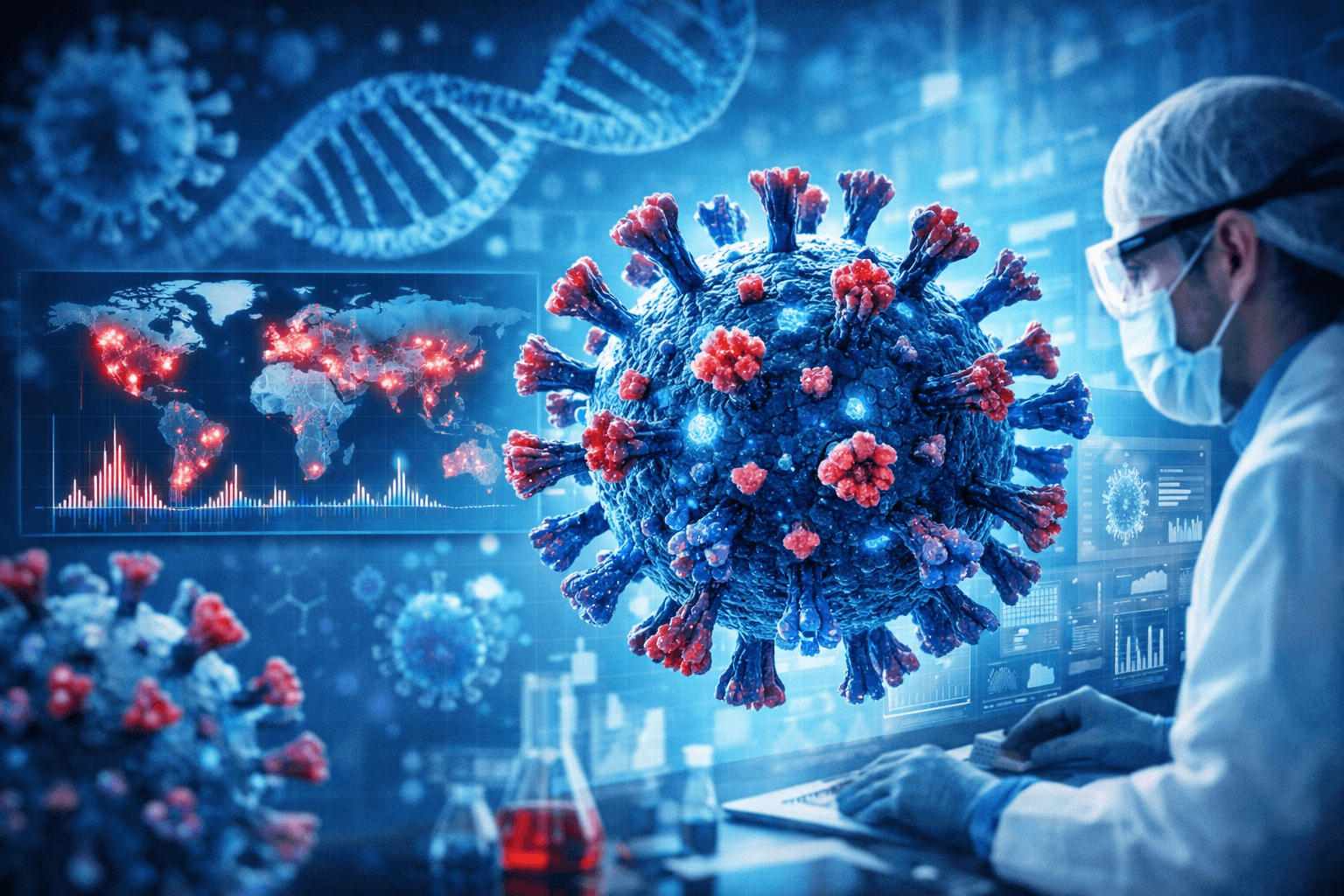
New Covid Variant BA.3.2: Symptoms, Vaccine Effectiveness, and Why Experts Are Concerned
The emergence of the new Covid variant BA.3.2 has once again brought global attention back to the evolving nature of the coronavirus. While the world has largely moved into a post-pandemic phase, scientists and health agencies are closely monitoring this latest mutation due to its potential to evade immunity and spread silently across populations.
Recent reports suggest that this variant is already circulating widely across multiple regions, particularly in the United States, with early indicators showing its presence in wastewater and clinical samples. While there is no immediate cause for panic, the characteristics of BA.3.2 have raised fresh questions about vaccine effectiveness, symptom patterns, and preparedness for future waves.
This detailed report breaks down everything you need to know about the new Covid variant BA.3.2, including its origin, symptoms, vaccine response, global spread, and expert insights.
What Is the New Covid Variant BA.3.2?
The new Covid variant BA.3.2 is a sublineage of the Omicron strain of SARS-CoV-2. It is genetically distinct from previously dominant variants like JN.1, which circulated widely through 2024 and 2025.
Researchers have identified BA.3.2 as a heavily mutated variant, with approximately 70 to 75 mutations in its spike protein—the part of the virus responsible for infecting human cells.
These mutations are significant because they:
- Increase transmissibility
- Enhance immune evasion
- Potentially reduce vaccine effectiveness
The variant was first detected in late 2024 and has since spread across multiple countries, with growing detection in wastewater samples—often an early indicator of widespread community transmission.
How Widely Is BA.3.2 Spreading?
According to early reports, the new Covid variant BA.3.2 has already been detected in over 20–25 regions, particularly across the United States.
However, experts believe the actual spread is much wider than reported because:
- It has been found in airplane wastewater samples
- It appears in community wastewater across multiple states
- Only a limited number of clinical cases have been confirmed so far
Wastewater surveillance is a key tool in tracking Covid variants, and the presence of BA.3.2 in multiple samples suggests that community transmission is already underway.
Globally, the variant has also been identified in more than 20 countries, reinforcing concerns about its international spread.
Know the latest updates on the Iran Israel war.
Why Experts Are Concerned About BA.3.2
The primary concern surrounding the new Covid variant BA.3.2 is its ability to evade immune protection.
1. Immune Escape Potential
Laboratory studies indicate that BA.3.2 can bypass antibodies generated from previous infections or vaccinations.
This means:
- Reinfections could become more common
- Vaccinated individuals may still get infected
- Booster shots may need updating
2. Genetic Distinction
Unlike many recent variants, BA.3.2 is genetically different from the dominant JN.1 lineage, which current vaccines are designed to target.
This raises the possibility that:
- Existing vaccines may offer reduced protection against infection
- New vaccine formulations might be required
3. High Mutation Count
The unusually high number of spike mutations increases the virus’s ability to:
- Attach to human cells more efficiently
- Spread faster across populations
Symptoms of the New Covid Variant BA.3.2
So far, the symptoms associated with the new Covid variant BA.3.2 appear to be similar to previous Omicron variants.
Common Symptoms Include:
- Fever
- Fatigue
- Cough
- Sore throat
- Runny nose or nasal congestion
- Headache
- Body aches
Less Common Symptoms:
- Loss of taste or smell
- Night sweats
- Mild respiratory discomfort
Most cases reported so far have been mild and cold-like, similar to recent Covid waves.
Importantly, there is no clear evidence yet that BA.3.2 causes more severe illness compared to earlier variants.
Does the Vaccine Work Against BA.3.2?
One of the biggest questions surrounding the new Covid variant BA.3.2 is whether current vaccines remain effective.
What Experts Say:
- Current vaccines may offer reduced protection against infection
- However, they are still expected to protect against severe disease and hospitalization
- Vaccine updates may be required if the variant becomes dominant
Because BA.3.2 is genetically distinct from current vaccine targets, experts are already discussing the need for next-generation vaccines tailored to new variants.
This is not unusual—Covid vaccines have been updated before to match evolving variants.
Is BA.3.2 More Dangerous?
At present, there is no evidence that the new Covid variant BA.3.2 is more deadly or severe.
Key observations:
- Most infections are mild
- Hospitalization rates remain stable
- All early reported patients have recovered
However, experts caution that:
- Data is still limited
- Variants can evolve further
- Vulnerable populations remain at risk
How BA.3.2 Compares to Previous Variants
| Variant | Key Feature | Severity | Vaccine Impact |
|---|---|---|---|
| Delta | High severity | Severe | Moderate |
| Omicron (BA.1) | Highly transmissible | Mild–Moderate | Reduced |
| JN.1 | Dominant 2024 variant | Mild | Moderate |
| BA.3.2 | High mutations, immune escape | Mild (so far) | Potentially reduced |
The new Covid variant BA.3.2 stands out primarily due to its mutation profile and immune evasion capability, rather than increased severity.
How Is BA.3.2 Being Tracked?
Health agencies like the CDC and WHO are using advanced surveillance methods to monitor BA.3.2:
1. Wastewater Surveillance
Detects early spread in communities
2. Genomic Sequencing
Identifies mutations and variant lineage
3. Clinical Testing
Tracks confirmed cases and symptoms
These tools allow authorities to identify new variants early and respond proactively.
Should You Be Worried?
For the general public, the emergence of the new Covid variant BA.3.2 is a reminder—not a reason for panic.
What You Should Do:
- Stay updated with official health advisories
- Maintain basic hygiene practices
- Consider booster doses if recommended
- Monitor symptoms, especially in vulnerable individuals
For most people, the risk remains manageable, especially with prior immunity from vaccination or infection.
What This Means for the Future of Covid
The rise of BA.3.2 reinforces a key reality:
Covid-19 is no longer a pandemic emergency—but it is still evolving.
Experts believe:
- New variants will continue to emerge
- Vaccines will require periodic updates
- Surveillance systems will play a critical role
The focus is shifting from elimination to long-term management of the virus.
FAQs on New Covid Variant BA.3.2
1. What is the new Covid variant BA.3.2?
It is a mutated Omicron subvariant with high immune escape potential.
2. What are the symptoms of BA.3.2?
Mostly mild symptoms like cough, fever, fatigue, and sore throat.
3. Can vaccines protect against BA.3.2?
They may offer reduced protection against infection but still protect against severe illness.
4. Is BA.3.2 more dangerous?
No evidence currently suggests increased severity.
5. Where has BA.3.2 been detected?
It has been found in the U.S. and multiple countries through wastewater and clinical samples.
Conclusion
The new Covid variant BA.3.2 is a significant development in the ongoing evolution of SARS-CoV-2. While it shows enhanced immune escape and widespread early detection, current data suggests that it does not lead to more severe illness.
However, its ability to potentially bypass existing immunity and spread quietly makes it a variant worth monitoring closely.
As the world continues to adapt to Covid as an endemic virus, variants like BA.3.2 highlight the importance of vigilance, scientific innovation, and public awareness.
The key takeaway is simple:
Stay informed, stay prepared, but don’t panic.