






Iran Allows India Pakistan Strait of Hormuz Access: Inside the Strategic Shift Reshaping Global Trade.
Introduction: A Strategic Shift in the Middle East Crisis
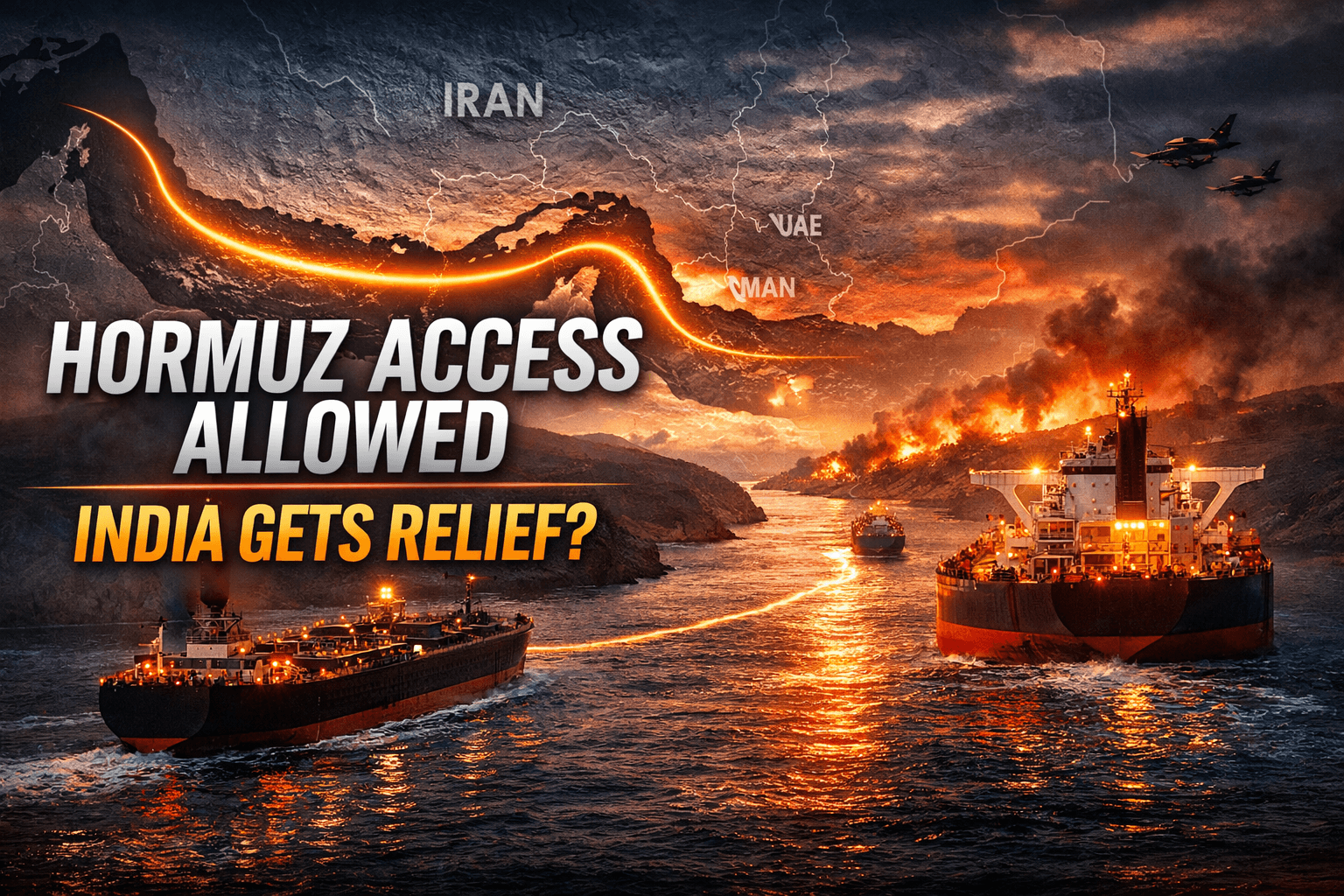
In a major geopolitical development amid the ongoing Iran–US–Israel conflict, Iran has announced that only “friendly nations” will be allowed to pass through the strategically crucial Strait of Hormuz. Among these countries are India, Pakistan, China, Russia, and Iraq, marking a selective reopening of one of the world’s most important maritime chokepoints.
This decision comes at a time when tensions in West Asia have disrupted global energy supplies, pushed oil prices upward, and triggered fears of a prolonged economic shock. Iran’s move is not just a tactical decision—it is a calculated geopolitical signal that could reshape trade routes, alliances, and global energy dynamics.
What Is the Strait of Hormuz and Why It Matters
The Strait of Hormuz is one of the most critical waterways in the world, connecting the Persian Gulf to the Gulf of Oman and the Arabian Sea. Nearly 20% of global oil shipments pass through this narrow stretch, making it the lifeline of global energy trade.
- It handles massive oil exports from countries like Saudi Arabia, UAE, Iraq, and Iran
- It is a key route for liquefied natural gas (LNG) shipments
- Any disruption here directly impacts fuel prices globally
Because of its strategic importance, even minor disruptions in Hormuz can trigger global economic instability.
Read more on the Transgender Amendment Bill here.
Iran’s “Friendly Nations Only” Policy Explained
Iran’s Foreign Minister Abbas Araghchi confirmed that vessels from select countries will be allowed safe passage through the strait, despite ongoing hostilities.
Countries Allowed
- India
- Pakistan
- China
- Russia
- Iraq
- (Reports also suggest Bangladesh and Malaysia in some cases)
Who Is Blocked
- United States
- Israel
- Western allies supporting military actions
Iran has made it clear that only “non-hostile” or “friendly” vessels will be permitted, and even those must coordinate with Iranian authorities.
This effectively turns the Strait of Hormuz into a controlled geopolitical gate, rather than an open international passage.
Why Iran Took This Decision
1. Strategic Retaliation
The move comes after US and Israeli strikes on Iranian targets, which triggered the ongoing conflict. Iran initially restricted the strait but later adopted a selective access approach.
2. Economic Leverage
By controlling access, Iran gains leverage over:
- Global oil supply chains
- Fuel prices
- Trade dependencies
Reports suggest Iran may even introduce transit fees or “toll systems” for ships.
3. Diplomatic Signalling
Allowing India and others signals:
- Continued cooperation with neutral or friendly nations
- A divide between allies and adversaries
This is Iran’s way of saying: “You’re either with us—or against us.”
Impact on India: A Strategic Advantage
For India, this decision comes as a major relief.
Energy Security Boost
India has already resumed purchasing Iranian LPG after years of halted trade due to sanctions.
- First LPG cargo expected soon
- Helps ease domestic fuel shortages
- Reduces dependency on expensive alternate sources
Safe Passage for Indian Ships
Indian vessels have successfully navigated the strait under this policy, with government assurance of safety.
Diplomatic Neutrality Pays Off
India’s balanced stance in the conflict has:
- Prevented it from being labeled “hostile”
- Secured continued access to critical trade routes
This reinforces India’s position as a strategically neutral yet influential global player.
Risks Still Remain for India
Despite the relief, the situation is far from stable.
1. Navigation Hazards
Indian ships face:
- GPS disruptions
- Risk of underwater mines
- Security threats in the region
2. Conditional Access
Access depends on Iran’s approval, meaning:
- It can be revoked anytime
- Trade flows remain uncertain
3. Rising Insurance and Shipping Costs
War conditions increase:
- Maritime insurance premiums
- Freight costs
Global Impact: A New Energy Crisis Brewing?
Oil Prices and Supply Shock
With restricted access:
- Oil prices have surged globally
- Supply chains are disrupted
- Countries are scrambling for alternatives
The strait’s reduced traffic has already caused significant economic stress.
Shift in Global Alliances
Iran’s selective policy may lead to:
- Stronger ties with Asian economies
- Isolation of Western nations in energy routes
Fragmentation of Global Trade
Instead of open trade routes, the world may move toward:
- Controlled corridors
- Political alignment-based trade
Military and Geopolitical Tensions Around Hormuz
The Strait of Hormuz has become a focal point of military escalation:
- Iran claims control over the strait
- US and allies are considering escort missions
- Israeli strikes have targeted Iranian naval assets
This makes Hormuz not just a trade route—but a potential war zone.
Legal and International Concerns
Under international maritime law (UNCLOS), the Strait of Hormuz should allow “innocent passage” for all ships.
However, Iran’s actions:
- Challenge global maritime norms
- Raise questions about sovereignty vs international rights
Critics argue this could set a dangerous precedent for other strategic waterways.
What Happens Next? Possible Scenarios
1. Continued Selective Access
Iran may continue allowing friendly nations while blocking adversaries.
2. Full Closure
If tensions escalate, Iran could shut the strait entirely—triggering a global crisis.
3. International Intervention
US or allied naval forces may attempt to secure open passage.
4. Negotiated Settlement
Diplomatic talks could restore normal operations.
Conclusion: A Turning Point in Global Trade Politics
The decision by Iran to allow only select countries—including India and Pakistan—to use the Strait of Hormuz marks a significant shift in global geopolitics. It reflects a world where trade routes are no longer neutral but influenced by political alignment and strategic interests.
For India, this is both an opportunity and a warning:
- Opportunity to secure energy supplies
- Warning of fragile dependencies in a volatile region
As the conflict unfolds, the Strait of Hormuz will remain at the center of global attention—because whoever controls it, controls a large part of the world’s energy future.