







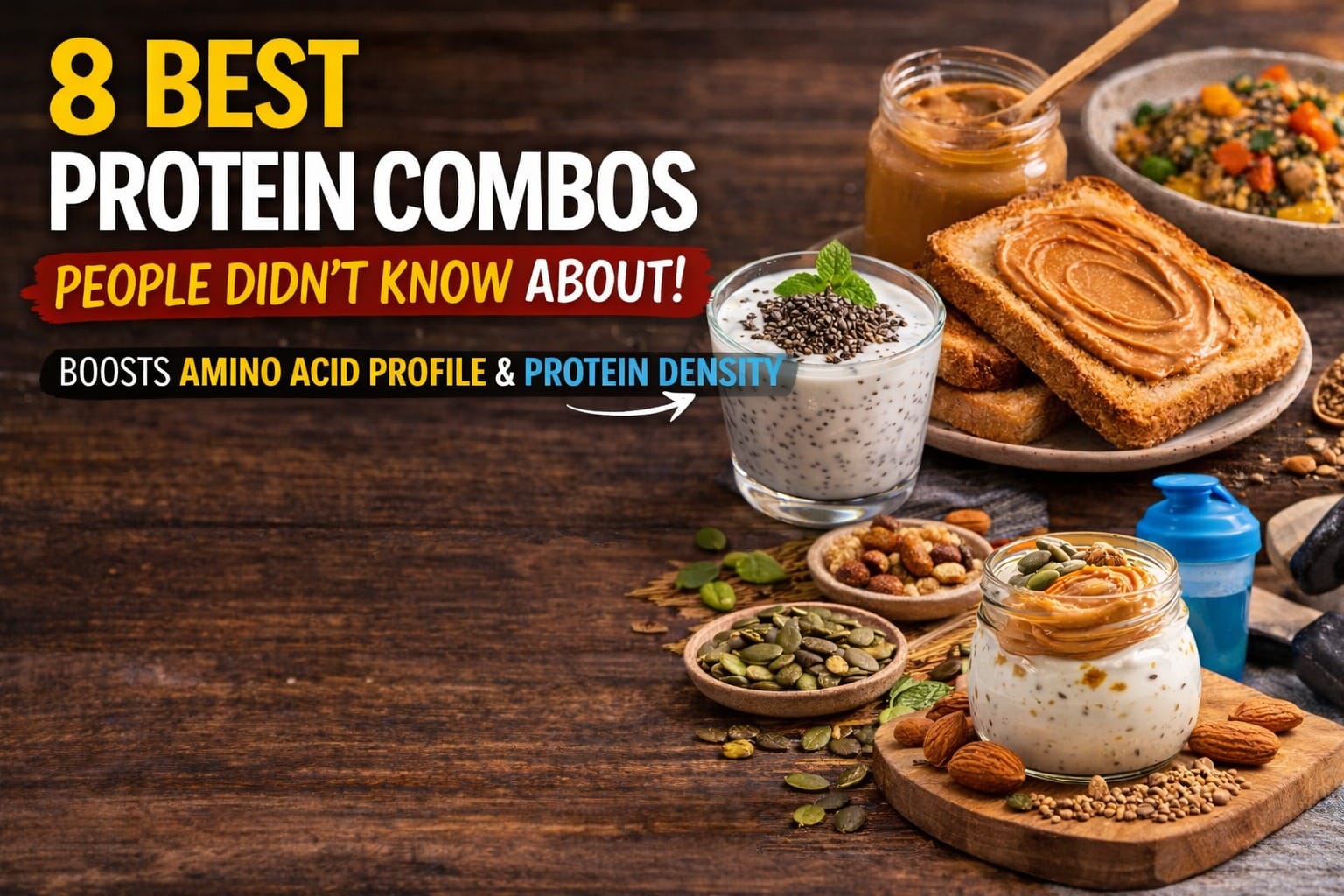
8 Powerful Veg Protein Combos
Protein is one of the most discussed nutrients in modern health and fitness conversations. Whether someone wants to build muscle, improve metabolism, support weight loss, or simply maintain overall health, protein plays a central role in the body. However, many people believe that high protein intake is possible only through meat, eggs, or expensive protein powders.
The reality is very different.
There are several powerful vegetarian protein combinations that significantly improve both protein density and amino acid profile, making them highly effective for muscle repair, digestion, and overall health. When certain foods are combined strategically, they create a more complete amino acid profile, meaning the body absorbs protein more efficiently.
In this article, we explore eight powerful protein combinations most people don’t know about that can help increase daily protein intake naturally without relying on supplements.
Why Protein Combinations Matter
Protein is made up of amino acids, which are the building blocks of muscles, enzymes, hormones, and tissues. There are 20 amino acids, out of which 9 are essential, meaning the body cannot produce them and they must come from food.
Many plant-based foods contain protein but lack one or more essential amino acids. This is why combining foods can dramatically improve protein quality.
Benefits of combining protein sources include:
• Improved amino acid balance
• Better digestion and absorption
• Higher bioavailability
• More sustained energy
• Better muscle repair and recovery
Now let’s explore the best vegetarian protein combinations you can include in your daily diet.
8. Chia Seeds with Curd (Dahi)
Protein: 12–14 grams
A surprisingly powerful protein combination is chia seeds soaked in curd (dahi). Chia seeds are rich in plant protein, omega-3 fatty acids, fiber, and antioxidants, while curd provides high-quality dairy protein and probiotics.
How to prepare
Add 1 teaspoon of chia seeds to 1 cup of curd and let it soak for 10–15 minutes.
Why this combo works
Curd improves gut health because of probiotics, while chia seeds provide fiber and protein. Together they improve digestion while increasing protein intake.
Benefits
• Supports digestion
• Improves gut health
• Boosts protein intake
• Helps with satiety
7. Buckwheat (Kuttu) with Buttermilk
Protein: Around 15 grams
Buckwheat, also known as kuttu, is widely used during fasting but is actually one of the most underrated protein sources.
How to consume
Prepare buckwheat flour roti or porridge and pair it with half a cup of buttermilk.
Why this combo works
Buckwheat contains a strong amino acid profile including lysine, which many grains lack. Buttermilk adds additional protein and improves digestion.
Benefits
• Gluten-free protein source
• Supports digestion
• Improves amino acid balance
• Sustained energy release
6. Amaranth (Rajgira) with Nuts
Protein: 15–16 grams
Amaranth, also known as rajgira, is one of the rare plant foods considered a complete protein.
How to consume
Prepare 1 cup of amaranth porridge and add one tablespoon of mixed nuts.
Why this combo works
Amaranth already contains most essential amino acids, and nuts add additional healthy fats and protein.
Benefits
• High-quality vegetarian protein
• Good for bone health
• Rich in magnesium and iron
• Supports muscle recovery
5. Peanut Butter with Whole Wheat Toast
Protein: Up to 18 grams
This is one of the easiest protein combinations that many people consume without realizing its nutritional value.
How to consume
Spread 2 tablespoons peanut butter on two slices of whole wheat toast.
Why this combo works
Peanuts provide protein and healthy fats while whole wheat adds additional amino acids and fiber.
Benefits
• Quick breakfast option
• High satiety
• Supports muscle building
• Sustained energy release
4. Hung Curd Dip with Pumpkin Seeds
Protein: 18–20 grams
Hung curd, also called strained yogurt, is highly concentrated in protein.
How to consume
Mix 70 grams hung curd with 2 tablespoons pumpkin seeds to make a dip.
Why this combo works
Hung curd has excellent protein bioavailability, while pumpkin seeds add plant protein, magnesium, and zinc.
Benefits
• High protein snack
• Boosts immunity
• Supports bone health
• Improves protein density
Also read – Microbiome Health is the Future of Workouts
3. Greek Yogurt with Hemp Seeds
Protein: About 24 grams
This combination is one of the best vegetarian protein meals in terms of bioavailability.
How to consume
Add 2 tablespoons hemp seeds to 1 cup Greek yogurt.
Why this combo works
Greek yogurt is extremely rich in protein, and hemp seeds contain all essential amino acids.
Benefits
• Excellent muscle recovery food
• Rich in omega-3 fatty acids
• Improves metabolism
• Supports gut health
2. Quinoa with Curry (Dal or Vegetable Curry)
Protein: Around 25 grams
Quinoa is widely recognized as a complete plant protein and pairs beautifully with Indian curries.
How to consume
Eat 1 bowl cooked quinoa with 1 cup dal or vegetable curry.
Why this combo works
Quinoa provides essential amino acids while lentils or curries add additional plant protein and fiber.
Benefits
• Balanced vegetarian meal
• Rich in fiber and protein
• Supports weight management
• Improves energy levels
1. The Ultimate Vegetarian Protein Combo
Protein: Around 30 grams
This combination is one of the most powerful vegetarian protein meals and can provide up to 30 grams of protein.
Ingredients
• 1 cup hung curd
• 1 tablespoon peanut butter
• 1 tablespoon pumpkin seeds or hemp seeds
Why this combo works
Hung curd provides high-quality dairy protein, peanut butter adds healthy fats and protein, and seeds increase amino acid diversity.
Benefits
• High protein vegetarian meal
• Excellent for muscle building
• Improves amino acid profile
• Supports post-workout recovery
Why These Protein Combos Are Better Than Single Foods
The key advantage of these combinations is improved amino acid profile.
Instead of relying on one food source, combining foods helps:
• Fill amino acid gaps
• Increase total protein density
• Improve digestion
• Enhance nutrient absorption
This concept is known as protein complementation, widely used in vegetarian diets.
Who Should Try These Protein Combos?
These combinations are ideal for:
• Vegetarians and vegans
• People trying to build muscle
• Individuals aiming for weight loss
• Those following intermittent fasting
• Athletes looking for natural protein sources
They are also affordable compared to protein powders and supplements.
Final Thoughts
Protein deficiency is more common than people realize, especially in vegetarian diets. However, the solution is not always expensive supplements.
By simply combining the right foods, you can significantly improve protein quality, digestion, and nutrient absorption.
The 8 protein combos discussed above provide anywhere from 12 to 30 grams of protein, making them powerful additions to daily meals.
If included regularly, these combinations can help support muscle growth, metabolism, digestion, and overall health.
Sometimes, the most powerful nutrition strategies are not complicated — they are simply smart food combinations.
Subscribe to our YouTube Channel The Logic Stick for more video insights