






Iran Threatens to Block Strait of Hormuz and Target Power Plants After U.S. Ultimatum
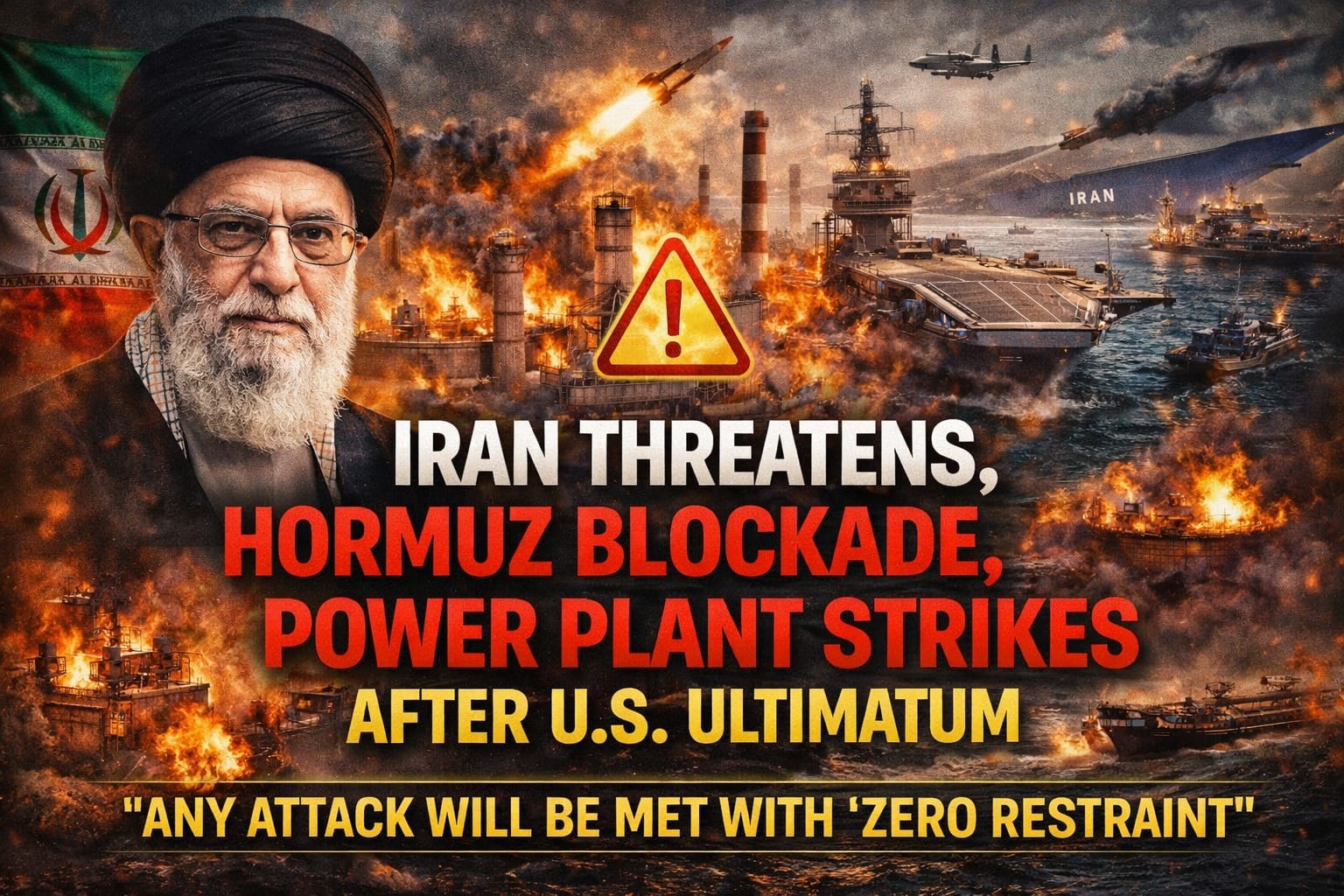
The ongoing West Asia conflict in 2026 has entered what global observers are calling a “perilous stage”, with tensions escalating dramatically after Iran issued strong threats to completely block the Strait of Hormuz and target energy infrastructure across the region.
This comes in direct response to a sharp ultimatum from the United States, warning that Iran’s power plants could be destroyed if the Strait is not reopened within 48 hours.
As missile strikes intensify, oil markets surge, and military deployments expand, the conflict is no longer just regional—it is now a global economic and geopolitical crisis in the making.
The Trigger: U.S. Ultimatum and Iran’s Immediate Response
The latest escalation began when the U.S. issued a 48-hour deadline to Iran to fully reopen the Strait of Hormuz.
- The warning included a direct threat to “hit and obliterate” Iran’s power plants if compliance was not met
- The Strait had already been partially restricted due to ongoing war activity
Iran responded with an equally aggressive stance:
- Threatened to completely shut the Strait of Hormuz
- Warned of retaliatory strikes on energy and desalination infrastructure across the Gulf
- Declared that any attack on its power plants would lead to “zero restraint” retaliation
This has effectively created a high-stakes standoff, with both sides unwilling to step back.
Also read – Iran Strikes Qatar’s LNG Plants
Why the Strait of Hormuz Matters So Much
The Strait of Hormuz is not just another shipping route—it is the world’s most critical oil chokepoint.
- Nearly 20% of global oil supply passes through it daily
- It connects the Persian Gulf to global markets
Since the conflict escalated:
- Shipping traffic has dropped drastically
- Maritime movement has plunged by up to 95%
- Tankers and cargo vessels are avoiding the region
The result?
The biggest disruption to global energy supply since the 1970s oil crisis
Iran’s Strategy: Block, Pressure, and Expand the Conflict
Iran’s threat to block the Strait is not just military—it is strategic.
1. Economic Pressure on the World
By restricting oil flow:
- Global oil prices surge
- Inflation rises worldwide
- Western economies face pressure
2. Targeting Vulnerabilities
Iran has clearly stated it will:
- Target energy plants
- Strike desalination facilities (critical for water supply in Gulf countries)
This is significant because:
- Gulf nations rely heavily on desalination for drinking water
- Power plants are central to economic stability
3. Expanding the Battlefield
Iran is signaling that:
This war will not remain confined to its borders
Any country hosting U.S. bases or supporting operations could become a target.
War on Energy Infrastructure: A New Phase
One of the most dangerous aspects of this conflict is the shift toward energy warfare.
What Has Already Happened:
- Iran accused the U.S. of attacking a desalination plant, disrupting water supply to villages
- Israel struck Iran’s South Pars gas field, affecting 12% of gas production
What Iran Is Threatening:
- Attacks on power plants
- Destruction of energy networks across the Gulf
- Retaliation against U.S.-linked infrastructure
This marks a shift from:
Traditional warfare → Infrastructure warfare
Missile War Intensifies: Latest Military Updates
The conflict on the ground is rapidly escalating.
Key Developments:
- Iran has launched over 400 missiles at Israel, with 92% intercepted
- Drone strikes have targeted military bases near Baghdad
- Missile attacks have hit sensitive locations, including nuclear-linked areas
At the same time:
- Israel continues deep strikes inside Iran
- Lebanon front intensifies with Hezbollah involvement
- Gulf countries are intercepting drones targeting oil facilities
This multi-front war is becoming:
One of the most complex conflicts in modern Middle East history
The Strait of Hormuz: From Trade Route to War Zone
The Strait has now become an active military battlefield.
Iran’s Actions:
- Deployment of naval mines
- Use of fast attack boats and drones
- Warning ships not to pass
U.S. Response:
- Naval escorts for oil tankers
- Deployment of Marines and advanced aircraft
- Possible plans to seize strategic oil hubs
This has turned the region into:
An asymmetric naval war zone with unpredictable outcomes
Global Economic Shock: Oil, Trade, and Markets
The economic consequences are already visible.
Oil Prices:
- Crossed $100–$112 per barrel
- Expected to rise further if the Strait remains blocked
Trade Disruption:
- Shipping halted
- Supply chains affected
- Thousands of seafarers stranded
Market Reaction:
- Stock markets facing volatility
- European gas prices surged significantly
Analysts are calling this:
A “ticking time bomb” for global markets
Iran’s Message: Deterrence Through Escalation
Iran’s strategy is based on deterrence through maximum pressure.
Key Signals:
- “If attacked, we escalate further”
- “If our infrastructure is hit, yours will be too”
By threatening:
- Power plants
- Water systems
- Oil infrastructure
Iran is trying to create a scenario where:
The cost of war becomes too high for everyone
Global Reactions: A World on Edge
The international response has been cautious but tense.
Europe:
- No evidence Iran is targeting Europe directly
- Calls for de-escalation
Gulf Countries:
- Increasingly alarmed
- Preparing defensive measures
Global Institutions:
- WHO warns the conflict is at a “perilous stage”
This reflects a broader fear:
The conflict could spiral into a global crisis
Why This Situation Is Extremely Dangerous
This phase of the war is particularly risky because:
1. Energy Warfare Escalation
Attacks on energy infrastructure can:
- Collapse economies
- Trigger global shortages
2. Multi-Country Involvement
With multiple fronts:
- Iran
- Israel
- U.S.
- Gulf nations
The risk of a wider war increases.
3. No Clear Exit Strategy
Neither side appears willing to:
- Agree to ceasefire
- Reduce military operations
Possible Scenarios: What Happens Next?
Scenario 1: Full Blockade of Hormuz
- Oil prices skyrocket
- Global recession risk
- Military escalation increases
Scenario 2: U.S. Strikes Power Plants
- Iran retaliates across the region
- Infrastructure war intensifies
Scenario 3: Controlled De-escalation
- Diplomatic intervention
- Limited reopening of trade routes
However, given current signals:
Escalation seems more likely than resolution
Conclusion: A Conflict That Could Reshape the World
The Iran threat to block the Strait of Hormuz and target energy infrastructure marks a turning point in the 2026 war.
This is no longer just about military dominance.
It is about:
- Control over global energy
- Economic pressure
- Strategic deterrence
With both sides raising stakes:
The Strait of Hormuz is no longer just a passage — it is the center of a global power struggle.
And what happens next could determine:
- The future of global oil markets
- The stability of the Middle East
- The direction of global geopolitics
Subscribe to our YouTube Channel The Logic Stick for more video insights