






Trump Backs Down
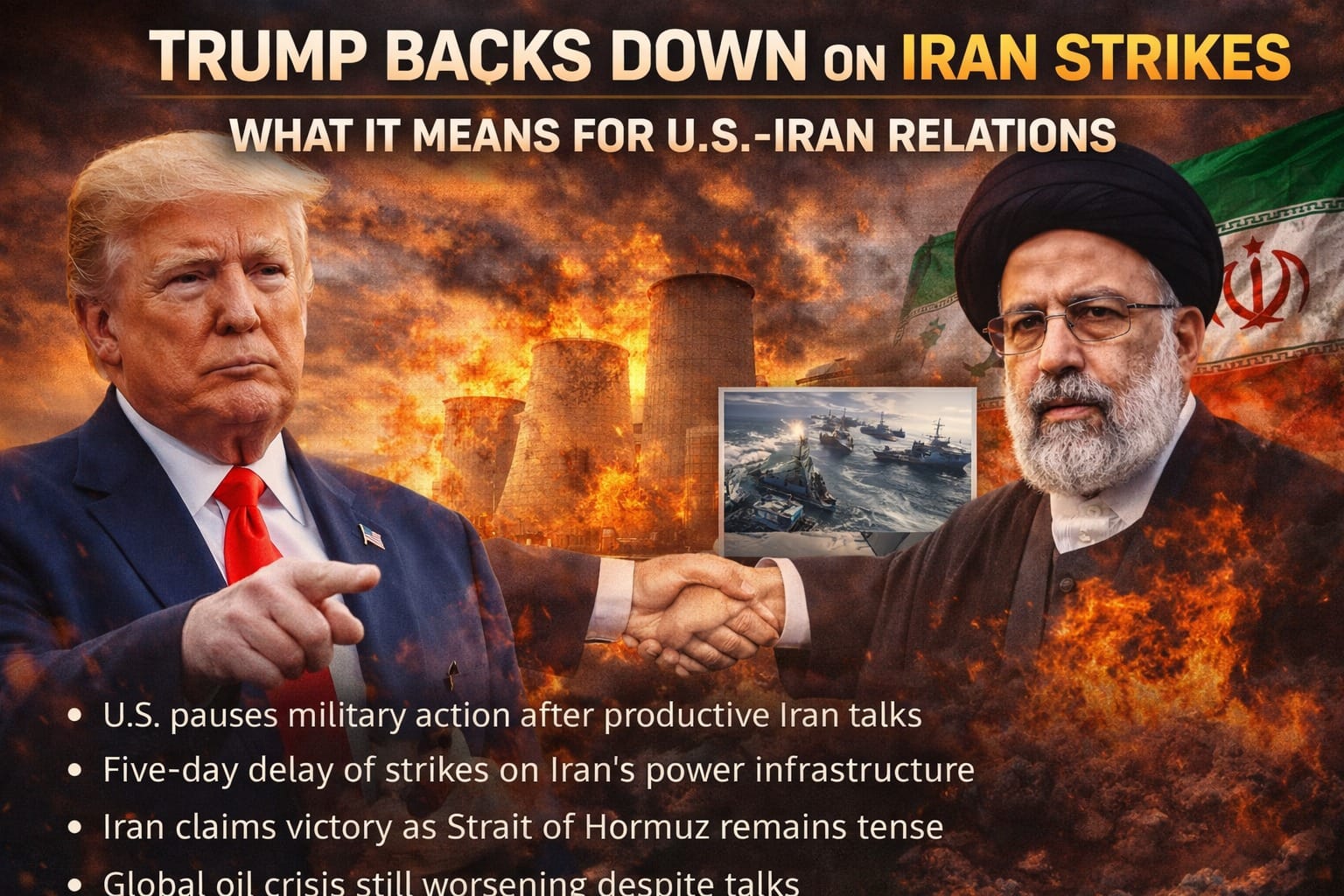
The ongoing Iran war in 2026 has reached a critical turning point as U.S. President Donald Trump unexpectedly paused planned military strikes on Iran’s power infrastructure, signaling a potential shift in strategy after weeks of escalation.
What began as an aggressive campaign aimed at crippling Iran’s military and nuclear capabilities is now entering a more complex phase—where diplomacy, economic pressure, and strategic recalibration are shaping the next steps.
This article explores:
- Why Trump backed down from military escalation
- The evolving situation between the United States and Iran
- What both sides are gaining and losing
- What this means for the future of the conflict
The Big Shift: Trump Pauses Military Action
In a significant development, President Trump announced a five-day delay on planned U.S. strikes targeting Iran’s power and energy infrastructure, citing “productive” discussions with Tehran.
This move came after:
- A prior 48-hour ultimatum demanding Iran reopen the Strait of Hormuz
- Threats of “obliterating” Iranian power plants if demands were not met
However, instead of immediate escalation, the U.S. chose to step back—at least temporarily.
Why This Matters:
- Marks the first clear sign of de-escalation in weeks
- Indicates possible backchannel negotiations
- Signals uncertainty in U.S. long-term war strategy
Also read – Iran Charges $2 Million on every ship that passes through Strait of Hormuz
Why Trump Backed Down: The Real Reasons
While officially framed as a diplomatic pause, several deeper factors explain this decision.
1. Rising Risk of Regional Explosion
Iran had clearly warned:
- Any attack on its infrastructure would trigger retaliation
- U.S. bases and allied infrastructure would be targeted
Tehran also threatened:
- Strikes on energy and desalination facilities across the Gulf
This meant:
A single U.S. strike could trigger a full-scale regional war
2. Global Economic Pressure
The war has already caused:
- Oil prices to surge above $100 per barrel
- Massive disruption in global energy supply
- Market instability and inflation fears
The International Energy Agency warned that:
- The current crisis could be worse than the 1970s oil shock and Ukraine war combined
For the U.S., continuing escalation risked:
- Economic backlash
- Political fallout at home
3. No Clear End Goal
From the start, U.S. objectives in Iran have been unclear.
Different goals included:
- Destroying Iran’s missile systems
- Preventing nuclear development
- Securing the Strait of Hormuz
- Even regime change
But as the war progressed:
- Iran continued fighting
- The Strait remained disrupted
- No clear “victory condition” emerged
This forced a rethink:
Escalation without a clear endgame becomes dangerous
4. Military Overstretch and Strategic Fatigue
The U.S. is currently managing:
- Iran conflict
- Ukraine war (indirectly)
- Global security commitments
Opening another aggressive front risks:
- Overstretching military resources
- Increasing vulnerability
This aligns with signals that:
- The U.S. may shift burden to allies for regional security
5. Diplomatic Window Opens
Trump confirmed that:
- The U.S. and Iran are engaged in “productive talks”
- Negotiations are ongoing to end the conflict
Even though Iran publicly denied direct talks, the pause suggests:
Backchannel diplomacy is active
Iran’s Reaction: Victory Narrative vs Reality
Iran has used this moment strategically.
Iranian Position:
- Claims the U.S. backed down due to its threats
- Portrays the pause as a strategic victory
Reality:
- Iran is under significant military pressure
- Infrastructure has already been hit
- Economy is strained
However, perception matters.
By framing the pause as:
“U.S. retreat” → Iran strengthens its internal and global narrative
Current Situation on the Ground
Despite the pause, the war is far from over.
Ongoing Developments:
- Iran continues missile and drone operations
- Israel maintains strikes inside Iranian territory
- Strait of Hormuz remains partially blocked
The conflict has already:
- Caused over 2,000 deaths
- Severely disrupted global oil supply
Strait of Hormuz: The Core Battleground
At the center of this conflict is the Strait of Hormuz.
Why It Matters:
- Handles nearly 20% of global oil trade
- Any disruption impacts global markets
Current Status:
- Iran has restricted passage
- U.S. is trying to reopen it
- Global shipping remains unstable
This has turned the Strait into:
A geopolitical pressure point rather than just a trade route
How Things Are Shaping Up for the United States
The U.S. is now in a complex position.
Advantages for the U.S.
- Maintains military superiority
- Has damaged key Iranian infrastructure
- Retains global influence
Challenges for the U.S.
1. Economic Pressure
- Rising oil prices
- Domestic political pressure
2. Lack of Allies
- NATO and allies hesitant to fully engage
- Trump openly criticized allies for inaction
3. Strategic Confusion
- Mixed messaging on war goals
- No clear exit plan
U.S. Strategy Going Forward
The current approach suggests:
- Pause → Negotiate → Reassess
- Avoid full-scale escalation
- Maintain pressure without triggering collapse
How Things Are Shaping Up for Iran
Iran is also navigating a difficult situation.
Advantages for Iran
1. Strategic Leverage
- Control over Strait of Hormuz
- Ability to disrupt global oil
2. Psychological Edge
- Claiming U.S. “backed down”
- Strengthening domestic support
3. Asymmetric Warfare
- Use of drones, missiles, and proxies
Challenges for Iran
1. Economic Damage
- Infrastructure attacks
- Sanctions pressure
2. Military Losses
- Heavy strikes on strategic locations
3. Risk of Further Escalation
- Any miscalculation could trigger massive retaliation
Iran’s Strategy Moving Forward
Iran appears to be focused on:
- Deterrence through escalation threats
- Maintaining pressure on oil routes
- Avoiding direct large-scale confrontation
Global Impact: Why This Matters Beyond the Middle East
This conflict is not isolated.
Key Global Effects:
- Oil price volatility
- Supply chain disruptions
- Market instability
Countries across:
- Asia
- Europe
- Africa
are already feeling the impact.
Is This Really De-escalation or Just a Pause?
The key question is:
Has the war slowed down—or just changed its form?
Signs of De-escalation:
- Pause in U.S. strikes
- Ongoing negotiations
Signs of Continued Risk:
- Active military operations
- Infrastructure threats
- Strait of Hormuz still unstable
Most analysts agree:
This is not the end—it’s a strategic pause
Possible Scenarios Ahead
Scenario 1: Diplomatic Breakthrough
- Talks succeed
- War gradually winds down
Scenario 2: Limited Conflict Continues
- Controlled strikes
- No full-scale escalation
Scenario 3: Major Escalation
- Talks fail
- U.S. resumes attacks
- Iran retaliates regionally
Conclusion: A Turning Point, Not an Ending
Trump’s decision to pause military action marks a critical shift in the Iran war, but not necessarily a resolution.
It reflects:
- Strategic caution
- Economic pressure
- Diplomatic opportunity
At the same time:
- Iran continues to assert strength
- The region remains volatile
- Global markets remain sensitive
The reality is:
The war hasn’t ended. It has evolved.
And what happens next will depend not just on military strength—but on:
- Negotiation outcomes
- Economic pressures
- Strategic decisions on both sides
Subscribe to our YouTube Channel The Logic Stick for more video insights