







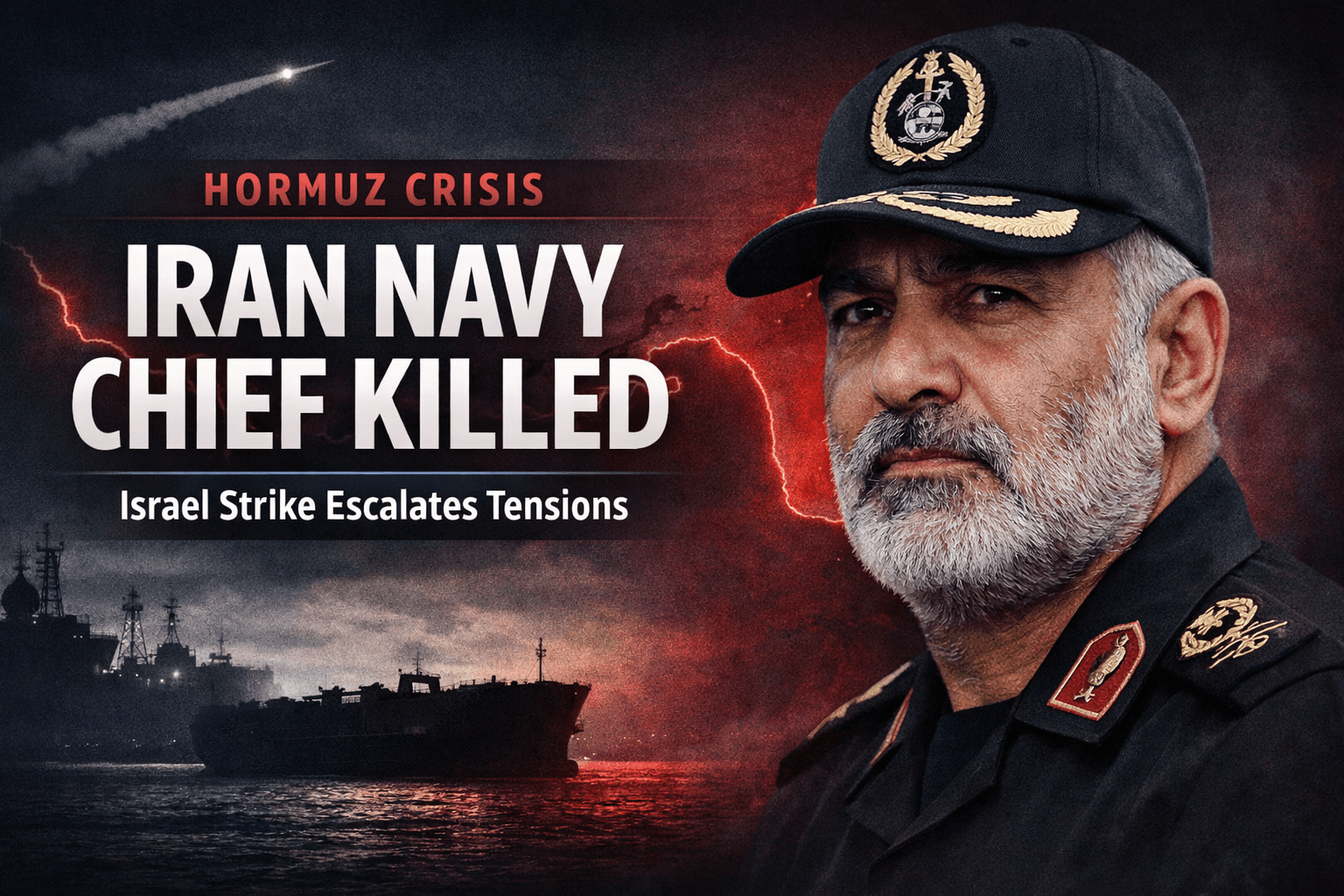
Iran Naval Commander Alireza Tangsiri Killed in Israeli Strike Escalates Strait of Hormuz Tensions.
The Middle East conflict witnessed a major escalation after reports confirmed that Iran naval commander Alireza Tangsiri was killed in an Israeli strike targeting the strategic port city of Bandar Abbas. The development is being viewed as a significant turning point in the ongoing regional tensions, particularly due to Tangsiri’s central role in Iran’s naval operations and its strategy around the Strait of Hormuz.
According to multiple international reports, including confirmations from U.S. Central Command, Tangsiri — who led the naval wing of Iran’s Islamic Revolutionary Guard Corps (IRGC) — was killed in the strike. The incident marks one of the most high-profile eliminations of an Iranian military leader in the current phase of the conflict.
Who Was Alireza Tangsiri? The Man Behind Iran’s Maritime Strategy
Alireza Tangsiri was one of the most influential figures in Iran’s military structure, serving as the commander of the IRGC Navy since 2018. A veteran of the Iran-Iraq War, Tangsiri was known for his aggressive stance against Western naval presence in the Persian Gulf and his focus on unconventional naval warfare tactics.
Under his leadership, the IRGC Navy emphasized:
- Fast attack boats and swarm tactics
- Coastal missile systems
- Drone-based surveillance and strike capabilities
- Strategic pressure in key maritime routes
Tangsiri frequently warned that Iran could restrict or control access to the Strait of Hormuz if its national security was threatened. His approach positioned Iran as a formidable player in maritime geopolitics, despite facing stronger conventional naval forces.
Read more on the ongoing war here.
Why the Strait of Hormuz Is So Critical
The killing of Iran naval commander Alireza Tangsiri has drawn global attention primarily because of his connection to the Strait of Hormuz — one of the world’s most crucial energy transit routes.
The Strait of Hormuz:
- Connects the Persian Gulf to the Arabian Sea
- Handles a significant share of global oil and gas shipments
- Is vital for countries dependent on Middle Eastern energy supplies
Any disruption in this narrow waterway has immediate global consequences, particularly for oil prices, shipping routes, and economic stability.
Details of the Israeli Strike
Reports indicate that the Israeli strike took place in Bandar Abbas, a major Iranian naval base located near the Strait of Hormuz. While Israel has stated that it carried out the operation, detailed operational specifics remain limited.
U.S. Central Command has confirmed Tangsiri’s death, reinforcing the credibility of the reports. However, full details about the strike — including whether other senior officials were targeted — remain unclear.
This level of ambiguity is common in high-stakes military operations, especially in ongoing conflicts where information is tightly controlled.
Why Tangsiri’s Death Matters Strategically
The news that Iran naval commander Alireza Tangsiri was killed is not just symbolic — it carries significant strategic implications.
1. Leadership Vacuum in IRGC Navy
Tangsiri’s death removes a key decision-maker responsible for Iran’s naval doctrine and operations in the Persian Gulf.
2. Impact on Hormuz Strategy
While Iran’s naval strategy is institutional and not dependent on a single individual, Tangsiri’s experience and leadership played a critical role in shaping it.
3. Message from Israel
The strike signals Israel’s intent to directly target high-ranking military leadership tied to strategic threats, particularly those affecting global trade routes.
Global Reactions to the Killing
The killing of Tangsiri has triggered cautious responses across the world.
United States
U.S. Central Command confirmed the death, indicating awareness and monitoring of the situation. However, Washington has not publicly escalated its stance following the incident.
Israel
Israeli officials have framed the operation as a strategic move aimed at reducing threats to maritime security and regional stability.
Iran
As of now, official detailed confirmation and response from Iran remain limited. However, historically, Iran has responded strongly to targeted killings of its senior military figures, raising concerns about potential retaliation.
Impact on the Ongoing Middle East Conflict
The killing of Iran naval commander Alireza Tangsiri comes amid a broader escalation in the Middle East.
Recent developments include:
- Continued Israeli strikes targeting Iranian-linked infrastructure
- Increased military readiness across the region
- Rising tensions affecting maritime routes and trade
While the removal of a senior commander may disrupt certain operations in the short term, analysts caution that it could also intensify the conflict rather than de-escalate it.
Will the Strait of Hormuz Be Affected?
One of the biggest global concerns following the incident is whether the Strait of Hormuz will see further disruption.
At present, there is no confirmed immediate change in shipping activity directly linked to Tangsiri’s death. However, the situation remains volatile.
Possible scenarios include:
- Status Quo: Iran maintains its current maritime posture without immediate escalation
- Strategic Response: Iran increases pressure in the region as a show of strength
- Diplomatic Intervention: International powers step in to stabilize maritime operations
Given the importance of the Strait, even minor disruptions can have outsized global consequences.
Economic Implications for the World
Tensions around the Strait of Hormuz typically lead to:
- Fluctuations in global oil prices
- Increased shipping and insurance costs
- Supply chain disruptions
Countries like India, which rely heavily on oil imports through this route, are particularly sensitive to such developments.
While markets often react quickly to geopolitical shocks, sustained impact depends on how the situation evolves in the coming days.
A Pattern of Targeted Military Strikes
Tangsiri’s killing is part of a broader pattern seen in modern warfare — targeting high-ranking officials to disrupt command structures.
Such actions aim to:
- Reduce operational efficiency
- Create uncertainty within military ranks
- Send strong geopolitical signals
However, history shows that such strategies can sometimes lead to escalation rather than containment.
What Happens Next?
The situation following the death of Iran naval commander Alireza Tangsiri remains fluid and unpredictable.
Key developments to watch include:
- Iran’s official response or retaliation
- Changes in naval activity near the Strait of Hormuz
- Diplomatic efforts by global powers
- Impact on energy markets
The coming days will be critical in determining whether this incident leads to further escalation or opens the door for de-escalation.
Conclusion
The confirmed reports that Iran naval commander Alireza Tangsiri was killed in an Israeli strike mark a significant moment in the ongoing Middle East conflict.
As a key architect of Iran’s maritime strategy, particularly in the Strait of Hormuz, his death has far-reaching implications — not just for regional security but also for global trade and energy markets.
However, while the strike represents a tactical success for Israel, its long-term impact remains uncertain. The balance between escalation and stability now depends on how Iran and the international community respond in the days ahead.
One thing is clear — the Strait of Hormuz will continue to remain at the center of global geopolitical tensions.