






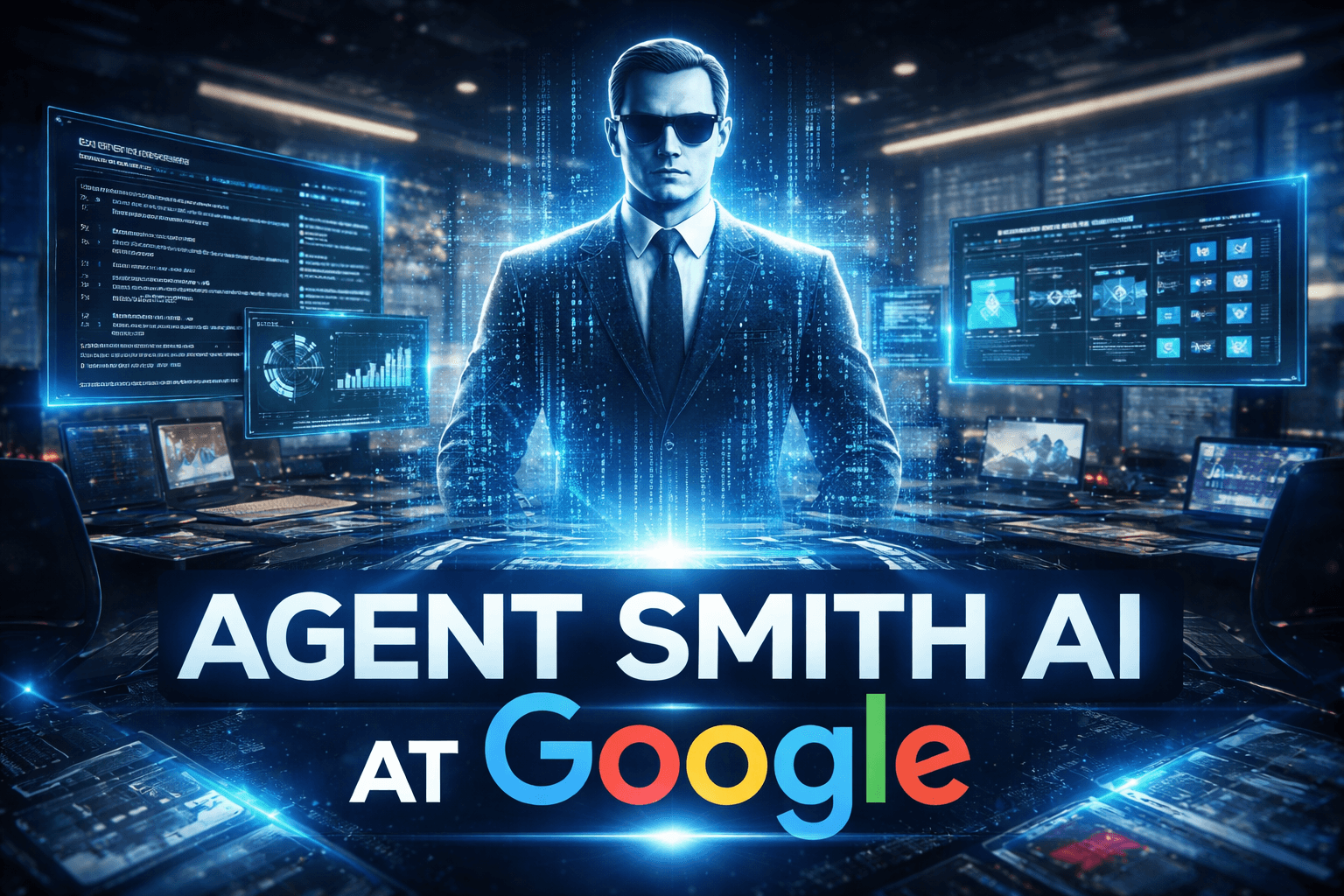
Agent Smith AI at Google: Inside the Viral Internal Tool Transforming Workflows and Raising Concerns
Introduction
In a surprising development from Silicon Valley, an internal artificial intelligence tool reportedly known as “Agent Smith” has taken the workforce at Google by storm. According to recent reports, the tool became so widely used across teams that the company had to restrict access to manage its rapid adoption and potential risks.
The name “Agent Smith” — reminiscent of the iconic antagonist from The Matrix — is symbolic of the tool’s powerful and almost autonomous capabilities. Designed to automate workflows, assist engineers, and boost productivity, this AI agent has quickly become one of the most talked-about internal innovations at Google.
However, its overwhelming popularity has also triggered internal caution, raising important questions about AI governance, data security, and the future of workplace automation.
What Is Agent Smith AI?
Agent Smith is reportedly an internal AI-powered assistant developed within Google to help employees streamline tasks. While official details remain limited, the tool is believed to function as an advanced AI agent capable of executing multi-step workflows, unlike traditional chat-based AI systems.
Key Capabilities (Based on Reports)
- Automating repetitive tasks
- Assisting with coding and debugging
- Managing workflows across tools
- Generating insights from internal data
- Acting as a semi-autonomous “agent” rather than just a chatbot
Unlike tools such as chatbots or copilots, Agent Smith is said to operate with greater autonomy, meaning it can take actions on behalf of users rather than just providing suggestions.
Why Did It Become So Popular?
The explosive adoption of Agent Smith inside Google can be attributed to one simple factor: it dramatically increased productivity.
1. Time-Saving Efficiency
Employees reportedly found that the AI agent could handle tasks that would normally take hours — in minutes.
2. Seamless Integration
Since it was built internally, Agent Smith likely integrates deeply with Google’s ecosystem, including:
- Internal databases
- Developer tools
- Cloud infrastructure
- Workflow systems
This allowed employees to delegate complex tasks without switching platforms.
3. Advanced Autonomy
Unlike standard AI assistants, Agent Smith doesn’t just answer questions — it executes instructions, making it far more useful in real-world workflows.
Read more on India Borrowing 8.2 Trillion.
Why Did Google Restrict Access?
Despite its success, Google reportedly decided to limit access to Agent Smith, signaling that the tool’s rapid growth raised internal concerns.
1. Security and Data Risks
One of the biggest concerns with powerful AI agents is data access. If an AI tool can interact with internal systems, it could potentially:
- Access sensitive company data
- Execute unintended actions
- Create vulnerabilities if misused
2. Lack of Control Over AI Actions
Autonomous AI agents introduce a new challenge: loss of control.
If an AI can act independently:
- Who is responsible for its actions?
- How are errors corrected?
- What safeguards are in place?
These questions likely contributed to the decision to restrict usage.
3. Overdependence on AI
Another concern is employee reliance on AI systems. If teams begin depending too heavily on tools like Agent Smith:
- Human oversight may decrease
- Critical thinking could be affected
- Errors may go unnoticed
4. Internal Resource Load
The tool’s popularity may also have strained infrastructure, as large-scale AI systems require significant computing power.
The Rise of AI Agents: A Bigger Trend
Agent Smith is not an isolated innovation — it represents a broader shift toward AI agents.
What Are AI Agents?
AI agents are systems that can:
- Understand tasks
- Plan steps
- Execute actions
- Adapt based on outcomes
This is a major evolution from traditional AI, which primarily focuses on responding to prompts.
How Agent Smith Reflects the Future of Work
The rise of tools like Agent Smith suggests that the workplace is moving toward:
1. Automation-First Workflows
Routine tasks will increasingly be handled by AI, allowing employees to focus on:
- Strategy
- Creativity
- Decision-making
2. AI as a Co-Worker
Instead of being a tool, AI is becoming a collaborator.
3. Faster Execution Cycles
Projects that once took weeks could be completed in days — or even hours.
Ethical and Governance Challenges
While the benefits are clear, Agent Smith also highlights critical challenges.
1. Accountability
If an AI agent makes a mistake:
- Who is responsible — the user or the system?
2. Transparency
AI agents often operate as “black boxes,” making it difficult to:
- Understand decisions
- Audit actions
3. Data Privacy
With access to internal systems, AI agents must be carefully controlled to prevent:
- Data leaks
- Unauthorized access
Google’s Strategic Move: Caution Over Speed
By restricting access to Agent Smith, Google appears to be prioritizing:
- Safety over rapid scaling
- Governance over uncontrolled adoption
- Long-term trust over short-term gains
This move aligns with a growing trend among tech companies to slow down AI deployment when risks outweigh immediate benefits.
Comparison with Other AI Tools
Agent Smith stands apart from other AI tools in key ways:
| Feature | Traditional AI Tools | Agent Smith AI |
|---|---|---|
| Interaction | Chat-based | Action-based |
| Autonomy | Low | High |
| Execution | Suggestive | Operational |
| Integration | Limited | Deep internal integration |
What This Means for the Tech Industry
The story of Agent Smith could have wider implications:
1. Rise of Enterprise AI Agents
More companies may begin developing internal AI agents tailored to their workflows.
2. Increased Regulation
Governments and organizations may introduce stricter rules around:
- AI autonomy
- Data usage
- Accountability
3. Shift in Skill Requirements
Employees may need to learn:
- AI supervision
- Prompt engineering
- Workflow automation
Could Agent Smith Go Public?
At this stage, Agent Smith remains an internal tool, but its success raises an interesting question:
Could Google eventually release a version for public or enterprise use?
If that happens, it could:
- Compete with AI copilots
- Redefine enterprise productivity tools
- Accelerate AI adoption globally
The “Matrix” Parallel: Why the Name Matters
The name “Agent Smith” is not just a pop culture reference — it reflects a deeper idea.
In The Matrix, Agent Smith represents:
- Control
- Autonomy
- System-level intelligence
Similarly, this AI tool represents a shift toward:
- Autonomous systems
- AI-driven decision-making
- Reduced human intervention
Risks vs Rewards: The Balancing Act
Benefits
- Massive productivity gains
- Reduced manual workload
- Faster innovation cycles
Risks
- Security vulnerabilities
- Lack of oversight
- Ethical concerns
The challenge for companies like Google is to balance innovation with responsibility.
Conclusion
The emergence of Agent Smith AI inside Google marks a turning point in the evolution of artificial intelligence. Its rapid adoption highlights how powerful AI agents can transform workflows, while the subsequent restrictions reveal the real-world challenges of deploying such systems at scale.
This story is not just about one tool — it’s about the future of work, the rise of autonomous AI, and the growing need for responsible innovation.
As companies continue to push the boundaries of AI, one thing is clear:
The age of AI agents has begun — but controlling them will be just as important as building them.