






Isfahan Blasts – Bunker-buster bombs hit Iran’s Isfahan as US-Israel offensive intensifies, raising fears of a wider regional conflict
Introduction
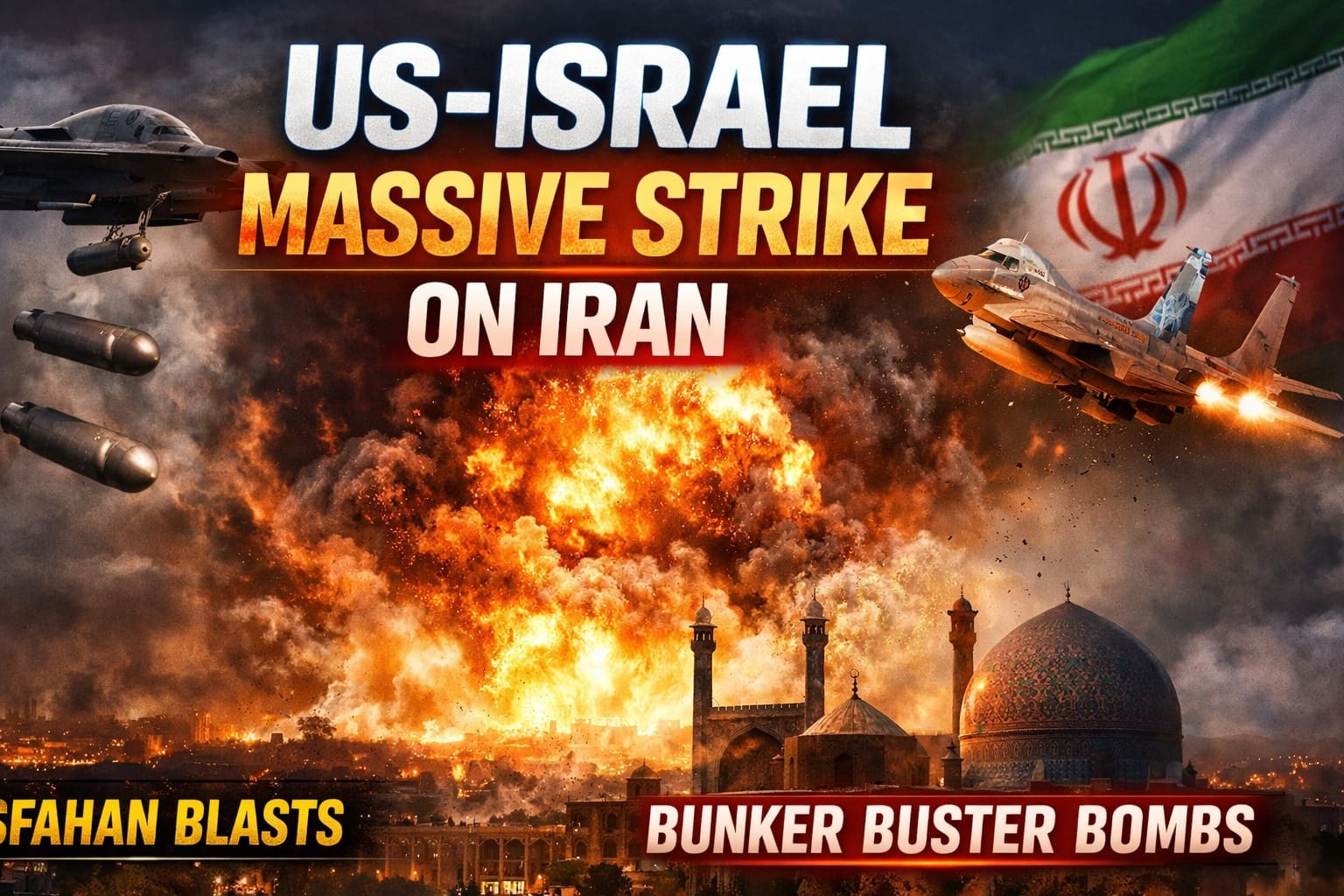
In a dramatic escalation of the ongoing 2026 Iran war, the United States and Israel have reportedly launched massive coordinated airstrikes on Iran’s Isfahan, triggering powerful explosions that were visible for miles. The strikes—reportedly involving 2,000-pound bunker-buster bombs—mark one of the most intense phases of the conflict so far.
Videos of the explosion, widely circulated and shared by US President Donald Trump, have intensified global attention, with analysts warning that this could be a turning point in Middle East geopolitics.
What Happened in Isfahan?
According to multiple reports, the strikes targeted a major ammunition depot and strategic military infrastructure in Isfahan—one of Iran’s most sensitive military and nuclear hubs.
- Massive explosions were reported across the city
- Fireballs and shockwaves were visible across large distances
- The attack is believed to have targeted deep underground facilities
- Advanced bunker-buster bombs were used to penetrate fortified structures
A US official confirmed that high-volume penetrator munitions were deployed in the strike, indicating a deliberate attempt to destroy hardened targets.
Isfahan is considered a critical node in Iran’s defense network, housing missile production systems and potentially sensitive nuclear-related infrastructure.
Why Is Isfahan So Important?
Isfahan is not just another city—it is a strategic military and nuclear center for Iran.
Key reasons why Isfahan was targeted:
- Houses missile development and storage facilities
- Linked to uranium enrichment and nuclear research
- Contains deep underground bunkers
- Acts as a logistics hub for Iran’s military operations
Because of this, targeting Isfahan sends a strong message:
This is not symbolic—it’s strategic dismantling of Iran’s core capabilities.
Also read – Project Hail Mary Review: Starring Ryan Gosling
US-Israel Strategy: Why These Strikes Matter
The Isfahan attack is part of a broader military campaign launched on February 28, 2026, when the US and Israel began coordinated strikes on Iran after nuclear negotiations collapsed.
This campaign—reportedly codenamed Operation Epic Fury—has several objectives:
1. Destroy Iran’s Nuclear Ambitions
The US and Israel have repeatedly accused Iran of advancing toward nuclear weapon capability.
2. Neutralize Missile Threats
Iran’s ballistic missile program poses a direct threat to Israel and US bases in the region.
3. Pressure Regime Change
Statements from US leadership suggest broader geopolitical goals, including internal political shifts in Iran.
Role of Bunker-Buster Bombs
One of the most significant aspects of this strike is the reported use of bunker-buster bombs.
What makes them important?
- Designed to penetrate deep underground structures
- Can destroy hidden nuclear or missile facilities
- Typically used only in high-priority, high-risk missions
Reports suggest that B-2 stealth bombers may have been used, highlighting the sophistication and scale of the operation.
This indicates that the attack was not just tactical—but deeply strategic, aimed at crippling Iran’s long-term capabilities.
Trump Shares Explosion Video: Strategic Messaging or Psychological Warfare?
US President Donald Trump added fuel to the situation by sharing a video of the massive explosions on social media.
- The video shows large-scale blasts lighting up the night sky
- It appears to confirm the intensity of the attack
- It sends a direct geopolitical message to Iran and the world
Experts believe this move serves multiple purposes:
- Domestic messaging: Show strength and control
- International pressure: Warn adversaries
- Psychological warfare: Undermine Iranian morale
Iran’s Response: Retaliation Already Underway
Iran has not remained silent.
Following earlier strikes, Iran launched:
- Missile attacks on Israeli cities
- Drone strikes across the Gulf region
- Threats to disrupt oil routes, including the Strait of Hormuz
The conflict has already caused:
- Civilian casualties
- Infrastructure damage
- Regional instability across Lebanon, Syria, and Gulf nations
Iran has also rejected US peace proposals, calling them “unrealistic,” signaling that the conflict is far from over.
Global Impact: Why the World Is Watching Closely
This is no longer a localized conflict—it has global implications.
1. Oil Prices and Energy Crisis
The Middle East controls critical oil routes. Any disruption could:
- Spike global oil prices
- Impact economies worldwide
- Trigger inflation shocks
2. Risk of World War-Level Escalation
With multiple countries indirectly involved, analysts warn of:
- NATO involvement
- Russia or China entering the equation
- Expansion into a multi-front war
3. Economic Instability
The IMF has already warned of potential global slowdown risks if tensions escalate further.
Timeline of Escalation (2026 Iran War)
- January–February 2026: US military buildup in Middle East
- Feb 28, 2026: US–Israel launch major strikes on Iran
- March 2026: Iran retaliates with missile and drone attacks
- Late March 2026: US targets key infrastructure like Kharg Island
- Now: Massive Isfahan strike signals next escalation phase
Is This the Beginning of a Larger War?
The Isfahan strike may represent a turning point.
Indicators of escalation:
- Use of heavy bunker-buster bombs
- Expansion of targets beyond military bases
- Increased public messaging from leadership
- Continued Iranian retaliation
Experts believe the conflict is entering a “high-intensity phase”, where:
- Negotiations become less likely
- Military objectives become more aggressive
- Civilian risks increase
Conclusion
The US–Israel massive strike on Iran’s Isfahan is more than just another military operation—it is a clear escalation in a rapidly evolving war that could reshape the Middle East.
With advanced weaponry, strategic targets, and global consequences, the situation is extremely volatile. As both sides continue to exchange strikes, the world watches closely, aware that the next move could define not just regional stability—but global security itself.
Subscribe to our YouTube Channel The Logic Stick for more video insights