







India Second Semiconductor Plant Sanand Signals Strategic Push Toward Self-Reliance in Semiconductor Ecosystem
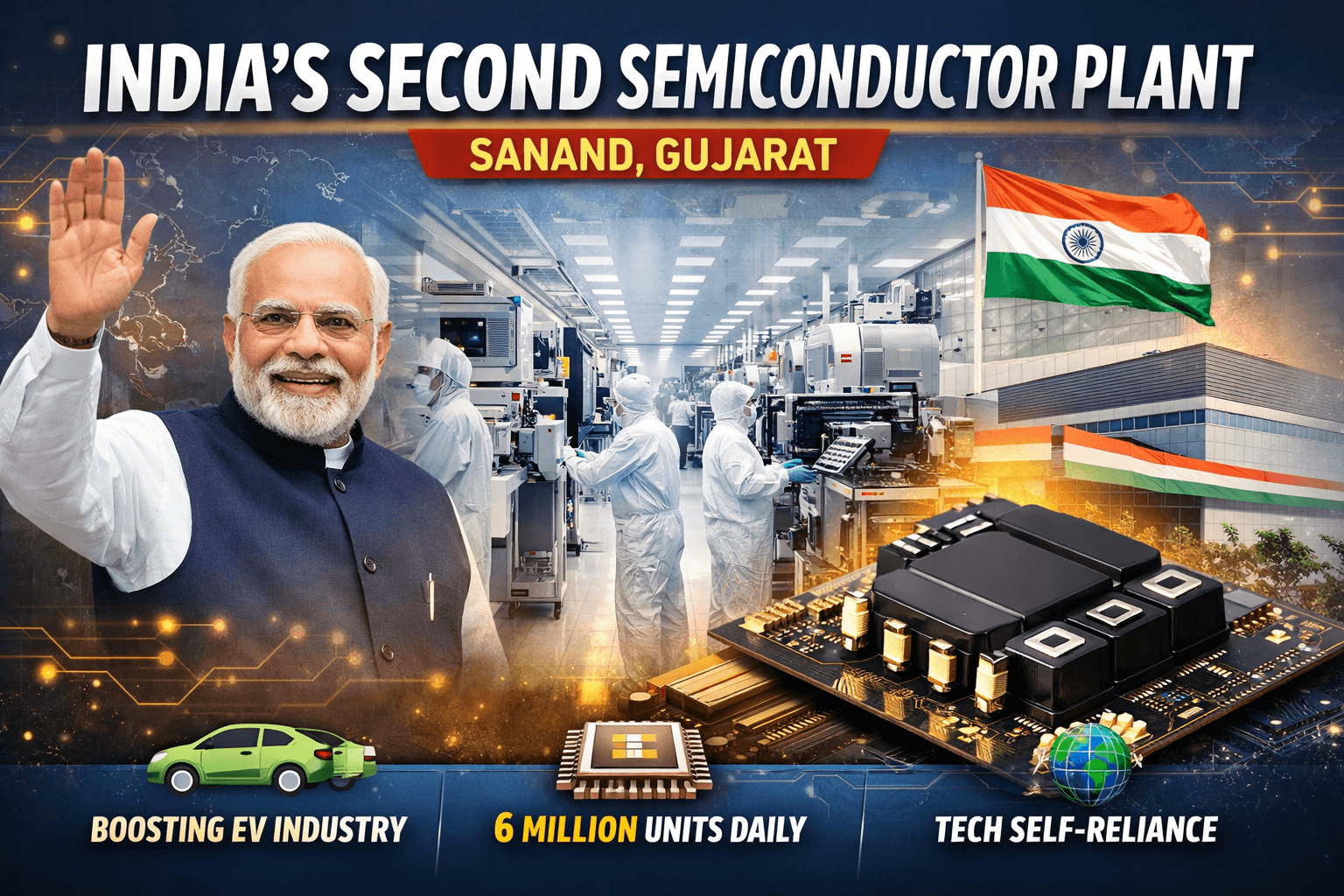
India has taken a significant step in its journey toward becoming a global electronics manufacturing hub with the inauguration of the India Second Semiconductor Plant Sanand. Prime Minister Narendra Modi officially launched the Kaynes Semicon facility in Sanand, Gujarat, marking the country’s second operational semiconductor unit under the India Semiconductor Mission.
This development is not just about opening another factory—it reflects India’s strategic push to reduce dependence on imports, strengthen domestic manufacturing, and build a long-term presence in the global semiconductor supply chain.
What is the India Second Semiconductor Plant Sanand?
The India Second Semiconductor Plant Sanand is a semiconductor facility developed by Kaynes Technology through its semiconductor arm, Kaynes Semicon. However, it is important to clarify that this plant is not a traditional semiconductor fabrication (fab) unit.
Instead, the facility operates as an OSAT (Outsourced Semiconductor Assembly and Test) plant, which focuses on:
- Assembling semiconductor components
- Packaging chips into usable formats
- Testing semiconductor products for quality and performance
These processes are essential stages in the semiconductor value chain and ensure that chips can be integrated into final products such as vehicles, industrial machines, and consumer electronics.
What Will the Sanand Semiconductor Plant Produce?
The India Second Semiconductor Plant Sanand is expected to produce approximately 6 million semiconductor units per day, according to reports surrounding the inauguration.
The primary focus of the plant will be on manufacturing:
- Intelligent Power Modules (IPMs)
- Power electronics components
- Packaged semiconductor solutions
These components are critical for several fast-growing industries, including:
- Electric Vehicles (EVs): Used in motor control systems and battery management
- Industrial Automation: Helps manage and regulate power efficiently
- Renewable Energy Systems: Supports solar and energy storage infrastructure
In simple terms, the plant will manufacture the “brain” behind power control systems that enable modern machines to operate efficiently and safely.
Why the India Second Semiconductor Plant Sanand is Important
1. Boost to India’s Electric Vehicle Ecosystem
India is aggressively pushing toward electric mobility, and the demand for power electronics is rising rapidly. The India Second Semiconductor Plant Sanand will directly support this ecosystem by supplying key components required in EV manufacturing.
This reduces reliance on imports and strengthens domestic supply chains for EV companies operating in India.
2. Reducing Dependence on Semiconductor Imports
India currently imports a large portion of its semiconductor requirements from countries like Taiwan, China, and South Korea. This dependency has exposed vulnerabilities, especially during global chip shortages.
By establishing facilities like the India Second Semiconductor Plant Sanand, the country is taking its first concrete steps toward semiconductor self-reliance.
3. Strengthening India’s Manufacturing Capabilities
The semiconductor industry is one of the most complex and capital-intensive sectors globally. Instead of jumping directly into advanced chip fabrication, India is building capabilities step-by-step.
The India Second Semiconductor Plant Sanand represents a practical entry point into the semiconductor ecosystem by focusing on packaging and testing—areas that are critical yet comparatively easier to scale in the initial phase.
Sanand: India’s Emerging Semiconductor Hub
Sanand, located in Gujarat, is rapidly emerging as a key manufacturing and semiconductor hub in India. The region already has strong industrial infrastructure, access to ports, and proximity to automotive manufacturing clusters.
The city recently gained attention with the launch of:
- Micron Technology’s semiconductor assembly and testing facility
- Kaynes Semicon’s OSAT plant
With multiple semiconductor projects being established in the same region, Sanand is positioning itself as India’s first major semiconductor cluster, similar to global hubs seen in countries like Taiwan and South Korea.
Read more on Nvidia betting on Marvel AI Platform.
Part of the India Semiconductor Mission
The India Second Semiconductor Plant Sanand is part of the government’s broader initiative known as the India Semiconductor Mission.
This mission aims to:
- Develop a complete semiconductor ecosystem in India
- Provide incentives for semiconductor manufacturing companies
- Attract global investments
- Strengthen India’s position in global supply chains
The government has committed billions of dollars in incentives to encourage companies to set up semiconductor facilities across the country.
Important Clarification: Not a Full Chip Manufacturing Plant
One of the most important aspects to understand about the India Second Semiconductor Plant Sanand is that it is not a full semiconductor fabrication plant (fab).
A full fab facility involves:
- Manufacturing silicon wafers
- Creating chips at nanometer-scale precision
- Extremely high capital investment (often billions of dollars)
The Sanand plant, on the other hand, focuses on:
- Assembly
- Packaging
- Testing
These are essential parts of the supply chain but come after the chip has already been manufactured.
This distinction is important because many headlines loosely refer to such facilities as “chip plants,” which can create confusion about the level of technological capability involved.
India’s Step-by-Step Semiconductor Strategy
The launch of the India Second Semiconductor Plant Sanand reflects a phased and strategic approach by India:
Phase 1: Build OSAT Capabilities
Start with assembly, packaging, and testing to gain industry experience.
Phase 2: Focus on Specialized Components
Develop expertise in areas like power electronics and intelligent modules.
Phase 3: Move Toward Full Fabrication
Eventually establish advanced semiconductor fabs within the country.
This approach reduces risk, builds expertise gradually, and ensures long-term sustainability.
Global Context: Why Semiconductors Matter
Semiconductors are the backbone of modern technology. They are used in:
- Smartphones
- Electric vehicles
- Defence systems
- Artificial intelligence
- Consumer electronics
Countries across the world are competing to secure their semiconductor supply chains due to increasing geopolitical tensions and rising demand.
India’s entry into this space, even at the packaging and testing level, is a critical move toward becoming a trusted alternative in global supply chains.
Economic and Strategic Impact
The India Second Semiconductor Plant Sanand is expected to have multiple long-term benefits:
- Job Creation: High-skilled employment in electronics and manufacturing
- Technology Transfer: Exposure to advanced semiconductor processes
- Investment Attraction: Encouraging global companies to invest in India
- Supply Chain Stability: Reducing disruptions caused by global shortages
It also strengthens India’s positioning as a manufacturing powerhouse under initiatives like Make in India.
Challenges Ahead
While the launch is a positive step, several challenges remain:
- India still lacks advanced chip fabrication facilities
- High dependency on imported raw materials and technology
- Need for skilled workforce in semiconductor engineering
- Intense global competition from established players
However, the launch of the India Second Semiconductor Plant Sanand shows that India is moving in the right direction with a long-term vision.
Conclusion
The inauguration of the India Second Semiconductor Plant Sanand marks a crucial milestone in India’s semiconductor journey. While it is not yet a full-fledged chip manufacturing facility, it represents a strong and strategic beginning.
By focusing on assembly, packaging, and power electronics, India is building the foundation of a robust semiconductor ecosystem. With continued investments, policy support, and industry participation, the country is gradually positioning itself as a key player in the global electronics and semiconductor landscape.
The road to becoming a semiconductor powerhouse may be long, but with developments like the India Second Semiconductor Plant Sanand, India has clearly taken a decisive and forward-looking step.