







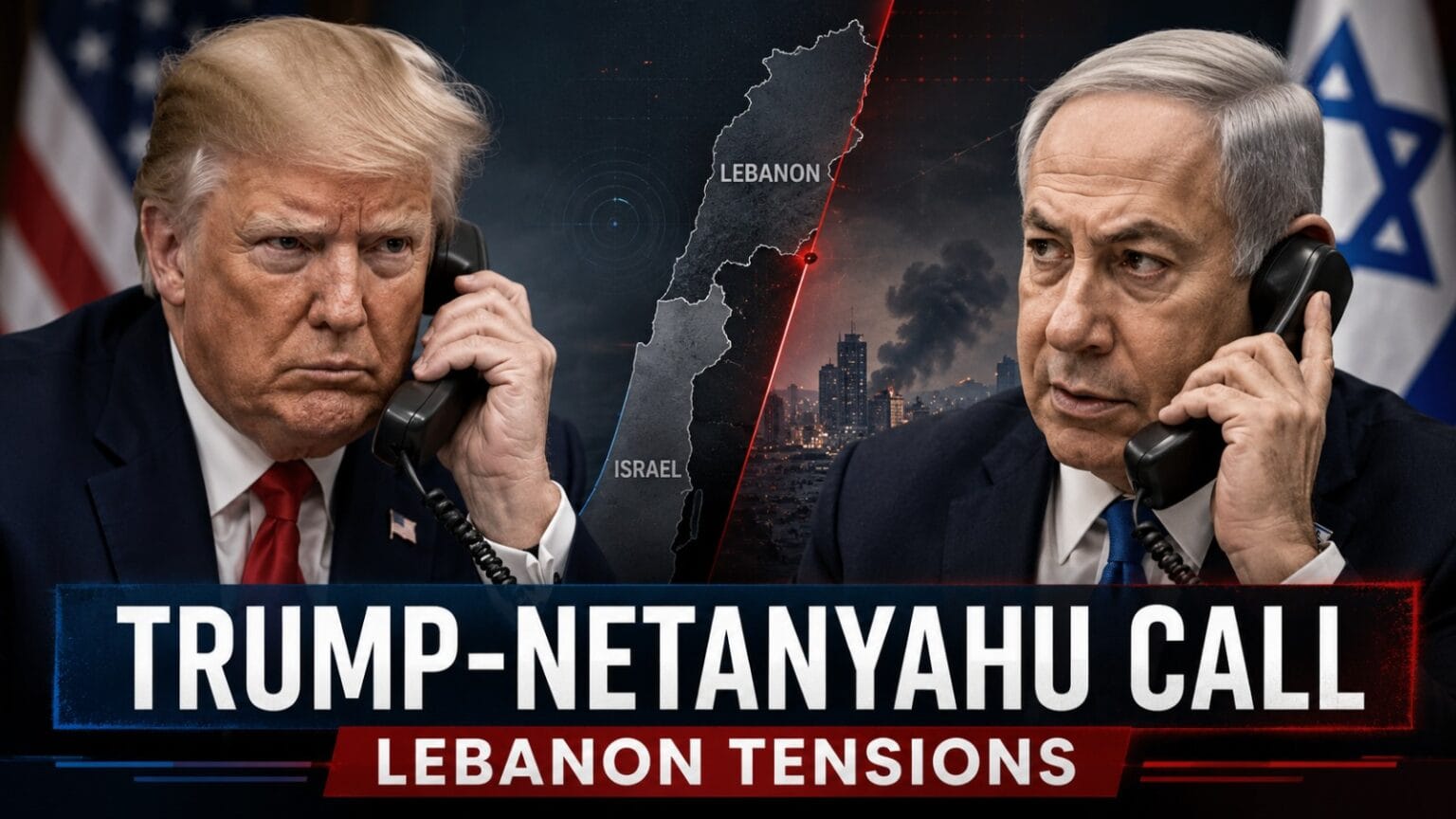
The latest Trump and Netanyahu phone call has become one of the most talked-about diplomatic flashpoints in the Middle East crisis. According to reports first detailed by Axios and later carried by NDTV, US President Donald Trump reportedly lashed out at Israeli Prime Minister Benjamin Netanyahu during a tense call over Israel’s military escalation in Lebanon. The call came at a critical moment when Washington was trying to prevent the Israel-Hezbollah conflict from spiralling further and derailing broader US-Iran negotiations.
The reported language was unusually harsh. Axios said Trump called Netanyahu “crazy,” accused him of ingratitude, and warned that strikes on Beirut would further isolate Israel internationally. NDTV, citing Axios, reported that Trump also claimed he had helped keep Netanyahu out of jail, referring to his public support during Netanyahu’s corruption trial.
But beyond the shock value of the alleged remarks, the real story is much bigger. This call reflects growing tension between two leaders who have often been seen as close allies, and it exposes the pressure Washington is facing as the Lebanon front threatens to disrupt diplomacy with Iran.
What Triggered the Trump and Netanyahu Phone Call?
The phone call was reportedly triggered by Israel’s escalating military operations in Lebanon, especially threats or plans involving Beirut and its southern suburbs. Axios reported that Trump was angry because Israel’s actions in Lebanon risked derailing ongoing US-led talks with Iran. The same report said Trump “put the brakes” on Israel’s plan to strike Beirut.
Reuters reported that Trump later said he had spoken to Netanyahu and that Israel had agreed to turn back any troops moving toward Beirut. Trump also claimed he had communicated with Hezbollah through intermediaries and received a pledge that the group would stop attacks on Israel.
The Associated Press also reported that Trump said Israel and Hezbollah had agreed to dial back fighting after his call with Netanyahu and indirect communication with Hezbollah through mediators. However, Netanyahu publicly framed the conversation differently, saying Israel would continue operations in southern Lebanon and would strike Beirut if Hezbollah attacks did not stop.
Also read – Russia’s Promising Cancer Vaccine Making Noise
What Did Trump Reportedly Tell Netanyahu?
According to Axios, two US officials and a third source briefed on the call described it as an expletive-laden confrontation. One US official summarized Trump’s message as a warning that Netanyahu was acting recklessly and damaging Israel’s global standing.
NDTV’s report, citing Axios, highlighted the most explosive part of the exchange: Trump allegedly told Netanyahu that he was “crazy,” claimed he was “saving” him, and said Israel was becoming more isolated because of the Lebanon escalation.
These remarks, if accurately reported, mark a sharp shift in tone. Trump has historically presented himself as one of Netanyahu’s strongest international supporters. A public or leaked confrontation of this intensity suggests that the White House may be trying to draw a red line around Israel’s military actions when they conflict with broader US diplomatic goals.
Why Lebanon Became the Flashpoint
Lebanon has become one of the most dangerous fronts in the wider Middle East crisis. Hezbollah, an Iran-aligned Lebanese armed group, has been exchanging fire with Israel, while Israel has expanded military operations in southern Lebanon. Reuters reported that the fighting has displaced more than 1.2 million Lebanese since March 2, when Hezbollah began firing rockets and drones into Israel in support of Iran.
The Associated Press reported that Israeli forces had recently made their deepest incursion into Lebanon in more than a quarter century. It also noted that Israel had ordered strikes on Beirut’s southern suburbs, while Hezbollah fired rockets toward northern Israel.
For Trump, the immediate problem appears to be escalation control. A major Israeli strike on Beirut could inflame regional tensions, increase civilian casualties, strengthen Hezbollah’s justification for retaliation, and make Iran less willing to continue negotiations with Washington.
Why the Call Matters for US-Iran Talks
The Trump and Netanyahu phone call is not only about Israel and Lebanon. It is also about Iran.
Axios reported that Trump’s anger was driven by concern that Netanyahu’s escalation in Lebanon could threaten negotiations with Iran. The report said the memorandum being negotiated by the US and Iran includes an end to fighting in Lebanon.
The Associated Press reported that Iran wants any ceasefire agreement with Washington to include Lebanon, and Iranian Foreign Minister Abbas Araghchi said that a ceasefire must apply on all fronts, including Lebanon.
This is why the phone call matters so much. If Lebanon burns, Iran talks may collapse. If Iran talks collapse, the risk of a wider regional war increases. Trump’s reported intervention suggests that Washington sees Lebanon not as a side conflict, but as a central piece of the regional ceasefire puzzle.
Trump’s Public Version vs Netanyahu’s Public Position
After the call, Trump publicly described the conversation in positive terms. Reuters reported that Trump posted that he had a “very productive call” with Netanyahu and said there would be no Israeli troops going to Beirut. He also said any troops on their way had already been turned back.
But Netanyahu’s public statement was more defiant. According to the Associated Press, Netanyahu said he told Trump that Israel would strike Beirut if Hezbollah attacks did not stop, and that the Israeli military would continue to operate as planned in southern Lebanon.
This difference in messaging is important. Trump presented the call as a de-escalation success. Netanyahu presented it as a warning to Hezbollah. That gap shows both leaders are trying to control the political narrative for different audiences.
Trump wants to show that he can prevent a wider war and manage diplomacy with Iran. Netanyahu wants to show Israelis that he is not backing down under US pressure.
Did Trump Really Stop an Israeli Strike on Beirut?
Based on the current reporting, Trump appears to have influenced Israel’s immediate decision-making, but the long-term impact remains uncertain.
Axios reported that Israel no longer planned to strike Hezbollah targets in Beirut after the call, citing an Israeli official. Reuters also reported Trump’s statement that there would be no Israeli troops going to Beirut and that troops already moving had been turned back.
However, Netanyahu did not publicly commit to avoiding Beirut permanently. Instead, he said Israel would attack Beirut if Hezbollah continued attacking Israel.
So the most accurate reading is this: Trump may have paused or blocked an immediate escalation toward Beirut, but he has not necessarily secured a stable ceasefire.
What Role Did Hezbollah Play?
Trump claimed he had communicated with Hezbollah through intermediaries. Reuters reported that Trump said Hezbollah agreed that “all shooting will stop,” while a Lebanese official told Reuters that Hezbollah had informed the US through Lebanon’s parliament speaker Nabih Berri that it was willing to halt attacks on northern Israel if Israel avoided strikes on Beirut and its suburbs.
The Associated Press reported that Lebanese authorities had secured Hezbollah’s approval of a proposal under which Israel would not strike Beirut’s southern suburbs and Hezbollah would not attack northern Israel. However, AP also noted that there was no immediate word directly from Hezbollah after Trump’s announcement.
This makes Hezbollah’s position critical but still somewhat indirect. Publicly, the arrangement depends on statements by Trump, Lebanese officials, and mediators rather than a direct Hezbollah declaration.
Why This Is Politically Sensitive for Trump
Trump has long positioned himself as a strong supporter of Israel. That makes this reported confrontation politically delicate. Criticising Netanyahu too openly could anger pro-Israel supporters in the US. But allowing Israel to escalate in Lebanon could damage Trump’s larger diplomatic strategy, especially if it ruins talks with Iran or triggers a broader war.
The reported call shows the contradiction at the heart of Trump’s Middle East policy: he wants to appear strongly pro-Israel while also proving that he can impose restraint when Israel’s actions threaten US objectives.
For Trump, the stakes are high. A successful de-escalation could allow him to claim diplomatic strength. A failed ceasefire could expose limits in US influence over Israel and Hezbollah.
Why This Is Politically Sensitive for Netanyahu
For Netanyahu, the call comes at a difficult moment. He faces pressure from security hawks who want a tough response against Hezbollah, while also relying heavily on US diplomatic and military support.
The Axios report said Trump referenced Netanyahu’s corruption trial and claimed credit for helping him avoid prison. That reported remark, if true, is especially sensitive because it personalises a strategic dispute and touches on Netanyahu’s domestic political vulnerabilities.
Netanyahu’s public statement after the call appeared designed to show strength. By saying Israel would continue operations in southern Lebanon and strike Beirut if necessary, he signalled that Israel would not be seen as taking orders from Washington.
What It Means for Israel-US Relations
The Trump and Netanyahu phone call does not necessarily mean a collapse in US-Israel relations. The two countries remain deeply aligned on security, Iran, and regional strategy. But it does suggest a serious tactical disagreement.
The US appears to want controlled de-escalation, especially while Iran talks are active. Israel appears to want freedom of military action against Hezbollah, especially after attacks on northern Israel and Israeli forces.
This is not the first time US and Israeli leaders have disagreed during a regional conflict. But the reported tone of this call makes it unusual. It signals that even close allies can clash when battlefield decisions threaten diplomatic negotiations.
What Could Happen Next?
There are three possible scenarios.
The first is controlled de-escalation. Israel avoids Beirut, Hezbollah reduces attacks, and US-Iran negotiations continue. This is the outcome Trump appears to be pushing.
The second is partial calm with continued fighting in southern Lebanon. This would allow both Israel and Hezbollah to claim they did not fully back down, while avoiding a direct attack on Beirut.
The third is renewed escalation. If Hezbollah continues attacks or Israel strikes Beirut, the fragile understanding could collapse quickly, putting Iran talks and Lebanon ceasefire efforts at risk.
The Associated Press reported that despite Trump’s announcement, missile launches from Lebanon were detected soon after, and talks between Israel and Lebanon were still expected in Washington.
Why the Trump and Netanyahu Phone Call Is a Turning Point
The call is important because it shows that Washington may be willing to pressure Israel when Israeli military moves threaten larger US diplomatic goals. It also shows that Lebanon is no longer a secondary theatre in the Middle East crisis. It has become directly linked to US-Iran negotiations, Israel’s security calculations, Hezbollah’s strategy, and the risk of regional war.
For now, Trump is trying to present himself as the leader who stopped Beirut from becoming the next major battlefield. Netanyahu is trying to show that Israel still controls its military response. Hezbollah is using mediation channels to seek guarantees against Israeli strikes on Beirut. Iran is watching Lebanon as part of the broader ceasefire equation.
That is why this phone call matters far beyond the reported profanity. It may shape whether the current conflict moves toward diplomacy or a wider war.
Conclusion
The reported Trump and Netanyahu phone call reveals a major strain inside the US-Israel relationship at a critical moment. Trump appears to be pushing Netanyahu to avoid a major escalation in Lebanon, especially a strike on Beirut, because it could collapse US-Iran negotiations and deepen Israel’s global isolation. Netanyahu, meanwhile, is publicly maintaining that Israel will continue operations in southern Lebanon and strike Beirut if Hezbollah does not stop attacking.
The immediate result may be a temporary pause in the most dangerous escalation. But the situation remains fragile. The real test will be whether Israel, Hezbollah, Lebanon, Iran, and the US can turn this pressure-filled phone call into a durable ceasefire arrangement.
For now, the Trump and Netanyahu phone call is not just a diplomatic controversy. It is a warning sign of how close the Middle East may be to either de-escalation or a broader conflict.
Subscribe to our YouTube Channel The Logic Stick for more video insights