







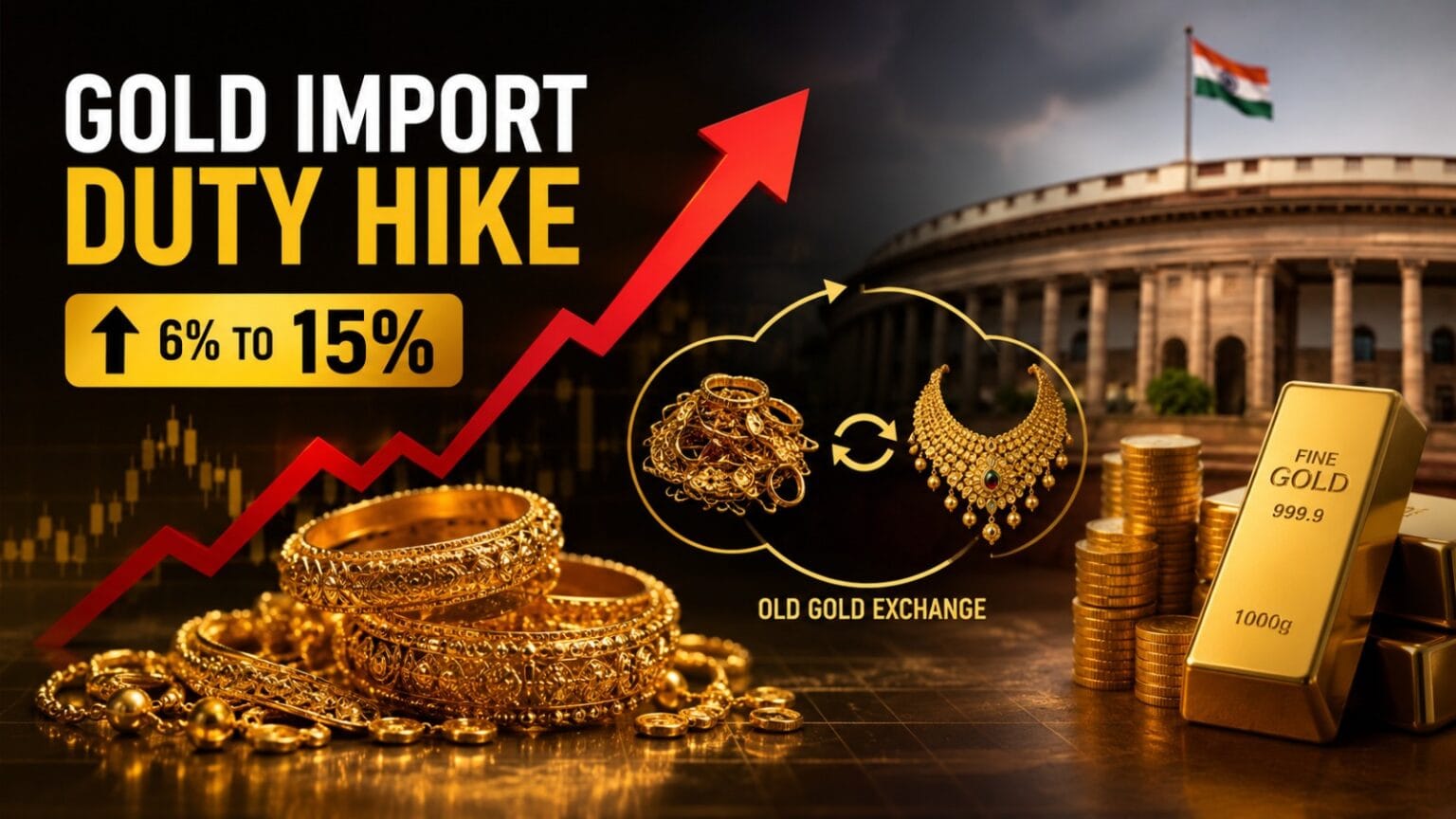
Gold Import Duty Hike 2026
India’s decision to sharply increase import duty on gold has sent shockwaves across the jewellery industry, bullion markets, and consumer sector. The government has raised the effective import duty on gold and silver from 6% to 15%, triggering immediate concerns about rising prices, weaker jewellery demand, old gold exchange schemes, and even a possible revival in gold smuggling.
Industry leaders believe the move will fundamentally change how Indians buy gold in 2026.
Instead of purchasing fresh jewellery outright, more consumers are expected to exchange old gold ornaments for new designs in order to reduce costs. Jewellers are also warning that the higher gold import duty could dampen overall sales volumes, especially among middle-class buyers and wedding shoppers.
The development has rapidly become one of the most searched financial and commodity stories in India, with people looking up terms such as:
- Gold import duty hike 2026
- Why gold prices are rising
- Old gold exchange schemes
- Gold smuggling India
- Gold price after import duty increase
- Modi gold buying appeal
- Gold exchange offers jewellery stores
What Did the Government Announce?
The Indian government revised customs duty rates on gold, silver, platinum, jewellery findings, and precious metal-linked imports.
Under the new structure:
- Basic customs duty on gold has been increased to 10%
- An additional 5% Agriculture Infrastructure and Development Cess (AIDC) has been imposed
- The total effective import tax now stands at 15%, compared to the earlier 6%
The revised duty structure came into effect on May 13, 2026.
The move is part of the government’s broader strategy to:
- Reduce pressure on India’s foreign exchange reserves
- Limit non-essential imports
- Support the weakening rupee
- Control rising import bills amid global economic uncertainty
Why India Raised Gold Import Duty
India is one of the world’s largest consumers of gold.
However, the country imports most of its gold using foreign currency, mainly US dollars. This creates pressure on:
- India’s trade deficit
- Foreign exchange reserves
- Rupee stability
According to reports, India’s gold import bill reached nearly $72 billion in FY26, despite a decline in import quantity because international gold prices surged sharply.
The government appears concerned that excessive gold imports could worsen:
- Currency pressure
- External balances
- Forex reserve stress
This concern became even stronger after:
- The Iran conflict disrupted global oil markets
- Crude oil volatility increased
- Dollar outflows intensified
Prime Minister Narendra Modi had also recently urged citizens to avoid non-essential gold purchases for a year to help conserve foreign exchange.
Why Jewellers Expect Old Gold Exchange to Surge
The jewellery industry believes consumers will now increasingly shift toward exchanging existing gold instead of buying completely fresh jewellery.
This is because:
- Gold prices will rise further due to higher import taxes
- Wedding buyers may struggle with affordability
- Exchange schemes reduce upfront spending
- Existing household gold becomes more valuable
Amit Modak, Director and CEO of PNG Sons, told Moneycontrol that higher import duties will increase the value of gold already lying in homes and jewellers’ inventories. He added that consumers may now prefer exchanging old jewellery for new pieces instead of making entirely new purchases.
India is estimated to hold:
- Nearly 25,000–30,000 tonnes of household gold
- One of the world’s largest private gold reserves
Industry experts believe even small recycling activity from households could significantly reduce fresh gold imports.
“Swap, Don’t Shop” Trend Gains Momentum
Jewellers across India are already adapting to the new environment.
In Gujarat, retailers have started aggressively promoting exchange-based schemes under the concept:
“Swap, don’t shop.”
Many stores are offering:
- Zero-deduction exchange offers
- Better resale valuations
- Lower making charges
- Exchange bonuses
According to industry reports:
- Around 80% of jewellery purchases in some markets are now happening through exchange transactions rather than fresh buying.
This trend could accelerate nationwide after the import duty hike.
Also read – Pakistan Gives Military Airbase to hide Iran’s Aircraft: US calls it betrayal
Why Jewellery Sales May Slow Down
Despite exchange schemes, the jewellery industry fears an overall decline in demand.
Experts estimate that gold jewellery sales volumes could decline by:
- 10% to 15% in the short term
Several reasons explain this slowdown.
1. Higher Retail Prices
Import duty directly increases domestic gold prices.
The additional cost is eventually passed on to consumers.
2. Middle-Class Affordability Pressure
Gold jewellery is highly price-sensitive in India, especially among:
- Middle-income households
- Wedding buyers
- Rural consumers
3. Rising Investment Volatility
Many buyers are now treating gold more as an investment asset than a jewellery purchase.
4. Economic Uncertainty
Consumers may postpone discretionary spending amid inflation and economic caution.
Gold Prices Have Already Reacted
Following the duty hike:
- Gold futures surged sharply
- Domestic prices rose rapidly
- Physical gold discounts hit record levels in some markets due to profit booking and weak retail demand
Reuters reported that gold discounts in India breached:
- $200 per ounce — the highest ever recorded.
Dealers said:
- Investors began selling aggressively
- Retail buyers stayed cautious
- Jewellers temporarily reduced purchases
Could Gold Smuggling Rise Again?
One of the biggest concerns surrounding the import duty hike is the possible return of large-scale gold smuggling.
Historically, higher gold duties in India have often led to:
- Illegal imports
- Airport seizures
- Underground trading networks
Moneycontrol reported that gold seizures nearly doubled after earlier duty hikes in 2022.
Experts now fear:
- Smuggling profit margins could rise significantly
- Grey market operators may become more active
- Illegal gold channels may expand again
Reuters also noted that the higher tariffs could nearly double smuggling incentives.
How Gold Loan Companies Could Benefit
Interestingly, not all sectors are negatively impacted.
Gold finance companies such as:
- Muthoot Finance
- Manappuram Finance
- IIFL Finance
have seen positive market reactions because higher gold prices increase the collateral value of gold loans.
As gold prices rise:
- Loan eligibility against jewellery increases
- Existing pledged gold becomes more valuable
- Gold-backed lending businesses benefit
This explains why some gold finance stocks rallied after the announcement.
Will Indians Stop Buying Gold?
Probably not.
Despite repeated duty hikes over the years, India’s emotional and cultural attachment to gold remains extremely strong.
Gold continues to play a central role in:
- Weddings
- Festivals
- Investments
- Family savings
- Rural wealth storage
Reuters noted that even large price increases historically have not significantly reduced long-term gold demand in India.
However, consumer behaviour may change.
Instead of:
- Heavy new jewellery purchases
people may increasingly prefer:
- Old gold exchange
- Lightweight jewellery
- Lower-karat products
- Digital gold investments
- Gold ETFs
Rise of Digital Gold and Gold ETFs
Financial experts believe the duty hike could also accelerate demand for:
- Gold ETFs
- Electronic Gold Receipts (EGRs)
- Digital gold products
These options allow investors to gain gold exposure without increasing physical imports.
This shift aligns with the government’s broader goal of:
- Reducing physical gold dependency
- Lowering forex outflows
What This Means for Consumers
If you are planning to buy gold in 2026, here’s what may happen:
Consumers May See:
- Higher jewellery prices
- Reduced affordability
- Better exchange offers
- More lightweight jewellery options
- Increased making-charge negotiations
Jewellers May Focus On:
- Exchange schemes
- Recycling old gold
- Lower-karat collections
- Inventory optimisation
Investors May Shift Toward:
- Gold ETFs
- Digital gold
- Financial gold products
Final Thoughts
India’s gold import duty hike is more than just a tax increase.
It represents:
- A forex protection strategy
- An attempt to control imports
- A response to global economic uncertainty
- A major shift for the jewellery industry
The biggest immediate impact may not simply be higher gold prices.
Instead, the real transformation could be in how Indians buy gold itself.
The traditional “buy new jewellery” model may increasingly evolve into:
- Exchange-based buying
- Recycling old household gold
- Financial gold investments
- Smaller-ticket purchases
At the same time, concerns about smuggling, lower sales volumes, and pressure on jewellers remain serious.
One thing is certain:
India’s relationship with gold is changing — but its obsession with gold is far from over.
Subscribe to our YouTube Channel The Logic Stick for more video insights