






Introduction: Inside the NIA Operation
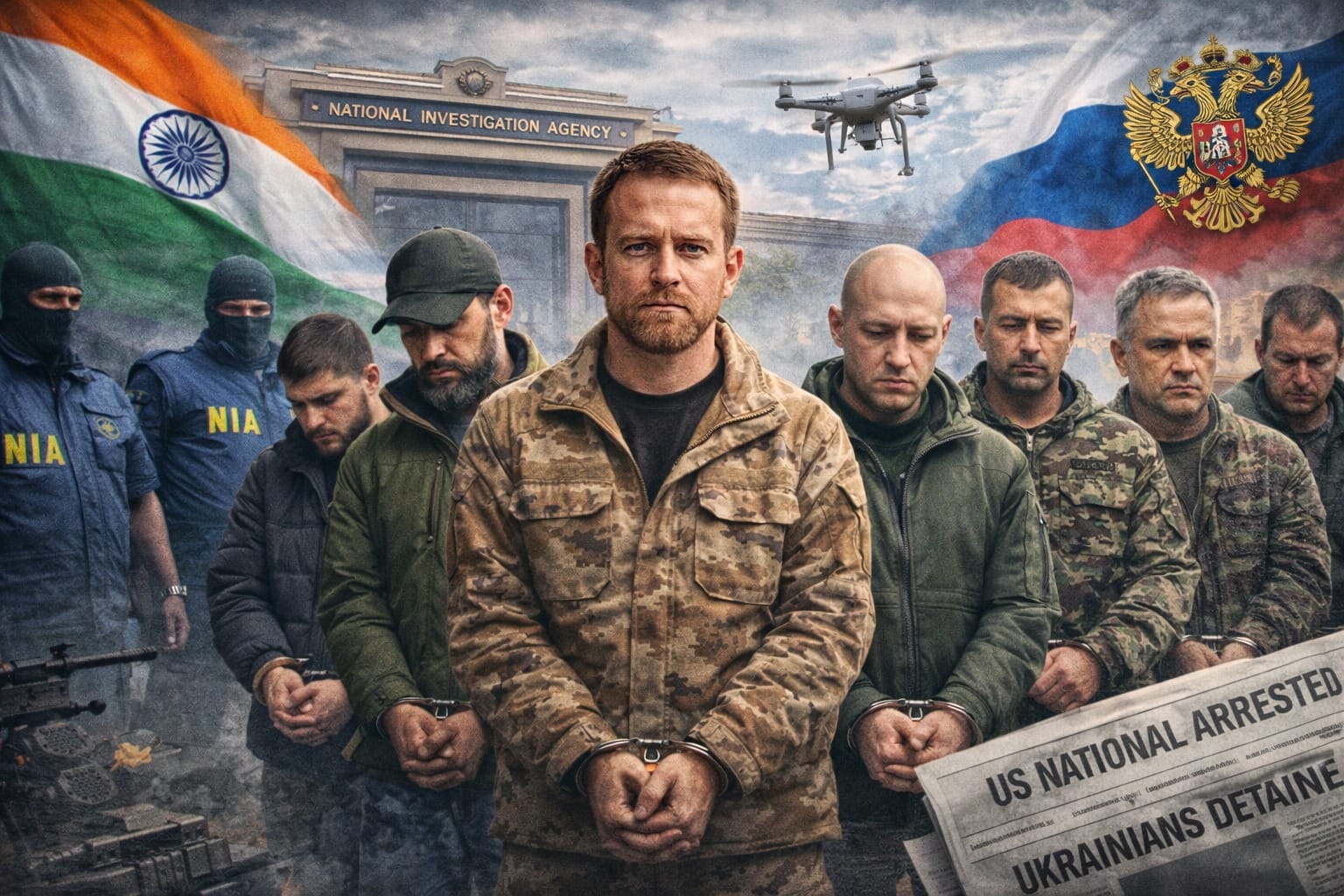
In a major international security breakthrough, India’s premier anti-terror agency—the National Investigation Agency (NIA)—arrested a US national, Matthew Aaron VanDyke, along with six Ukrainian nationals in March 2026. What makes this case globally significant is the role of Russian intelligence, which reportedly provided critical inputs that helped Indian agencies track and detain the group.
The arrests have sparked intense debate across geopolitical, intelligence, and security circles. Questions are being raised about foreign mercenary networks, drone warfare training, insurgency links in India’s Northeast, and the increasing role of international intelligence cooperation.
This article breaks down how Russian intelligence tipped off India, who Matthew VanDyke is, what the group was allegedly doing, how the NIA tracked them, and why this case matters globally.
The Russian Intelligence Tip-Off: How It All Started
The entire operation reportedly began with a critical intelligence input from Russian authorities.
According to officials, Russian agencies shared information with India about suspicious activities involving:
- A US citizen
- Six Ukrainian nationals
- Their movements linked to Myanmar and India’s Northeast
This intelligence was significant because it flagged cross-border activities involving drone warfare and training insurgent groups.
While the exact details of the intelligence remain classified, sources confirm that:
- Russia provided actionable inputs
- The tip-off helped India identify the suspects’ movements
- It triggered a deeper surveillance and tracking operation
This marks an important example of India-Russia intelligence cooperation, especially in a region sensitive to insurgency and geopolitical tensions.
Who is Matthew VanDyke?
At the center of the case is Matthew Aaron VanDyke, a US national with a controversial global profile.
VanDyke is not a typical traveler or businessman.
His background includes:
- War correspondent
- Documentary filmmaker
- Security analyst
- Founder of a military training organization called Sons of Liberty International
He is also known for:
- Participating in the Libya war (2011)
- Being detained by pro-Gaddafi forces and later escaping
- Involvement in Syria and other conflict zones
Over time, VanDyke developed a reputation as someone who operates within conflict zones—not just as an observer, but often as a participant.
This background raised immediate red flags for Indian investigators.
The Alleged Mission: What Were They Doing?
According to the NIA, the group was involved in a complex cross-border operation linked to Myanmar.
Key allegations include:
- Entering India on tourist visas
- Traveling to restricted areas like Mizoram without permits
- Crossing into Myanmar illegally
- Training ethnic armed groups
- Supplying advanced equipment like:
- drones
- signal jamming technology
- Conducting drone warfare training sessions
The NIA also alleged that these armed groups had links to insurgent organizations operating in India’s Northeast, making the case a serious national security concern.
Officials believe the group had been:
- Making repeated trips since 2024
- Building operational networks in the region
- Conducting multiple training sessions
The Northeast Route: Why Mizoram Matters
One of the most critical aspects of the case is the route used by the accused.
Why Mizoram?
Mizoram shares a porous border with Myanmar, making it:
- Strategically sensitive
- Difficult to monitor completely
- A known route for cross-border movement
According to investigators:
- The group flew into Guwahati
- Then traveled to Mizoram
- From there, they crossed into Myanmar illegally
This route is particularly important because it has historically been used by:
- insurgent groups
- smugglers
- illegal cross-border networks
The NIA Operation: Months of Surveillance
The arrests were not sudden.
The NIA had been:
- Tracking the group for nearly three months
- Monitoring movements across multiple states
- Coordinating with intelligence agencies
Arrest Timeline
- March 13, 2026 – NIA arrests all seven suspects
- Locations:
- Delhi
- Lucknow
- Kolkata
This multi-city operation suggests:
- careful planning
- synchronized intelligence inputs
- coordinated execution
Also read – Iran Strikes Tel Aviv Railway Station: Services Halted
Charges Filed Against the Accused
The accused have been charged under India’s strict anti-terror law:
Unlawful Activities (Prevention) Act (UAPA)
Key charges include:
- Criminal conspiracy
- Terror-related activities
- Illegal arms training
- Cross-border insurgency support
The NIA also claimed that:
- The group illegally imported drones from Europe
- These drones were supplied to armed groups in Myanmar
- The training included:
- drone assembly
- combat usage
- signal jamming
International Reactions: US and Ukraine Respond
The arrests quickly triggered international attention.
United States
- The US Embassy confirmed awareness
- However, it declined detailed comments citing privacy
Ukraine
Ukraine took a more active stance:
- Confirmed the nationality of the six detainees
- Sought:
- fair trial
- consular access
- transparency in proceedings
The situation is sensitive because:
- Ukraine is currently engaged in conflict with Russia
- Russia’s role in tipping off India adds a geopolitical dimension
The Russia Angle: Why Did Moscow Share Intelligence?
The involvement of Russia raises important strategic questions.
Possible reasons behind Russia’s tip-off:
- Countering Ukrainian-linked networks
Russia may view Ukrainian nationals operating internationally as a security threat. - Strengthening ties with India
Intelligence sharing boosts India-Russia strategic relations. - Geopolitical signaling
Demonstrates Russia’s global intelligence reach. - Monitoring mercenary networks
VanDyke’s activities align with global freelance military networks.
While official confirmation is limited, the cooperation indicates deep intelligence coordination between India and Russia.
The Bigger Threat: Drone Warfare and Insurgency
This case is not just about individuals—it reflects a larger global concern.
Emerging threats highlighted by the case:
- Drone warfare becoming accessible
- Non-state actors gaining military capabilities
- Cross-border insurgency networks expanding
- Foreign nationals engaging in regional conflicts
The use of drones and jamming technology suggests:
- advanced training
- strategic intent
- potential long-term impact
Was This a Mercenary Network?
Several aspects of the case point toward a possible mercenary-style operation.
Indicators include:
- International composition of the group
- Military training expertise
- Conflict-zone experience
- Financial and logistical operations
VanDyke’s organization and past activities further support this theory.
What Happens Next?
As of now:
- All accused are in NIA custody
- Investigation is ongoing
- Authorities are trying to identify:
- local facilitators
- funding sources
- additional network members
The case could expand into a larger international probe involving multiple countries.
Why This Case Matters
This incident is significant for multiple reasons:
1. India’s Internal Security
- Highlights vulnerabilities in Northeast borders
- Shows risks of foreign involvement in insurgency
2. Global Intelligence Cooperation
- Demonstrates real-time collaboration between nations
- Russia’s role signals strategic partnerships
3. Rise of Hybrid Warfare
- Combines:
- technology
- training
- cross-border networks
4. Legal and Diplomatic Impact
- Could influence:
- India-US relations
- India-Ukraine engagement
Conclusion
The arrest of Matthew VanDyke and six Ukrainians is not just another terror case—it is a window into the evolving nature of global conflict.
From Russian intelligence inputs to NIA’s multi-city crackdown, the case reveals how modern warfare is no longer confined to national armies. It now involves:
- private actors
- foreign nationals
- advanced technologies
- hidden networks
As the investigation unfolds, this case may redefine how India—and the world—approaches security, surveillance, and international cooperation in the age of hybrid warfare.
Subscribe to our YouTube channel The Logic Stick for more video insights