






NEET UG 2026 Paper Leak Explained
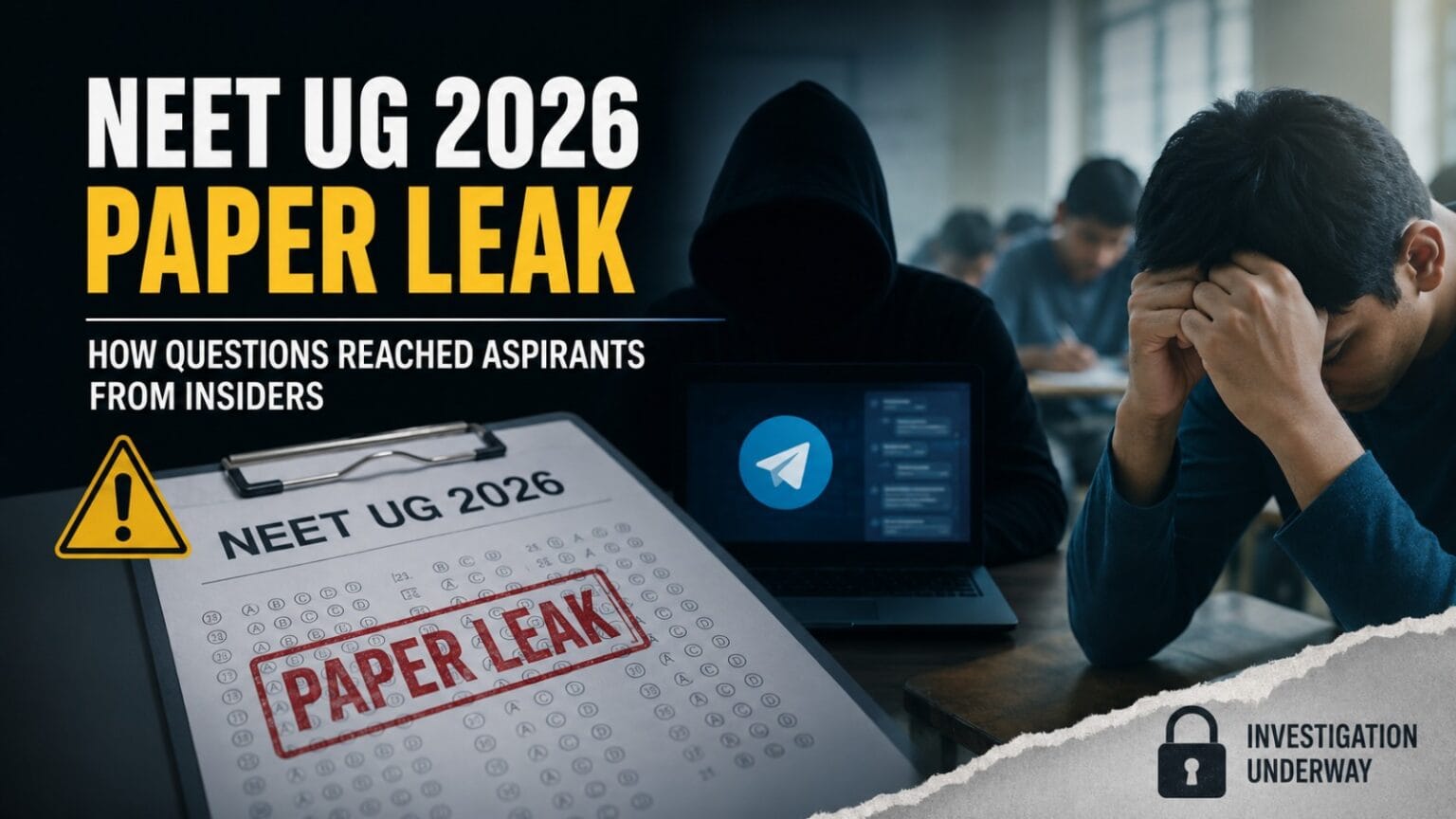
The NEET UG 2026 paper leak controversy has triggered massive outrage across India after investigators uncovered what appears to be a highly organized network involving insiders, intermediaries, coaching links, and digital circulation channels. The scandal has once again raised serious questions about the security and credibility of India’s biggest medical entrance examination.
The National Eligibility cum Entrance Test (NEET-UG) is the single gateway for admission into MBBS, BDS, AYUSH, and other medical courses in India. Every year, lakhs of students spend years preparing for the exam, making it one of the most competitive and emotionally intense examinations in the country.
This year, however, NEET UG 2026 became the center of a national controversy after allegations surfaced that examination questions had leaked before the May 3 exam. The National Testing Agency (NTA) later cancelled the exam, and the Central Bureau of Investigation (CBI) launched a nationwide investigation into the alleged malpractice.
What Is the NEET UG 2026 Paper Leak Case?
The NEET UG 2026 paper leak case revolves around allegations that confidential examination questions were accessed by insiders linked to the paper-setting ecosystem and later circulated among selected aspirants through a network spread across multiple states.
According to NDTV and court submissions referenced in the ongoing probe, investigators suspect the leak happened in multiple stages:
- Access to confidential question pools
- Sharing through insider contacts
- Coaching and memorization sessions
- Digital distribution through Telegram and PDFs
- Financial transactions involving lakhs of rupees
- Expansion of the network beyond Maharashtra into Rajasthan and other regions
The case has now become one of the biggest educational scandals of 2026.
How the NEET Paper Leak Allegedly Happened
Investigators believe the leak originated from within the examination ecosystem itself.
1. Access Through Subject Experts
According to the CBI probe, Pune-based botany professor Manisha Mandhare allegedly had access to confidential botany and zoology question pools because of her association with the NEET examination process as a subject expert.
Court proceedings also revealed the alleged involvement of retired chemistry professor PV Kulkarni, who investigators believe had links to the chemistry paper-setting process.
Authorities suspect portions of the question paper and answer keys may have been extracted from the examination ecosystem before the exam date.
This insider angle is what has made the scandal especially alarming.
The Manisha Mandhare–Manisha Waghmare Connection
Investigators believe one of the earliest dissemination points emerged through Pune-based accused Manisha Waghmare, who reportedly lived in the same housing society as Manisha Mandhare.
According to court submissions:
- Waghmare frequently visited Mandhare’s residence
- The two allegedly worked together
- Questions were shared through personal coordination
- Other accused were also connected through this network
The CBI informed the court that:
“PV Kulkarni provided questions to certain persons through Manisha Waghmare.”
Investigators allege the accused operated in conspiracy to collect and distribute leaked questions.
“Special Coaching Sessions” for Select Students
One of the most shocking revelations in the case involves what investigators called “special coaching sessions.”
According to court submissions:
- Mandhare allegedly conducted secret coaching sessions in Pune during April
- Select students were invited
- Questions were dictated verbally
- Students were allegedly instructed to mark answers in notebooks instead of receiving printed copies
This method may have been used to avoid leaving obvious documentary evidence.
Authorities believe the leaked questions were disguised as “important questions” or “guess papers” during these sessions.
Telegram, PDFs and Digital Circulation
The investigation suggests that the leaked material later spread digitally through messaging platforms.
According to investigators:
- Accused Shubham Khairnar allegedly acted as a middle link
- Question papers reportedly moved beyond Maharashtra
- Another accused, Yash Yadav, allegedly circulated PDFs through Telegram on April 29 — four days before the exam
This digital distribution phase reportedly helped the alleged leak network expand rapidly.
Investigators are now conducting forensic analysis of:
- Mobile phones
- Telegram chats
- WhatsApp conversations
- Financial records
- Cloud data
- Communication logs
Rajasthan Connection: The Sikar Network
Rajasthan has emerged as a major focal point in the investigation.
According to investigators:
- Mangilal Biwal allegedly approached the accused network
- He reportedly sought leaked papers for his son
- Payments between Rs 10 lakh and Rs 12 lakh were allegedly discussed
The CBI suspects that the network expanded into Rajasthan through coaching institute connections in Sikar — a city already known as one of India’s largest coaching hubs.
Authorities claim that after receiving the leaked papers:
- Printouts were made
- Questions were distributed among relatives and known aspirants
- Multiple students may have gained access before the exam
The “Guess Paper” Controversy
One of the biggest turning points in the scandal came when investigators found that a so-called “guess paper” allegedly matched a large portion of the actual exam.
According to investigation sources:
- Around 410 questions were being examined
- More than 100 Biology and Chemistry questions showed “striking similarities”
- Roughly 120 questions allegedly matched the actual NEET paper
Some reports even claimed that the similarities could amount to nearly 600 out of 720 marks.
This discovery intensified pressure on the NTA and eventually led to the cancellation of the exam.
NEET UG 2026 Cancelled
After allegations escalated nationally, the NTA cancelled the NEET UG 2026 examination.
The exam had originally been conducted on May 3, 2026, in:
- 551 cities across India
- 14 international cities
- More than 5,400 centers
Approximately 22 lakh students appeared for the exam.
The re-examination has now been scheduled for June 21, 2026.
Also read – PM Modi Receives Royal Order of the Pole Star
Why NEET Paper Leaks Have Become a National Crisis
Paper leaks are not new in India, but the scale and frequency of these incidents have become increasingly alarming.
India’s exam ecosystem involves:
- Millions of aspirants
- Extremely limited seats
- Intense competition
- Massive financial pressure
- Coaching industry influence
For NEET specifically:
- Over 22 lakh students compete
- Around 1 lakh MBBS seats are available
- A difference of a few marks can change a student’s entire future
Experts say this intense pressure creates an environment where organized “education mafias” exploit desperate aspirants and parents.
How Paper Leak Networks Usually Operate
Investigations and past cases suggest most exam paper leak operations follow a structured pattern:
- Access obtained through insiders
- Questions copied before exams
- Distribution through brokers and middlemen
- Sale to aspirants for lakhs of rupees
- Rapid sharing via Telegram and WhatsApp
- Secret memorization sessions before exams
The NEET UG 2026 case appears to follow many of these same patterns.
Political Reactions and Public Outrage
The NEET UG 2026 paper leak has sparked nationwide political debate.
Opposition leaders have:
- Questioned the credibility of the NTA
- Demanded resignations
- Called for Supreme Court-monitored investigations
- Raised concerns over repeated exam leaks in India
Meanwhile, the government has promised strict action against those involved.
Several ministers described the leak as an attack on students’ futures and assured that the accused would face strong legal consequences.
Impact on Students
The biggest victims of the scandal are the students.
Millions of aspirants:
- Prepared for years
- Faced emotional stress
- Spent huge amounts on coaching
- Sacrificed social life and mental peace
The cancellation of the exam has created:
- Anxiety
- Uncertainty
- Emotional exhaustion
- Loss of trust in the system
Social media has been flooded with reactions from students demanding:
- Transparent investigations
- Accountability
- Better exam security
- Fair opportunities for genuine candidates
Will NEET Become Computer-Based?
Following repeated controversies, reports suggest authorities are considering major structural reforms.
According to reports, NEET could move toward a computer-based examination format from 2027 onwards to reduce the risk of paper leaks.
Experts believe computer-based testing could:
- Improve security
- Reduce physical paper handling
- Minimize transportation risks
- Make real-time monitoring easier
However, implementing such a large-scale digital exam across India will also bring logistical challenges.
What Happens Next?
The investigation is still ongoing.
The CBI is currently examining:
- Financial trails
- Device data
- Coaching institute links
- Messaging app records
- Possible insider involvement
- Inter-state connections
More arrests are expected as investigators continue tracing the network.
The outcome of this case could significantly impact:
- NTA credibility
- Future entrance exam structures
- Coaching institute regulations
- Exam security protocols in India
Conclusion
The NEET UG 2026 paper leak controversy has exposed deep vulnerabilities in India’s examination system. What investigators initially believed was a localized leak now appears to be a coordinated network involving insiders, intermediaries, coaching connections, and digital circulation channels across states.
For millions of students, NEET represents years of sacrifice and the dream of becoming a doctor. Cases like this not only damage institutional credibility but also destroy trust in merit-based education.
As the CBI probe continues, the country now faces a larger question:
Can India build an examination system that is truly secure, transparent, and fair for every student?
The answer to that question may shape the future of competitive exams in India for years to come.
Subscribe to our YouTube Channel The Logic Stick for more video insights