




PM Modi Warns World Could Be Pushed Back Into Poverty
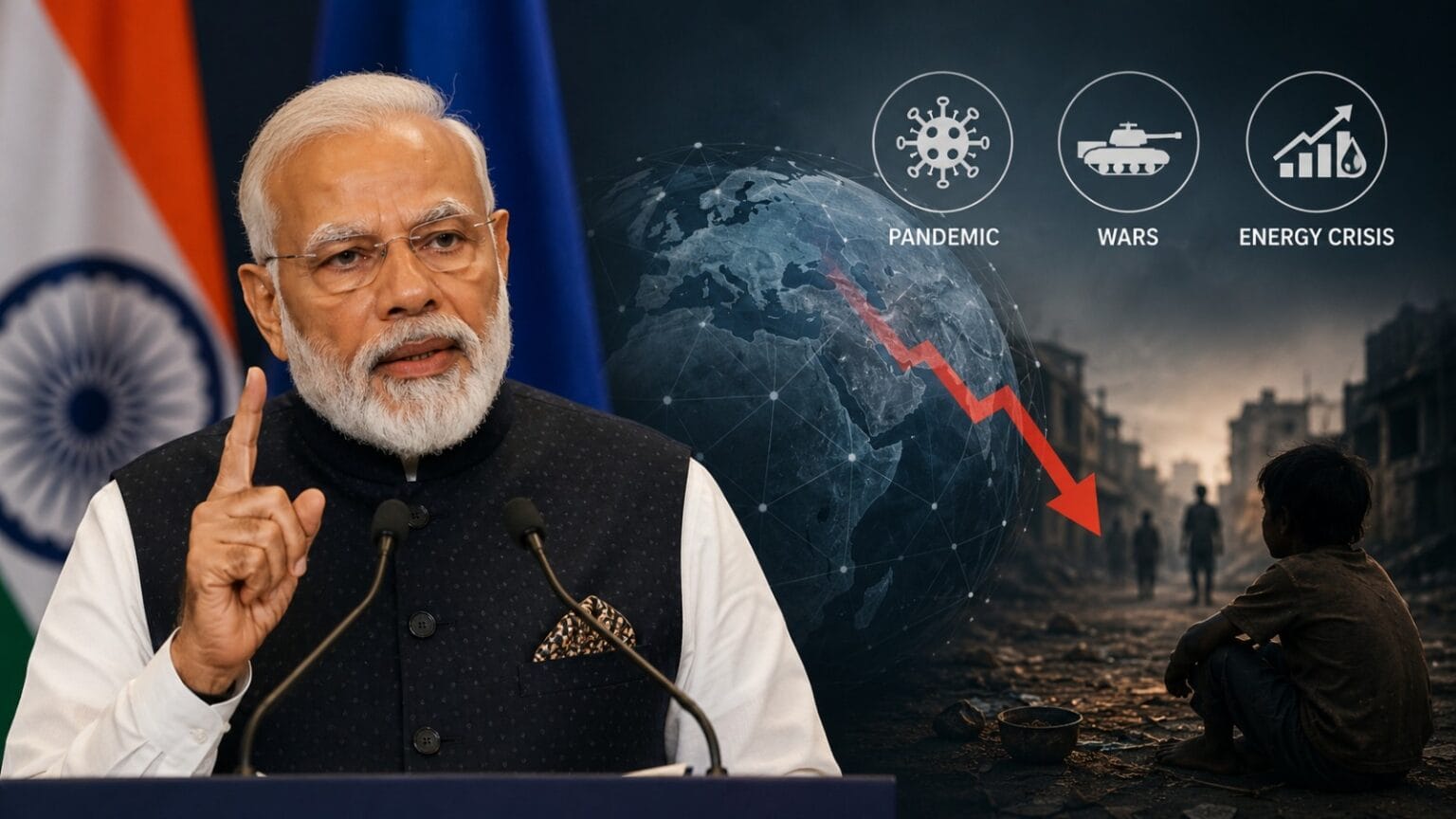
Prime Minister Narendra Modi delivered a strong warning during his speech in The Hague, Netherlands, stating that the world is entering a “decade of disasters” and that global instability could erase decades of economic progress, pushing millions back into poverty. His remarks came amid rising geopolitical tensions, wars, energy insecurity, and growing economic uncertainty worldwide.
Speaking to the Indian diaspora during his Europe visit, PM Modi highlighted how the COVID-19 pandemic, ongoing wars, and the global energy crisis are collectively threatening economies, supply chains, and livelihoods across the world.
The statement has gained international attention because it reflects growing concerns among global leaders that the world economy may be entering a prolonged period of instability similar to the financial and humanitarian crises seen during previous global recessions and wars.
What PM Modi Said in The Hague
Addressing the Indian community in the Netherlands, PM Modi said:
“First came corona, then wars began, and now there is an energy crisis. This decade is turning into a decade of disasters for the world.”
He further warned that if global conditions do not improve rapidly:
- Decades of development progress could be reversed
- Economic achievements could be wiped away
- A large section of the global population could fall back into poverty
The speech was delivered during the second leg of PM Modi’s five-nation Europe and Middle East diplomatic tour.
Why PM Modi Issued This Warning
PM Modi’s remarks were linked to three major global crises currently affecting economies worldwide:
1. The COVID-19 Pandemic Aftereffects
The coronavirus pandemic severely disrupted:
- Global supply chains
- Employment
- Healthcare systems
- Manufacturing
- International trade
Many countries are still recovering from:
- Rising debt
- Inflation
- Reduced economic growth
- Healthcare spending burdens
Even years after the pandemic, global economies continue facing the long-term consequences of lockdowns and economic slowdowns.
2. Ongoing Global Wars and Geopolitical Tensions
PM Modi referred to multiple ongoing conflicts that are impacting the global economy.
Key conflicts affecting the world include:
- Russia-Ukraine war
- Middle East tensions involving Iran and Israel
- Red Sea shipping disruptions
- Regional military conflicts affecting energy markets
Wars impact economies through:
- Higher fuel prices
- Trade disruptions
- Rising transportation costs
- Food shortages
- Investor uncertainty
The Russia-Ukraine conflict alone has affected:
- Wheat exports
- Fertilizer supply
- Crude oil prices
- Natural gas markets
- European manufacturing costs
3. The Global Energy Crisis
One of the biggest concerns highlighted by PM Modi was the energy crisis.
The world has seen:
- Sharp increases in fuel prices
- Supply chain disruptions in oil and gas
- Rising electricity costs
- Energy insecurity across Europe and Asia
India itself recently experienced fuel price hikes after years of relative stability in petrol and diesel prices.
Energy crises often lead to:
- Inflation
- Higher transportation costs
- Expensive manufacturing
- Increased food prices
- Slower economic growth
This is why many economists fear that prolonged energy instability could push vulnerable populations back into poverty.
Why Poverty Could Increase Globally
PM Modi’s warning reflects a broader global concern shared by economists and institutions like the World Bank and IMF.
When economies face prolonged instability:
- Jobs decline
- Inflation rises
- Food becomes expensive
- Healthcare access weakens
- Small businesses collapse
- Middle-class savings shrink
Poor and developing nations suffer the most because:
- They rely heavily on imports
- Energy costs affect daily life directly
- Economic shocks spread faster
- Social protection systems are weaker
Millions of people globally had escaped extreme poverty over the past three decades due to:
- Economic globalization
- Technology growth
- Manufacturing expansion
- International trade
But global crises are now threatening to reverse those gains.
PM Modi’s “Decade of Disasters” Remark Explained
PM Modi describing the current era as a “decade of disasters” reflects how multiple crises have happened consecutively since 2020.
Timeline of Major Global Crises
2020
- COVID-19 pandemic
- Global lockdowns
- Historic economic collapse
2021
- Supply chain disruptions
- Semiconductor shortages
- Inflation begins rising globally
2022
- Russia invades Ukraine
- Oil and gas prices surge
- Food supply chains disrupted
2023–2025
- Middle East tensions escalate
- Red Sea shipping attacks
- Global recession fears
- Rising climate-related disasters
2026
- Continued geopolitical instability
- Energy security concerns
- High inflation in multiple economies
PM Modi’s speech connects these events into a larger narrative that the world is entering a prolonged phase of instability.
Also read – Petrol Prices Hiked: How It Will Impact the Common Man
India and Netherlands Working on “Future-Ready Supply Chains”
One of the major themes of PM Modi’s speech was the need for resilient global supply chains.
He said India and the Netherlands are working together to create:
- Trusted supply chains
- Transparent logistics systems
- Future-ready trade partnerships
Supply chains became a major global issue after:
- COVID-19 factory shutdowns
- Shipping disruptions
- Wars affecting trade routes
- Semiconductor shortages
Countries now want to reduce overdependence on single markets and create diversified supply chains.
India is increasingly positioning itself as:
- A manufacturing hub
- A semiconductor destination
- A logistics alternative
- A trusted democratic partner
India’s Growing Global Economic Position
During the speech, PM Modi also highlighted India’s transformation over the past decade.
He mentioned:
- India’s startup ecosystem
- Growth in AI and semiconductor sectors
- Infrastructure development
- Digital transformation
- Healthcare expansion
According to Modi:
- India now has the world’s third-largest startup ecosystem
- The country is rapidly expanding in AI and semiconductor technology
- India is undergoing “unprecedented transformation”
The remarks were also aimed at positioning India as a stable growth engine amid global uncertainty.
Why Europe Is Strengthening Ties With India
PM Modi’s Europe visit comes at a time when Europe is actively seeking:
- Alternative manufacturing partners
- Stable democratic allies
- Diversified supply chains
- Energy partnerships
- Technology cooperation
India has become strategically important for Europe because:
- China-related trade concerns are increasing
- Global supply chains are shifting
- India offers a large skilled workforce
- India’s market size continues growing
The Netherlands plays a major role in Europe’s logistics and trade ecosystem, making India-Netherlands cooperation strategically important.
PM Modi’s Appeal for Economic Discipline in India
Before his Europe visit, PM Modi had also urged Indians to:
- Save fuel
- Reduce unnecessary imports
- Work from home where possible
- Avoid excessive foreign travel
- Reduce gold purchases temporarily
These remarks were interpreted as efforts to:
- Reduce pressure on foreign exchange reserves
- Manage energy consumption
- Control economic vulnerability during global instability
Such statements indicate growing concern over the impact of global geopolitical crises on India’s economy.
How Global Crises Affect Common People
The warning issued by PM Modi is not just about governments and global politics.
Global crises directly impact ordinary citizens through:
- Expensive fuel
- Higher grocery prices
- Rising electricity bills
- Job uncertainty
- Expensive transportation
- Costlier imports
When wars disrupt oil supply:
- Fuel prices rise globally
- Shipping costs increase
- Inflation spreads across industries
This is why international conflicts now affect even countries that are geographically far from the war zones.
Climate Change and Economic Risk
Although PM Modi mainly focused on wars and energy, experts also warn that climate-related disasters are worsening global economic instability.
Countries are increasingly facing:
- Floods
- Heatwaves
- Droughts
- Food insecurity
- Water shortages
These climate events further increase:
- Poverty risk
- Migration pressures
- Economic losses
- Insurance costs
Many economists now believe climate shocks and geopolitical instability together could define the global economy of the next decade.
Global Leaders Increasingly Concerned About Economic Instability
PM Modi’s speech reflects a growing trend among world leaders warning about:
- Fragmented globalization
- Economic nationalism
- Resource competition
- Energy insecurity
- Geopolitical tensions
The IMF and World Bank have repeatedly warned that:
- Global growth remains fragile
- Inflation remains a concern
- Developing countries face higher debt risks
- Poverty reduction has slowed significantly
PM Modi’s comments align with these broader concerns.
Conclusion
PM Modi’s warning in The Hague was not just a political speech — it was a broader reflection on the state of the global economy in 2026.
By describing the current period as a “decade of disasters,” he highlighted how pandemics, wars, and energy crises are collectively threatening decades of global economic progress.
His remarks also underline a major reality of today’s interconnected world:
A crisis in one region now affects economies, fuel prices, jobs, trade, and livelihoods across the globe.
As countries struggle with geopolitical tensions, inflation, and economic uncertainty, leaders worldwide are increasingly focusing on:
- Resilient supply chains
- Energy security
- Economic stability
- Strategic partnerships
Subscribe to our YouTube Channel The Logic Stick for more video insights