





Trump Extends Iran Deadline as 45-Day Ceasefire Talks Intensify
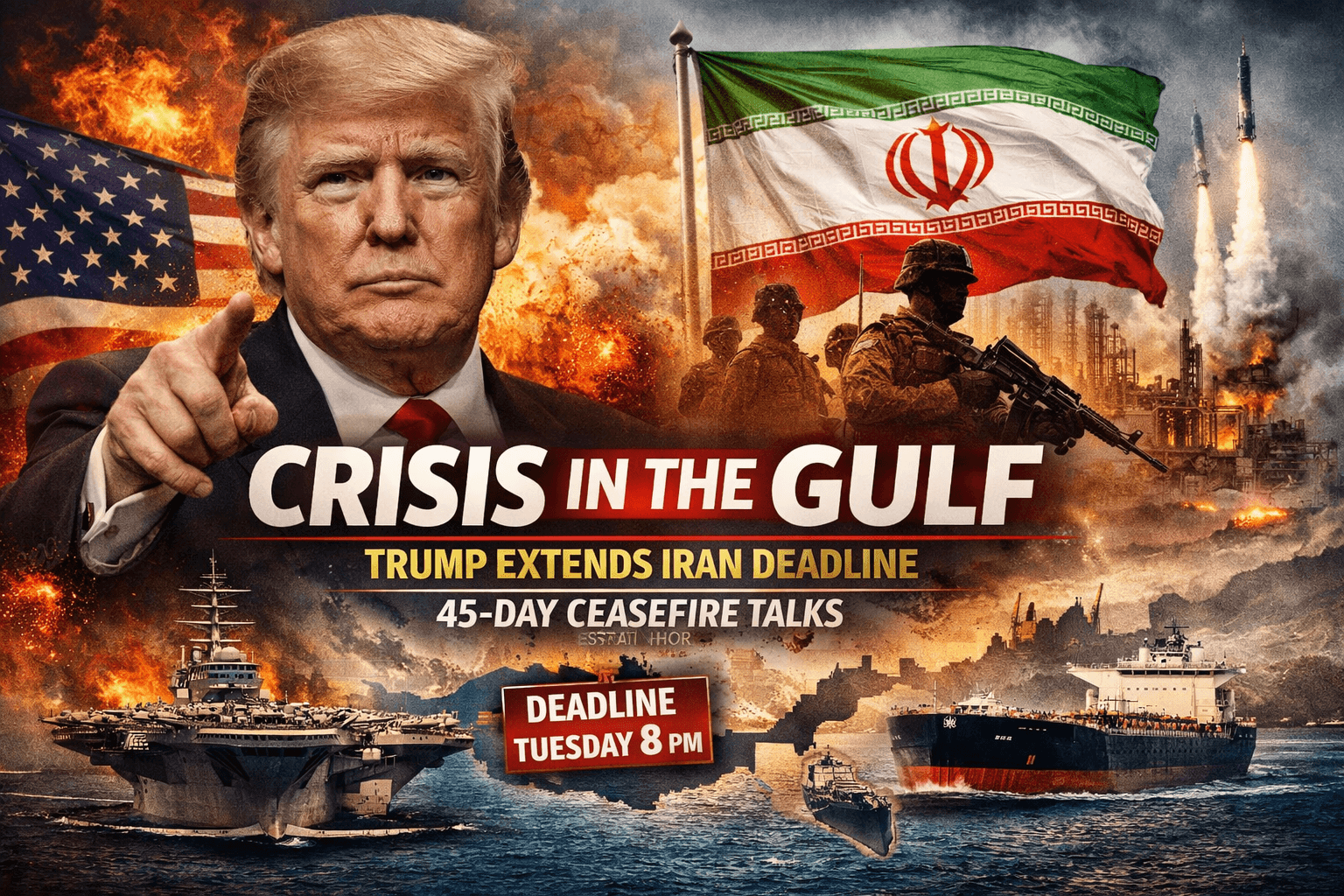
The United States–Iran conflict has reached a critical turning point, with U.S. President Donald Trump appearing to extend a key deadline for Iran in a cryptic message, even as urgent diplomatic efforts push for a proposed 45-day ceasefire to prevent further escalation.
This development comes amid rising global tensions linked to the closure of the Strait of Hormuz—a crucial oil transit route—and ongoing hostilities that have already lasted more than five weeks.
Deadline Extension: What Actually Happened
Trump had earlier issued a strong ultimatum demanding that Iran reopen the Strait of Hormuz or face military consequences, including potential strikes on critical infrastructure.
However, in a brief and ambiguous social media post stating a new deadline (“Tuesday, 8:00 p.m. Eastern Time”), Trump effectively extended the timeline by roughly 20 hours.
This extension suggests that:
- The U.S. is still pursuing diplomatic options
- Negotiations are actively ongoing
- Immediate military escalation has been delayed—but not ruled out
At the same time, Trump has continued to warn that failure to comply could result in severe retaliation targeting Iranian infrastructure.
The 45-Day Ceasefire Proposal: What We Know
Parallel to the deadline extension, a significant diplomatic initiative is underway.
According to reports cited by Reuters (via Axios), the United States, Iran, and regional mediators are discussing a two-phase peace plan centered around a 45-day ceasefire.
Structure of the Proposed Deal
Phase 1: Temporary Ceasefire (45 Days)
- Immediate halt in hostilities
- De-escalation of military activity
- Time window for negotiations
Phase 2: Negotiation Phase
- Talks on a permanent resolution
- Potential agreements on nuclear issues, sanctions, and regional security
The ceasefire could also be extended if negotiations require additional time.
However, it is important to note:
- Reuters stated it could not independently verify the Axios report
- There has been no official confirmation from the White House yet
Iran’s Position: Resistance to Deadlines
Iran has taken a firm stance against externally imposed deadlines.
- Tehran has indicated it will not reopen the Strait under temporary arrangements
- Officials have rejected imposed timelines and conditions
- Iran continues to push for broader, long-term guarantees
This creates a major challenge in negotiations, as both sides differ on:
- Timing
- Conditions
- Scope of agreement
Why the Strait of Hormuz Is the Core Issue
The crisis is centered around the Strait of Hormuz, one of the world’s most critical energy chokepoints.
- A significant portion of global oil passes through it
- Disruptions have already triggered market instability
- Iran has effectively restricted shipping following the conflict escalation
This has led to:
- Rising oil prices (above $110 per barrel in recent trading)
- Increased volatility in global markets
- Concerns over energy security worldwide
Conflict Background: How Things Escalated
The current crisis is part of a broader conflict that escalated in late February 2026.
- U.S. and Israeli strikes triggered Iranian retaliation
- Iran launched missile and drone attacks across the region
- Maritime disruptions intensified
The conflict has now:
- Lasted more than five weeks
- Resulted in thousands of casualties
- Expanded across multiple countries in the region
Read more on OpenAI vs ANI case.
Trump’s Strategy: Pressure + Negotiation
Trump’s approach reflects a dual-track strategy:
1. Maximum Pressure
- Public threats of military action
- Clear deadlines to force urgency
- Targeting critical infrastructure as leverage
2. Negotiation Window
- Extending deadlines
- Allowing diplomatic backchannels
- Supporting mediation efforts
This indicates that while the rhetoric remains aggressive, the U.S. is still open to a negotiated outcome.
Mediators Step In: A Last-Ditch Effort
Several countries are actively mediating the situation, including:
- Pakistan
- Turkey
- Egypt
These mediators are working to:
- Facilitate communication between the U.S. and Iran
- Structure a ceasefire agreement
- Prevent escalation into a full-scale regional war
The urgency of these efforts reflects growing concern that the conflict could spiral further if negotiations fail.
Global Impact: Markets and Energy Shock
The geopolitical crisis has already begun affecting the global economy.
Oil Markets
- Prices have surged due to supply fears
- Disruptions in the Strait are a major concern
Financial Markets
- Increased volatility across global indices
- Investor uncertainty due to geopolitical risks
Broader Implications
- Pressure on energy-importing countries
- Increased inflation risks
- Supply chain disruptions
What Happens Next: Three Scenarios
As the extended deadline approaches, the situation could unfold in several ways:
1. Ceasefire Agreement
- 45-day truce begins
- Reduction in violence
- Stabilization of markets
2. Partial Agreement or Delay
- Negotiations continue
- Temporary de-escalation
- Ongoing uncertainty
3. Breakdown and Escalation
- U.S. launches strikes
- Iran retaliates regionally
- Wider Middle East conflict
Key Reality Check
It is important to separate verified facts from speculation:
Confirmed:
- Trump extended the deadline to Tuesday evening
- A 45-day ceasefire proposal is being discussed
- Iran has resisted reopening the Strait under pressure
- Oil prices and markets have reacted to the crisis
Not Fully Confirmed:
- Final terms of the ceasefire
- Whether both sides have agreed in principle
- Timeline for implementation
Conclusion: A Narrow Window for Diplomacy
The extension of the deadline and the push for a 45-day ceasefire indicate that diplomacy still has a chance—but the window is closing fast.
The next 24–48 hours will be crucial in determining whether:
- The region moves toward de-escalation
- Or enters a deeper and more dangerous phase of conflict
While headlines may focus on Trump’s “cryptic post,” the real story is the intense diplomatic effort underway behind the scenes.
The outcome of these negotiations will not only shape the future of U.S.-Iran relations but could also have far-reaching consequences for global stability, energy markets, and international security.