







Introduction
The Indian rupee fall is once again at the center of economic discussions. As the currency continues to weaken against the US dollar amid rising crude oil prices, foreign capital outflows, and global uncertainty, a bold statement by the Chairman of the 16th Finance Commission, Arvind Panagariya, has triggered intense debate.
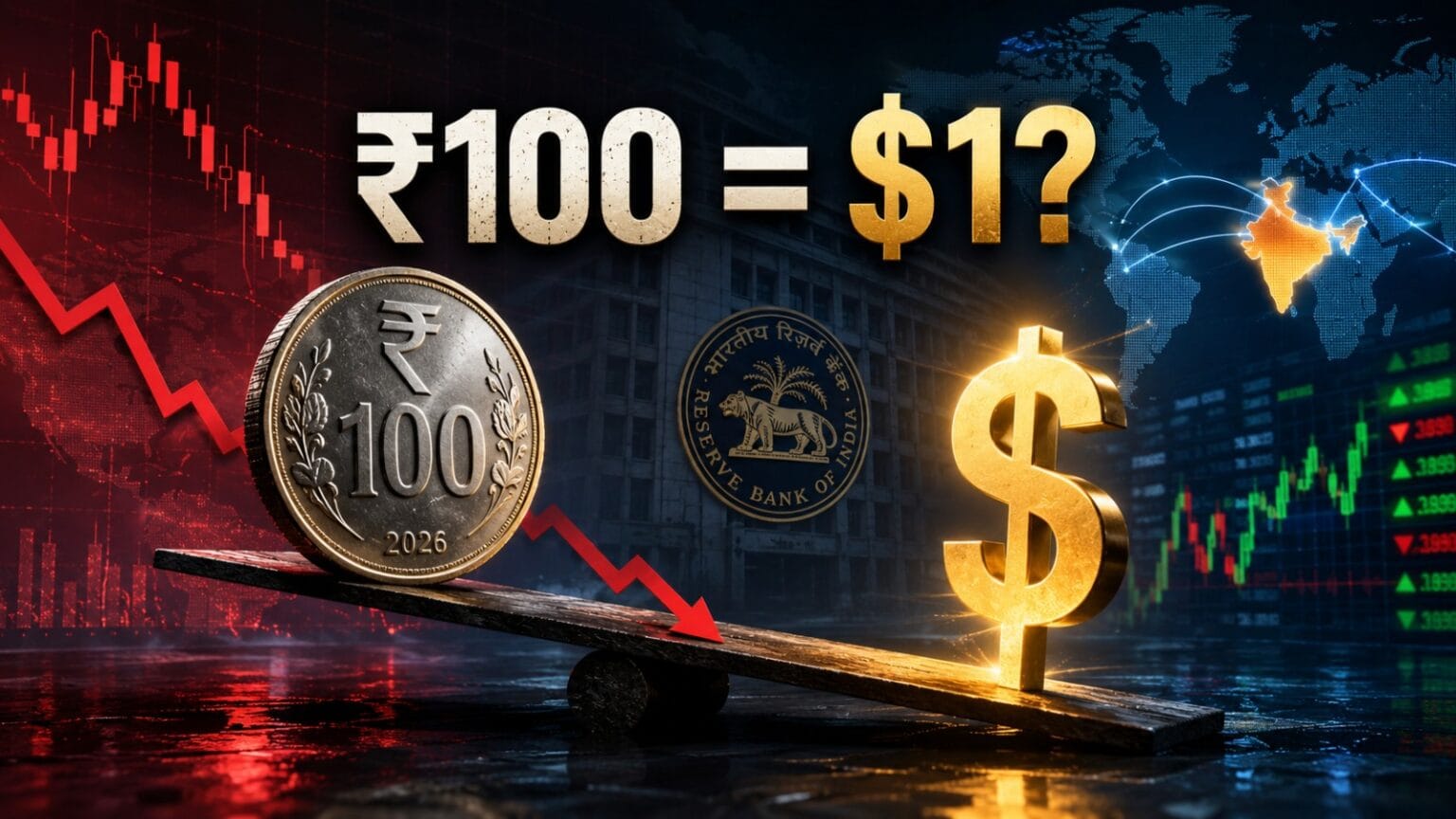
Panagariya recently advised the Reserve Bank of India (RBI) not to aggressively defend the rupee if it crosses the psychologically important ₹100-per-dollar mark. According to him, “100 is just a number,” and preserving India’s foreign exchange reserves is more important than maintaining a symbolic exchange rate.
But what does this mean for India’s economy, businesses, investors, and ordinary citizens?
This article explores the implications of a weaker rupee, the RBI’s current strategy, and whether India should allow the rupee to depreciate beyond ₹100 per US dollar.
Why Is the Rupee Falling?
The Indian rupee has been under pressure throughout 2026 due to a combination of domestic and international factors.
1. Rising Crude Oil Prices
India imports nearly 85% of its crude oil requirements. With Brent crude hovering near $110 per barrel due to geopolitical tensions in West Asia, India’s import bill has surged dramatically. Higher oil imports require more dollars, increasing demand for the US currency and weakening the rupee.
2. Foreign Investor Outflows
Foreign Institutional Investors (FIIs) have withdrawn billions of dollars from Indian equity markets in recent months. As investors move money into safer assets such as US Treasury bonds, demand for dollars rises while demand for rupees falls.
3. Strong US Dollar
Higher US interest rates and stronger bond yields have made dollar-denominated assets more attractive globally. This has strengthened the dollar against most currencies, including the rupee.
4. Trade Deficit Concerns
India’s merchandise trade deficit widened significantly in recent months, driven largely by energy imports. A larger trade deficit typically puts downward pressure on a country’s currency.
What Exactly Did Arvind Panagariya Say?
Arvind Panagariya argued that the RBI should not spend massive amounts of foreign exchange reserves merely to defend a particular number on the exchange rate chart.
According to him:
- ₹100 per dollar is a psychological barrier, not an economic one.
- Excessive intervention can drain valuable foreign exchange reserves.
- Market forces should be allowed to determine the rupee’s value.
- India should conserve reserves for genuine crises rather than defending symbolic exchange rate levels.
His remarks come at a time when the RBI has been actively intervening in currency markets by selling dollars to slow the rupee’s decline.
Why Is ₹100 Per Dollar Such A Big Deal?
Economically, there is nothing magical about ₹100.
However, psychologically, it carries immense significance.
Crossing ₹100 would:
- Generate headlines worldwide.
- Trigger concerns among investors.
- Create fear among importers.
- Influence public perception about economic stability.
Much like stock market milestones, the ₹100 level is largely symbolic. Yet symbols can influence market sentiment and investor confidence.
Why Does RBI Intervene in Currency Markets?
The RBI’s primary objective is not to fix a specific exchange rate but to prevent excessive volatility.
When the rupee falls too quickly, the RBI:
- Sells dollars from its reserves.
- Buys rupees in the market.
- Reduces downward pressure on the currency.
Recently, the RBI conducted aggressive interventions through state-owned banks to stabilize the rupee after it approached record lows.
The RBI maintains that it does not target any specific level and only intervenes to ensure orderly market conditions.
The Case for Allowing the Rupee to Depreciate
Many economists believe a controlled depreciation can actually benefit India.
Boosts Exports
A weaker rupee makes Indian products cheaper in international markets.
Industries such as:
- IT services
- Pharmaceuticals
- Textiles
- Engineering goods
- Automobile components
often become more competitive globally when the rupee weakens.
Supports Domestic Manufacturing
Imports become more expensive, encouraging businesses to source products locally.
This aligns with India’s long-term goals of strengthening manufacturing under initiatives such as “Make in India.”
Conserves Forex Reserves
India’s foreign exchange reserves are a strategic asset.
Allowing the market to determine the exchange rate prevents excessive depletion of reserves that may be needed during future crises.
Also read – Cockroach Janta Party Explained
The Risks of a Weaker Rupee
While depreciation offers advantages, it also carries significant risks.
Higher Fuel Prices
India imports most of its oil.
A weaker rupee increases the cost of every barrel purchased from abroad.
This eventually leads to:
- Higher petrol prices
- Higher diesel prices
- Increased transportation costs
Inflation
Imported goods become more expensive.
This affects:
- Electronics
- Machinery
- Medical equipment
- Chemicals
- Consumer goods
Businesses often pass these costs to consumers, leading to inflation.
Pressure on Government Finances
Government subsidies and import-related expenditures increase when the rupee weakens.
Impact on Foreign Travel and Education
Students studying abroad and Indians traveling overseas face significantly higher expenses because every dollar costs more rupees.
Could the Rupee Really Reach ₹100?
Several economists now believe the possibility is very real.
Recent market discussions suggest that if oil prices remain elevated and capital outflows continue, the rupee could move closer to ₹100 and potentially beyond. Some analysts have even projected levels around ₹102 under adverse scenarios.
The key variables include:
- Oil prices
- Geopolitical tensions
- Foreign investment flows
- RBI intervention strategy
- US Federal Reserve policy
Lessons From the Past
Economists and policymakers have debated whether the RBI kept the rupee artificially stable during 2023 and 2024.
Some experts argue that prolonged intervention delayed natural market adjustments and may have contributed to the sharper depreciation witnessed today. Others believe the current weakness is primarily due to global factors and would have occurred regardless.
This debate has become central to discussions about whether defending exchange rate levels is ultimately sustainable.
What Happens If RBI Stops Defending the Rupee?
If the RBI significantly reduces intervention:
Possible Short-Term Effects
- Faster rupee depreciation
- Market volatility
- Investor nervousness
- Inflationary pressures
Possible Long-Term Effects
- Better export competitiveness
- More realistic exchange rates
- Preservation of forex reserves
- Reduced market distortions
The outcome would depend on how gradually the transition occurs and whether underlying economic fundamentals remain strong.
Impact on Common Indians
If the rupee crosses ₹100 per dollar, ordinary citizens could feel the effects in several ways:
Things Likely to Become More Expensive
- Petrol and diesel
- Imported smartphones
- Laptops and electronics
- Foreign travel
- Overseas education
- Imported medicines and medical devices
- Luxury goods
Potential Beneficiaries
- Export-oriented companies
- IT professionals working with foreign clients
- NRIs sending money to India
- Export-focused industries
What Should Investors Do?
A weakening rupee does not necessarily indicate economic collapse.
Historically, many growing economies have experienced gradual currency depreciation alongside economic expansion.
Investors may consider:
- Diversified portfolios
- Export-oriented stocks
- Gold as a hedge
- International diversification
- Long-term investment discipline
The key is to focus on fundamentals rather than reacting emotionally to exchange rate milestones.
Conclusion
The debate over whether the RBI should allow the rupee to depreciate beyond ₹100 per dollar has become one of the most important economic discussions of 2026.
Arvind Panagariya’s argument is simple: preserving foreign exchange reserves matters more than defending a symbolic number. While a weaker rupee brings challenges such as inflation and higher import costs, it can also improve export competitiveness and reduce pressure on India’s reserves.
Whether the rupee crosses ₹100 this year remains uncertain. However, what is clear is that India’s policymakers are increasingly focused on balancing currency stability with long-term economic resilience.
As global oil prices, geopolitical tensions, and capital flows continue to influence markets, the future path of the rupee will remain one of the most closely watched indicators of India’s economic health.
Subscribe to our YouTube Channel The Logic Stick for more video insights