







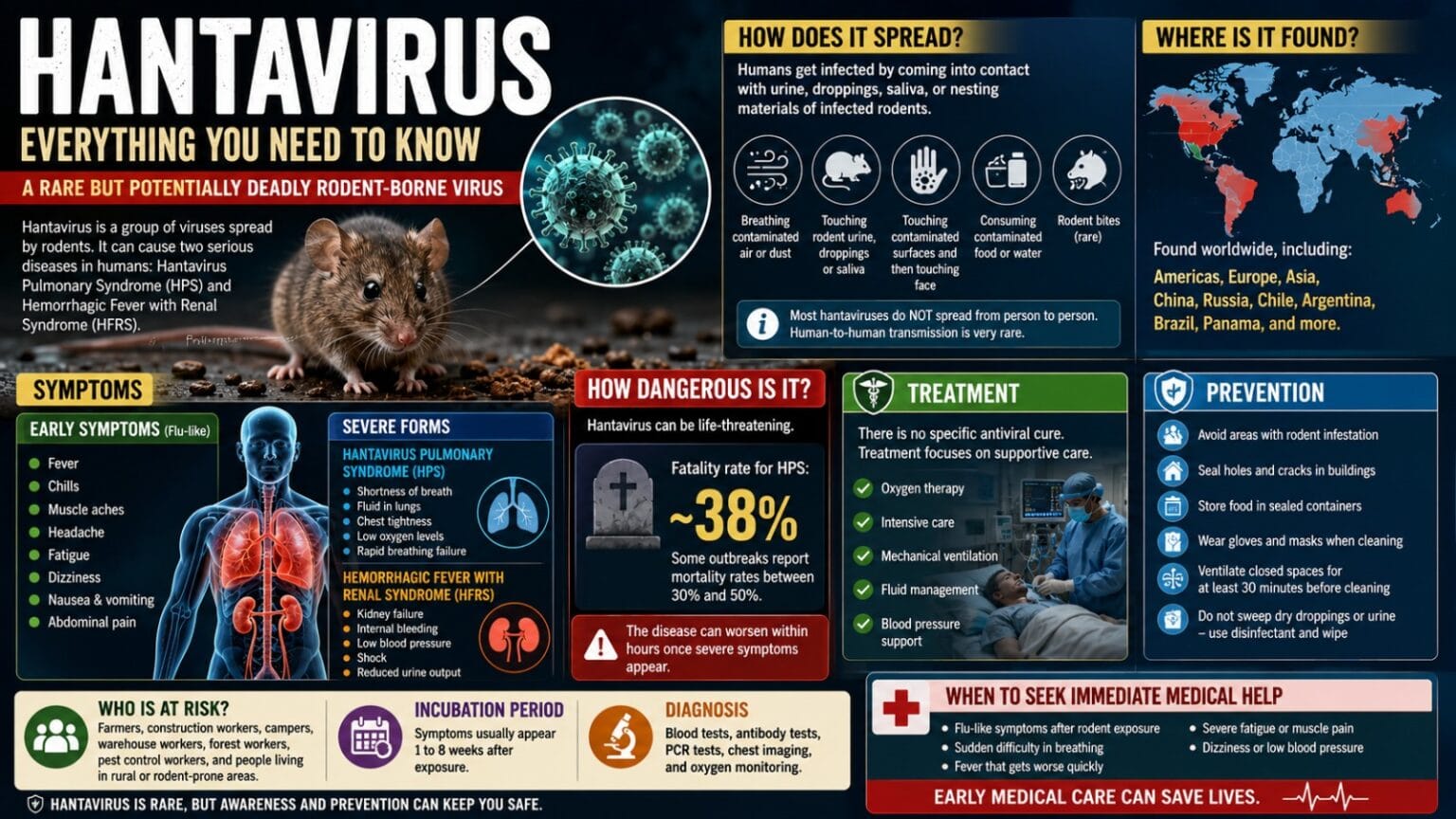
Hantavirus Explained: Symptoms, Causes, Treatment
Hantavirus is one of the world’s lesser-known but potentially deadly viral infections. While it does not spread as rapidly as diseases like COVID-19 or influenza, hantavirus infections can become extremely dangerous once symptoms begin, especially if they affect the lungs or kidneys.
The virus has gained global attention multiple times after isolated outbreaks and deaths in countries including the United States, China, Argentina, Chile, Panama, and parts of Europe. Public concern often rises whenever a new hantavirus case is reported because of its high fatality rate in severe cases.
But what exactly is hantavirus? How does it spread? Can it spread from person to person? What are the symptoms? And how dangerous is it compared to other viral diseases?
Here is everything you need to know about hantavirus, including symptoms, transmission, treatment, mortality rates, and prevention strategies.
What Is Hantavirus?
Hantavirus refers to a family of viruses primarily spread by rodents. Humans usually become infected after coming into contact with infected rodent urine, droppings, saliva, or contaminated dust particles.
The virus belongs to the Hantaviridae family and can cause two major diseases in humans:
- Hantavirus Pulmonary Syndrome (HPS)
- Hemorrhagic Fever with Renal Syndrome (HFRS)
According to the Centers for Disease Control and Prevention (CDC), hantavirus infections are rare but potentially life-threatening.
Different strains of hantavirus exist in different parts of the world:
- In the Americas, hantavirus mainly causes Hantavirus Pulmonary Syndrome (HPS)
- In Europe and Asia, it more commonly causes Hemorrhagic Fever with Renal Syndrome (HFRS)
How Does Hantavirus Spread?
Hantavirus spreads mainly through infected rodents.
Humans can get infected by:
- Breathing contaminated air particles
- Touching rodent urine or droppings
- Consuming contaminated food
- Touching contaminated surfaces and then touching the mouth or nose
- Rarely, through rodent bites
The most common source in North America is the deer mouse.
The virus can become airborne when dried rodent droppings or urine are disturbed during:
- Sweeping
- Cleaning garages
- Opening abandoned cabins
- Handling old storage boxes
- Farming or construction work
The World Health Organization (WHO) states that rodents carrying hantavirus usually do not become sick themselves.
Can Hantavirus Spread From Human To Human?
In most cases, hantavirus does NOT spread between humans.
This is one of the biggest differences between hantavirus and highly contagious viruses like COVID-19.
However, there have been rare exceptions.
The Andes virus strain in South America has shown limited human-to-human transmission in Argentina and Chile. (who.int)
But overall:
- Most hantavirus strains spread only from rodents to humans
- Widespread person-to-person outbreaks are extremely rare
What Are The Symptoms Of Hantavirus?
Symptoms usually appear 1 to 8 weeks after exposure to infected rodents.
Early Symptoms Of Hantavirus
Initial symptoms often resemble flu-like illnesses:
- Fever
- Chills
- Muscle aches
- Fatigue
- Headache
- Dizziness
- Nausea
- Vomiting
- Abdominal pain
According to the Mayo Clinic, muscle pain — especially in large muscle groups like thighs, hips, back, and shoulders — is one of the most common early signs.
Severe Symptoms Of Hantavirus
As the infection progresses, symptoms can rapidly become severe.
Hantavirus Pulmonary Syndrome (HPS)
This affects the lungs and breathing system.
Symptoms include:
- Shortness of breath
- Fluid buildup in lungs
- Chest tightness
- Low oxygen levels
- Severe breathing difficulty
Patients can deteriorate very quickly once lung symptoms begin.
Hemorrhagic Fever with Renal Syndrome (HFRS)
This mainly affects kidneys and blood vessels.
Symptoms may include:
- Kidney failure
- Internal bleeding
- Low blood pressure
- Shock
- Reduced urine output
How Dangerous Is Hantavirus?
Hantavirus can be extremely dangerous in severe cases.
According to the CDC:
- Hantavirus Pulmonary Syndrome has a fatality rate of approximately 38%
- Some outbreaks have reported mortality rates between 30% and 50%
That makes it significantly deadlier than many common viral infections.
However, it is important to understand:
- Hantavirus infections are relatively rare
- The virus is not highly contagious between humans
- Early medical treatment improves survival chances
Why Is Hantavirus So Dangerous?
The virus becomes dangerous because it can trigger severe immune system reactions and rapid organ damage.
In HPS:
- Blood vessels leak fluid into lungs
- Oxygen exchange becomes difficult
- Respiratory failure can occur rapidly
In HFRS:
- Blood vessel damage affects kidneys
- Internal bleeding and shock may develop
The disease can worsen within hours after severe symptoms begin.
Where Is Hantavirus Found?
Hantavirus exists worldwide.
Regions With Reported Cases:
- United States
- Canada
- China
- South Korea
- Russia
- Argentina
- Chile
- Brazil
- Panama
- Several European countries
Different rodent species carry different hantavirus strains.
In The United States
The “Sin Nombre virus” is the most common hantavirus strain linked to HPS.
In Asia And Europe
HFRS is more common, particularly in China and Korea.
According to the WHO, China reports the highest number of HFRS cases globally each year. (who.int)
Is Hantavirus Found In India?
Hantavirus infections are considered rare in India, but studies have found evidence of hantavirus antibodies in rodents and some human populations.
India has not reported large-scale outbreaks like some other countries, but experts believe surveillance remains limited.
Because rodent populations are widespread, the possibility of isolated infections cannot be completely ruled out.
Who Is Most At Risk?
People at higher risk include:
- Farmers
- Construction workers
- Warehouse workers
- Campers
- Forest workers
- Pest control workers
- Rural residents
- People cleaning abandoned buildings
Risk increases in areas with heavy rodent infestation.
How Is Hantavirus Diagnosed?
Doctors diagnose hantavirus using:
- Blood tests
- Antibody testing
- PCR testing
- Chest imaging
- Oxygen monitoring
Because symptoms initially resemble flu or viral fever, diagnosis can sometimes be delayed.
Doctors often suspect hantavirus if:
- Severe breathing problems develop
- There is rodent exposure history
- Lung fluid accumulation appears rapidly
Is There A Cure For Hantavirus?
Currently, there is no specific antiviral cure for hantavirus.
Treatment mainly focuses on supportive care.
This may include:
- Oxygen therapy
- Intensive care
- Mechanical ventilation
- Fluid management
- Blood pressure support
According to the CDC, early intensive medical care significantly improves survival chances. (cdc.gov)
Some antiviral drugs like ribavirin have shown limited benefit for certain HFRS strains, but results vary.
Also read – What Is Driving Global Tech Layoffs in 2026
How To Prevent Hantavirus
Prevention mainly focuses on avoiding rodent exposure.
Important Prevention Tips
1. Avoid Sweeping Rodent Droppings
Sweeping can release virus particles into the air.
Instead:
- Spray disinfectant first
- Use gloves
- Wipe carefully
2. Seal Rodent Entry Points
Close holes and gaps in:
- Homes
- Warehouses
- Garages
- Cabins
3. Store Food Properly
Keep food sealed and avoid attracting rodents.
4. Use Protective Gear
Wear:
- Gloves
- Masks
- Protective clothing
when cleaning rodent-infested areas.
5. Improve Ventilation
Open windows before cleaning enclosed areas.
The CDC specifically advises ventilating closed spaces for at least 30 minutes before cleaning. (cdc.gov)
Hantavirus Vs COVID-19
Many people compare hantavirus with COVID-19, but the two diseases are very different.
| Feature | Hantavirus | COVID-19 |
|---|---|---|
| Main Spread | Rodents | Human-to-human |
| Contagiousness | Very low | Very high |
| Fatality Rate | Higher | Lower overall |
| Cases Worldwide | Rare | Massive global spread |
| Vaccine Availability | No | Yes |
| Primary Damage | Lungs/Kidneys | Respiratory system |
While hantavirus is deadlier per case, COVID-19 spread much more easily globally.
Could Hantavirus Cause A Pandemic?
Experts currently believe a global hantavirus pandemic is unlikely because:
- Human-to-human spread is extremely limited
- Most strains require rodent exposure
- Transmission chains are weak
However, scientists continue monitoring mutations and new hantavirus strains.
What Should You Do If You Suspect Hantavirus?
Seek immediate medical attention if:
- You have flu-like symptoms after rodent exposure
- Breathing difficulty develops
- Fever rapidly worsens
- Severe fatigue appears suddenly
Early hospitalization can be lifesaving.
Conclusion
Hantavirus remains one of the world’s most dangerous rodent-borne viral infections due to its high fatality rate and rapid progression in severe cases.
Although rare, the disease can become deadly if not treated quickly, especially when it develops into Hantavirus Pulmonary Syndrome or Hemorrhagic Fever with Renal Syndrome.
The good news is that hantavirus is far less contagious than viruses like COVID-19, and most infections can be prevented through proper hygiene, rodent control, safe cleaning practices, and awareness.
Understanding the symptoms, transmission methods, and prevention strategies is critical — especially for people living or working in rodent-prone environments.
As global health authorities continue monitoring emerging infectious diseases, hantavirus remains an important reminder of how closely human health is connected to environmental and wildlife exposure.
Subscribe to our YouTube Channel The Logic Stick for more video insights