






Don’t Buy Gold
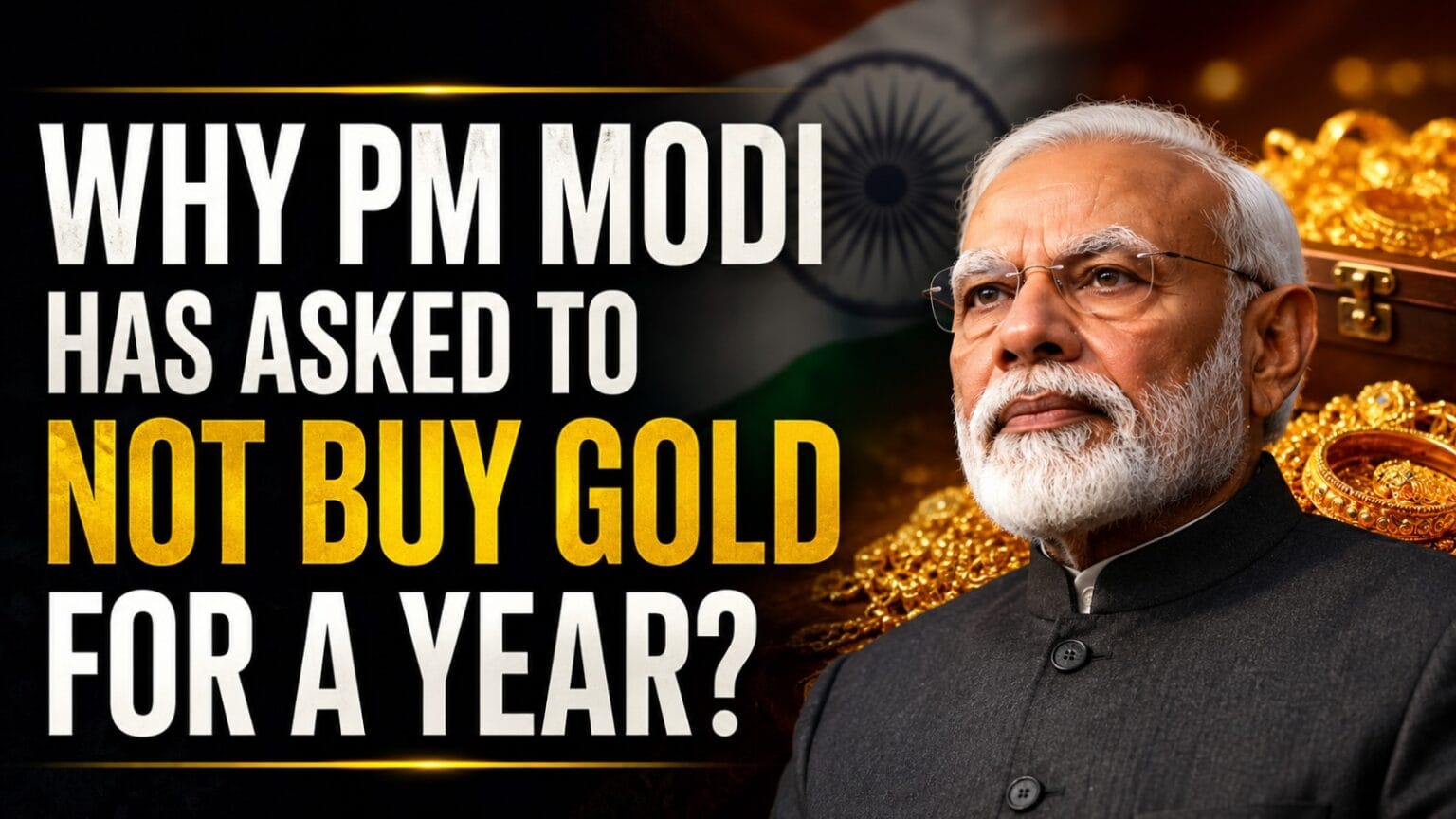
Prime Minister Narendra Modi’s latest appeal asking Indians to avoid buying non-essential gold for the next one year has triggered massive discussion across financial, political, and business circles. The statement, made during his Hyderabad speech amid rising global tensions and economic uncertainty, is being seen as much more than a casual suggestion.
For a country emotionally and economically connected to gold, this was one of the most unusual economic appeals made by an Indian Prime Minister in recent years.
But why exactly has PM Modi asked Indians to pause gold buying for a year?
The answer lies in a mix of geopolitics, crude oil prices, foreign exchange reserves, import dependency, and fears of global economic instability.
This article explains everything in simple words.
What Exactly Did PM Modi Say About Gold?
During his speech in Hyderabad, PM Modi urged citizens to avoid “non-essential gold purchases” for the next one year as part of a larger national effort to conserve foreign exchange and reduce pressure on the Indian economy.
The appeal was part of a broader set of recommendations that included:
- Reducing petrol and diesel usage
- Using public transport
- Avoiding unnecessary foreign travel
- Supporting Made-in-India products
- Conserving resources during global instability
But the gold comment immediately became the biggest talking point.
Why?
Because gold is deeply connected to Indian culture, weddings, investments, and household savings.
Why Gold Matters So Much In India
India is one of the world’s largest consumers and importers of gold.
Gold in India is not just jewelry.
It is:
- A savings instrument
- A status symbol
- A wedding necessity
- A hedge against inflation
- An emotional family asset
Every year, Indians buy hundreds of tonnes of gold, especially during:
- Weddings
- Festivals like Diwali and Akshaya Tritiya
- Investment seasons
- Economic uncertainty
The problem is that India does not produce enough gold domestically.
Most of it is imported from abroad using US dollars.
And that is where the real issue begins.
The Real Reason Behind Modi’s Appeal: Foreign Exchange Pressure
India imports gold by paying in foreign currency — mainly US dollars.
At the same time, India is also heavily dependent on imported crude oil.
Now imagine this situation:
- Oil prices rise globally
- Gold prices rise globally
- India imports both in massive quantities
- More dollars leave India
- Pressure increases on forex reserves and the rupee
This is exactly the economic risk the government appears worried about right now.
How Rising Oil Prices Are Connected To Gold Buying
The latest global crisis in West Asia and disruptions linked to the Strait of Hormuz have pushed oil prices higher.
India imports nearly 85% of its crude oil requirements.
When crude prices rise:
- India spends more dollars on oil imports
- The import bill increases sharply
- Pressure builds on forex reserves
- The rupee weakens against the dollar
If gold imports also remain high during the same period, the economic burden increases further.
That is why the government seems to be targeting “non-essential imports” right now — and gold is one of the largest among them.
Why Gold Imports Can Become Dangerous During Global Crises
Gold is considered a “safe haven” asset globally.
Whenever:
- Wars increase
- Inflation rises
- Markets become unstable
- Economic fears grow
people start buying more gold.
That pushes gold prices even higher.
India then ends up importing expensive gold at a time when it is already paying more for oil.
This creates what economists call a “double import pressure.”
And that can:
- Increase the trade deficit
- Weaken the rupee
- Raise inflation
- Hurt India’s external balance
Also read – PM Modi’s Latest Speech Explained in 10 Points
Is India Planning To Increase Gold Import Duty?
PM Modi’s statement has now triggered speculation that the government could eventually raise gold import duties if the situation worsens.
According to reports, policy circles are already discussing contingency measures if:
- Oil prices continue rising
- Global instability worsens
- Import bills increase further
At present, gold imports already attract customs duty and other levies.
Analysts believe higher duties could:
- Reduce gold demand
- Slow dollar outflow
- Protect forex reserves
However, the government has not officially announced any such move yet.
The Bigger Message: India Wants To Reduce “Luxury Imports”
PM Modi’s speech was not just about gold.
The larger theme was:
“Reduce avoidable imports during uncertain times.”
This included:
- Foreign travel
- Excess fuel consumption
- Non-essential luxury spending
- Imported dependency
The government appears to be preparing citizens psychologically for a period where economic discipline may become necessary.
Many economists believe this resembles the kind of messaging countries use during:
- Wars
- Energy crises
- Forex shortages
- Trade imbalance situations
Why The Government Is Worried About Forex Reserves
Foreign exchange reserves are crucial for any country because they help pay for:
- Oil imports
- International trade
- Foreign debt obligations
- Currency stabilization
If reserves weaken significantly:
- The rupee can fall sharply
- Imports become more expensive
- Inflation increases
- Economic confidence weakens
India currently maintains strong reserves compared to many countries, but global instability can quickly change economic conditions.
That is why conserving dollars becomes strategically important during uncertain periods.
Why Indians Buy Gold During Economic Fear
Ironically, the more unstable the world becomes, the more Indians usually buy gold.
This happens because gold is traditionally seen as:
- Safe
- Reliable
- Inflation-proof
- Crisis-resistant
But from the government’s perspective, massive gold imports during global crises can become economically risky.
So the Prime Minister’s appeal is essentially asking citizens to temporarily prioritize national economic stability over traditional buying patterns.
Could This Affect Jewelry Businesses?
Yes — if consumers actually reduce purchases significantly.
India’s jewelry industry is enormous and supports:
- Retail chains
- Small jewelers
- Manufacturers
- Artisans
- Wedding markets
Major jewelry companies could face:
- Reduced demand
- Slower festive sales
- Wedding market impact
However, experts believe cultural demand for gold in India may not disappear completely even after the Prime Minister’s appeal.
Political Reactions Have Already Started
Opposition leaders have criticized Modi’s comments, calling them signs of deeper economic stress. Congress leader Rahul Gandhi described the appeals around gold buying, fuel use, and work from home as evidence of policy failure.
Meanwhile, BJP supporters argue the Prime Minister is simply asking citizens to act responsibly during a difficult global period.
The speech has therefore become both:
- An economic discussion
- A political debate
Is This Similar To Past Economic Warnings?
Many analysts are comparing the tone of this speech to earlier periods where governments asked citizens to:
- Save resources
- Reduce imports
- Spend cautiously
- Support domestic production
Some observers have even compared the mood to the messaging seen during demonetisation and other economic transition periods.
However, this time the focus appears more connected to:
- Energy security
- Global trade risks
- Forex management
- External economic pressures
What Happens If Indians Actually Stop Buying Gold?
If gold demand falls significantly:
- Dollar outflow may reduce
- Pressure on imports could ease
- Trade deficit may improve
- Forex reserves may remain stronger
But the impact depends on:
- How long global tensions continue
- Oil prices
- Currency movements
- Consumer behavior
In reality, experts believe Indian gold demand may slow temporarily rather than stop completely.
Final Thoughts
PM Modi’s appeal to avoid buying gold for a year is not really about jewelry.
It is about economics.
The government appears concerned that rising oil prices, global instability, and increasing import pressure could eventually affect India’s economic stability.
Gold became the symbol of that concern because:
- India imports huge amounts of it
- It requires dollar payments
- Demand rises during crises
- It directly affects forex reserves
The speech also reveals something larger:
India may be entering a period where economic discipline, resource conservation, and strategic spending become national priorities.
Whether citizens follow the appeal or not, one thing is clear:
The government is preparing India for a potentially volatile global economic phase.
And PM Modi’s statement on gold may have been the clearest signal yet.
Subscribe to our YouTube Channel The Logic Stick for more video insights