






US Seizes Iranian Ship Near Strait of Hormuz
Introduction
The global geopolitical landscape witnessed a major escalation after the United States seized an Iranian-flagged cargo ship near the Strait of Hormuz in April 2026. The incident has intensified tensions between Washington and Tehran, disrupted fragile ceasefire talks, and raised serious concerns about global oil supply and regional stability.
The event is not just a naval interception — it is a flashpoint in an ongoing conflict involving the US, Iran, and regional players like Pakistan.
What Happened: The Seizure of the Iranian Ship
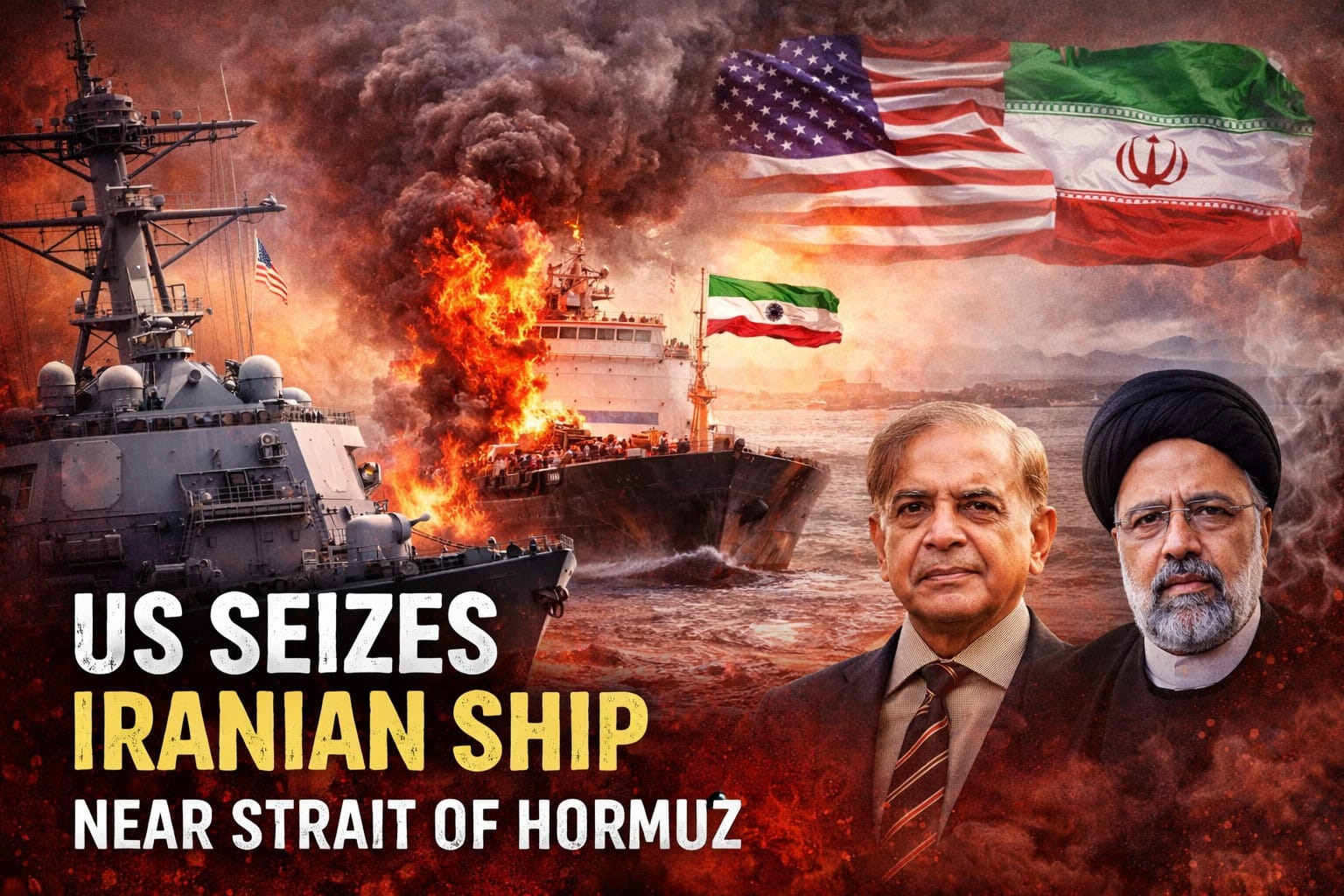
On April 19, 2026, US forces intercepted and seized an Iranian-flagged cargo ship named TOUSKA near the Strait of Hormuz, one of the world’s most critical oil transit routes.
- The ship allegedly attempted to bypass a US naval blockade imposed on Iranian ports
- A US Navy destroyer issued multiple warnings over several hours
- After the crew reportedly ignored orders, the US fired at the ship’s engine room to disable it
- US Marines then boarded and took control of the vessel
This marked the first major seizure since the US blockade began in April 2026, signaling a new phase of direct confrontation.
Why Did the US Seize the Ship?
The US claims the action was part of enforcing a naval blockade aimed at pressuring Iran.
Key reasons include:
1. Enforcing the Hormuz Blockade
- The US imposed a blockade to restrict Iran’s maritime trade
- Any vessel attempting to bypass it is treated as a violation
2. Sanctions Enforcement
- The seized vessel was reportedly already under US Treasury sanctions
- It was suspected of being linked to illegal trade or Iran’s shadow shipping network
3. Strategic Pressure
- The blockade is part of a broader strategy to:
- Force Iran into negotiations
- Limit its oil exports
- Counter its regional military actions
Iran’s Response: “Piracy” and Threat of Retaliation
Iran reacted strongly to the seizure:
- Called the action “armed piracy”
- Accused the US of violating a fragile ceasefire agreement
- Warned of immediate retaliation
Iran also:
- Withdrew from planned peace talks
- Increased military readiness in the region
- Threatened attacks on regional infrastructure if tensions escalate
Also read – Louisiana Mass Shooting 2026: 8 Children Killed
Pakistan Enters the Picture: Diplomatic Fallout
One of the most important developments is the involvement of Pakistan.
According to reports:
- Iran contacted Pakistan’s Prime Minister Shehbaz Sharif after the seizure
- Tehran criticized the US for “bullying behaviour” and undermining diplomacy
- Pakistan was expected to act as a mediator for US-Iran peace talks in Islamabad
However:
- The seizure has jeopardized these talks
- Iran’s trust in diplomatic processes has weakened
- Pakistan’s role as a neutral mediator is now under pressure
This adds a South Asian diplomatic dimension to what was primarily a Middle East conflict.
Why the Strait of Hormuz Is So Important
The Strait of Hormuz is one of the most strategic waterways in the world:
- Handles around 20% of global oil supply
- Connects the Persian Gulf to global markets
- Any disruption impacts:
- Oil prices
- Global trade
- Energy security
Recent tensions have already:
- Reduced shipping traffic significantly
- Increased insurance costs for vessels
- Triggered volatility in global energy markets
Background: The 2026 Strait of Hormuz Crisis
To understand the incident, we need context:
Timeline of Escalation:
- February 2026: US-Israel strikes on Iran
- March 2026: Iran restricts access to the Strait
- April 13, 2026: US imposes naval blockade
- April 19, 2026: US seizes Iranian ship
The region is now in an active conflict phase, with both sides using military and economic pressure.
Global Impact of the Ship Seizure
1. Rising Oil Prices
The incident has:
- Increased fears of supply disruption
- Pushed oil prices upward
2. Risk of Wider War
- Iran has threatened retaliation
- US has warned of further military action
3. Trade Disruptions
- Shipping companies are avoiding the Strait
- Hundreds of vessels are delayed or rerouted
4. Diplomatic Breakdown
- Peace talks are stalled
- Trust between nations is deteriorating
What Happens Next?
Several scenarios are possible:
1. Escalation
- Iran retaliates militarily
- US responds with stronger force
2. Diplomatic Revival
- Pakistan or other nations mediate talks
- Ceasefire is restored
3. Prolonged Standoff
- Continued naval blockades
- Economic pressure without full-scale war
Key Takeaways
- The US seizure of an Iranian ship marks a major escalation
- The incident is tied to a broader Hormuz blockade strategy
- Iran has responded aggressively, calling it piracy
- Pakistan’s role as a mediator is now under strain
- The situation has serious implications for global oil markets and geopolitics
Conclusion
The seizure of the Iranian-flagged ship near the Strait of Hormuz is more than a military operation — it is a symbol of rising global tensions, fragile diplomacy, and economic uncertainty.
With major powers involved and critical trade routes at stake, the world is closely watching what happens next.
One thing is clear:
The Strait of Hormuz is no longer just a shipping route — it is the center of a high-stakes geopolitical battle.
Subscribe to our YouTube Channel The Logic Stick for more video insights