







Introduction
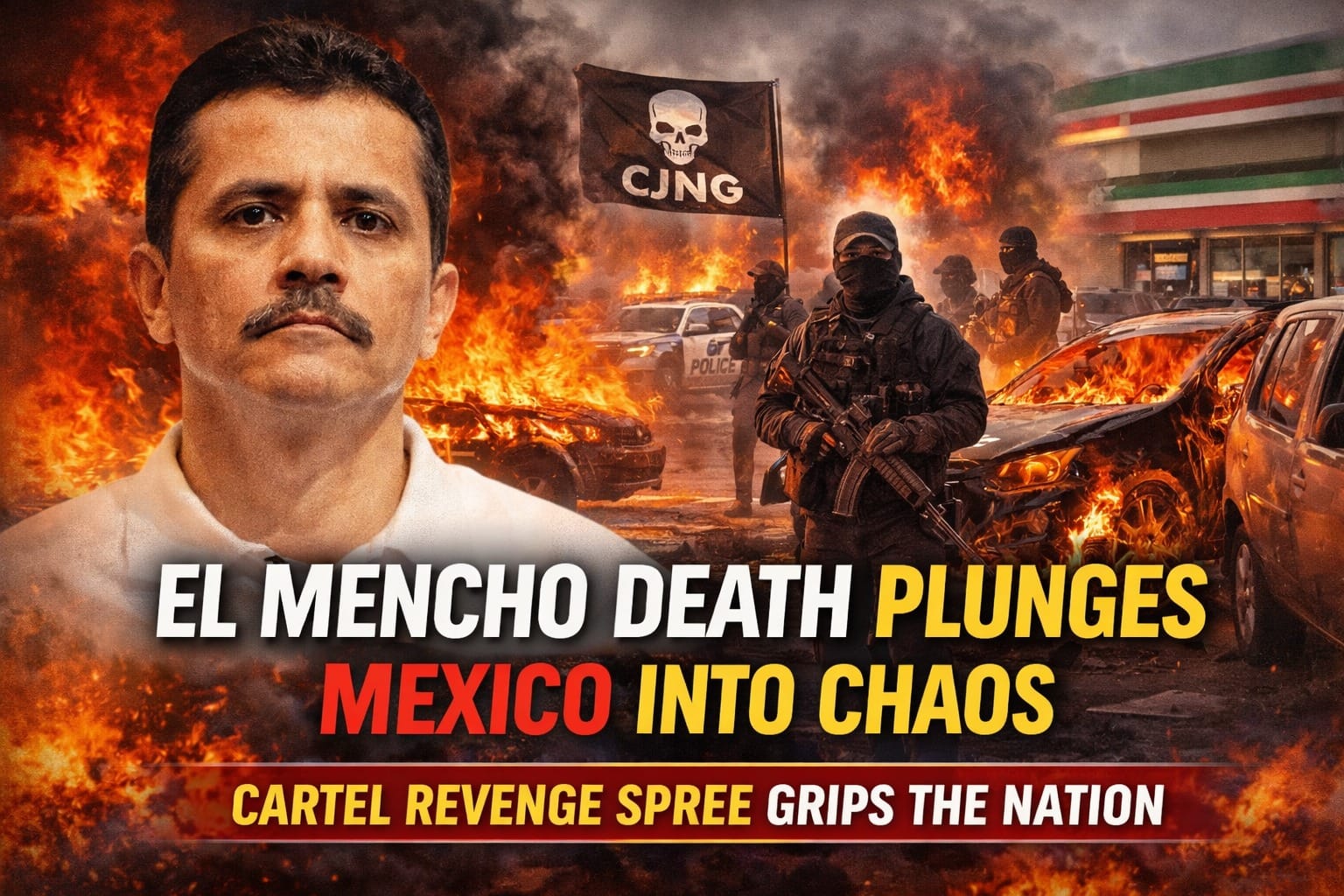
Mexico has plunged into one of its most volatile security crises in recent years following the killing of Nemesio Rubén Oseguera Cervantes, widely known as “El Mencho,” the powerful leader of the Jalisco New Generation Cartel (CJNG). His death during a military operation triggered a wave of cartel retaliation across multiple Mexican states, resulting in burning vehicles, roadblocks, attacks on infrastructure, airport disruptions, and widespread panic among civilians.
El Mencho’s killing represents a major milestone in Mexico’s decades-long war against drug cartels. However, analysts warn that it could also spark a dangerous power vacuum, intensify cartel warfare, and deepen instability across Latin America’s second-largest economy.
This detailed SEO-centric article explains:
- The latest updates on El Mencho’s death
- Why the killing happened
- Cartel revenge and chaos across Mexico
- Who El Mencho was and how he built CJNG
- Historical context of cartel violence
- Government and global reaction
- The future of cartel power in Mexico
Latest Updates: How El Mencho Was Killed
Military operation in Jalisco
Mexican security forces killed El Mencho during a military operation in Tapalpa, Jalisco, after he was wounded in a clash and died while being transported under custody.
The operation reportedly involved:
- Mexican special forces
- Intelligence support from the United States
- A coordinated strategy targeting CJNG leadership
Authorities described the killing as the biggest victory in the country’s anti-cartel campaign in years.
Also read – Pakistan Strikes Afghanistan: Latest Updates & Casualities
Immediate Aftermath: Chaos and Cartel Revenge
Violence across multiple states
Following El Mencho’s death, CJNG members launched coordinated retaliatory attacks including:
- Highway blockades
- Burning vehicles and petrol stations
- Attacks on banks and businesses
- Gunfire incidents
- Road sabotage using tire-puncturing devices
Violence spread across several states including Jalisco, Michoacán, Colima, Guerrero, Guanajuato, and Zacatecas.
Airports, schools, and public life disrupted
Major cities such as Guadalajara and Puerto Vallarta experienced:
- Airport chaos and flight cancellations
- School closures
- Public transport suspension
- Sports event cancellations
- Residents sheltering indoors
Governments issued advisories urging citizens and tourists to stay indoors.
Escalation into national security crisis
Cartel violence reached tourist zones and economic hubs, raising fears of wider instability and damaging Mexico’s tourism and trade reputation.
Who Was El Mencho?
Rise from poverty to cartel kingpin
Born in Michoacán in 1966, El Mencho’s criminal career spanned decades.
Key milestones:
- Arrested in the US for heroin trafficking in the 1990s
- Joined Mexico’s drug trafficking networks after deportation
- Became a police officer before entering organized crime
- Rose through Milenio Cartel ranks
- Founded CJNG after internal cartel split
Leader of one of the world’s most dangerous cartels
CJNG became infamous for:
- Fentanyl, meth, and cocaine trafficking
- Advanced weaponry and drone explosives
- Extreme violence and intimidation
- Global drug distribution networks
The US offered a $15 million bounty for his capture.
Why Mexico Targeted El Mencho
1. Fentanyl crisis and US pressure
CJNG played a central role in trafficking fentanyl into North America, fueling overdose deaths and diplomatic pressure on Mexico.
2. Militarisation of cartels
CJNG’s advanced weaponry and drone use made it one of the most militarised criminal organizations.
3. Political and security pressure
Mexico’s government faced criticism over rising cartel violence, making the operation politically significant.
Cartel Revenge Strategy
CJNG retaliation followed familiar patterns:
- Creating road chaos to delay security forces
- Demonstrating cartel power
- Intimidating civilians
- Signaling resilience despite leadership loss
Experts say revenge attacks are common after major cartel arrests or killings.
Government Response
Emergency security protocols
Authorities activated emergency measures including:
- Military deployment
- Suspension of public services
- Flight cancellations
- Enhanced airport security
Presidential appeal for calm
President Claudia Sheinbaum urged citizens to remain calm while security forces restored order.
Historical Context: Mexico’s War on Cartels
Origins of cartel violence
Mexico’s cartel violence stems from:
- Drug trafficking routes to the US
- Weak institutional control in certain regions
- Economic inequality and recruitment
- Fragmentation of large cartels
Pattern of violence after cartel leadership loss
History shows that killing cartel leaders often leads to:
- Power struggles
- Internal wars
- Increased homicide rates
- Emergence of splinter groups
Similar past incidents
Examples include:
- El Chapo arrest and subsequent violence
- Sinaloa cartel leadership disputes
- Ovidio Guzman arrest triggering urban warfare
These patterns suggest El Mencho’s death could escalate cartel conflict.
Power Vacuum and Succession Crisis
The biggest question now: Who replaces El Mencho?
Possible scenarios:
1. Family succession
Relatives may attempt to take leadership.
2. Internal cartel war
Factional fighting within CJNG.
3. Rival cartel expansion
Sinaloa cartel and others may exploit the vacuum.
Impact on Mexico’s Economy and Society
Tourism impact
Travel warnings and airport chaos threaten tourism revenue.
Business disruptions
Burning businesses and transport shutdowns affect supply chains.
Psychological impact
Fear and uncertainty among citizens deepen public distrust in security.
International Reaction
United States
US officials welcomed the killing as a major blow to drug trafficking networks.
Travel advisories
Multiple countries issued warnings urging caution for citizens in Mexico.
The Bigger Problem: Cartel Violence Structure
Research indicates cartels recruit hundreds of members weekly and maintain large operational networks, making them resilient even after leadership losses.
Violence often increases following government crackdowns due to retaliation dynamics.
Future Scenarios for Mexico
Scenario 1: Short-term chaos followed by stabilization
Government regains control after security crackdown.
Scenario 2: Long cartel war
Power vacuum triggers nationwide violence.
Scenario 3: Fragmentation
CJNG splinters into smaller but more violent groups.
Scenario 4: Government strategic shift
Mexico may adopt stronger intelligence-driven anti-cartel operations.
Expert Analysis
Security analysts describe El Mencho’s death as:
- A tactical victory
- A strategic risk
- A test of Mexico’s security institutions
Many warn that leadership decapitation strategies rarely dismantle cartels entirely.
Conclusion
The killing of El Mencho marks one of the most dramatic developments in Mexico’s long struggle against organized crime. While the operation represents a major tactical victory for authorities, the violent retaliation across multiple states highlights the deep entrenchment and resilience of cartel power.
Mexico now faces a critical moment. The coming months will determine whether the country experiences stabilization or deeper cartel warfare triggered by leadership vacuum and revenge violence.
El Mencho’s death may reshape Mexico’s criminal landscape — but the broader war on cartels is far from over.
Subscribe to our YouTube Channel The Logic Stick for more video insights