






Nvidia CEO Jensen Huang Joins Trump’s China Mission
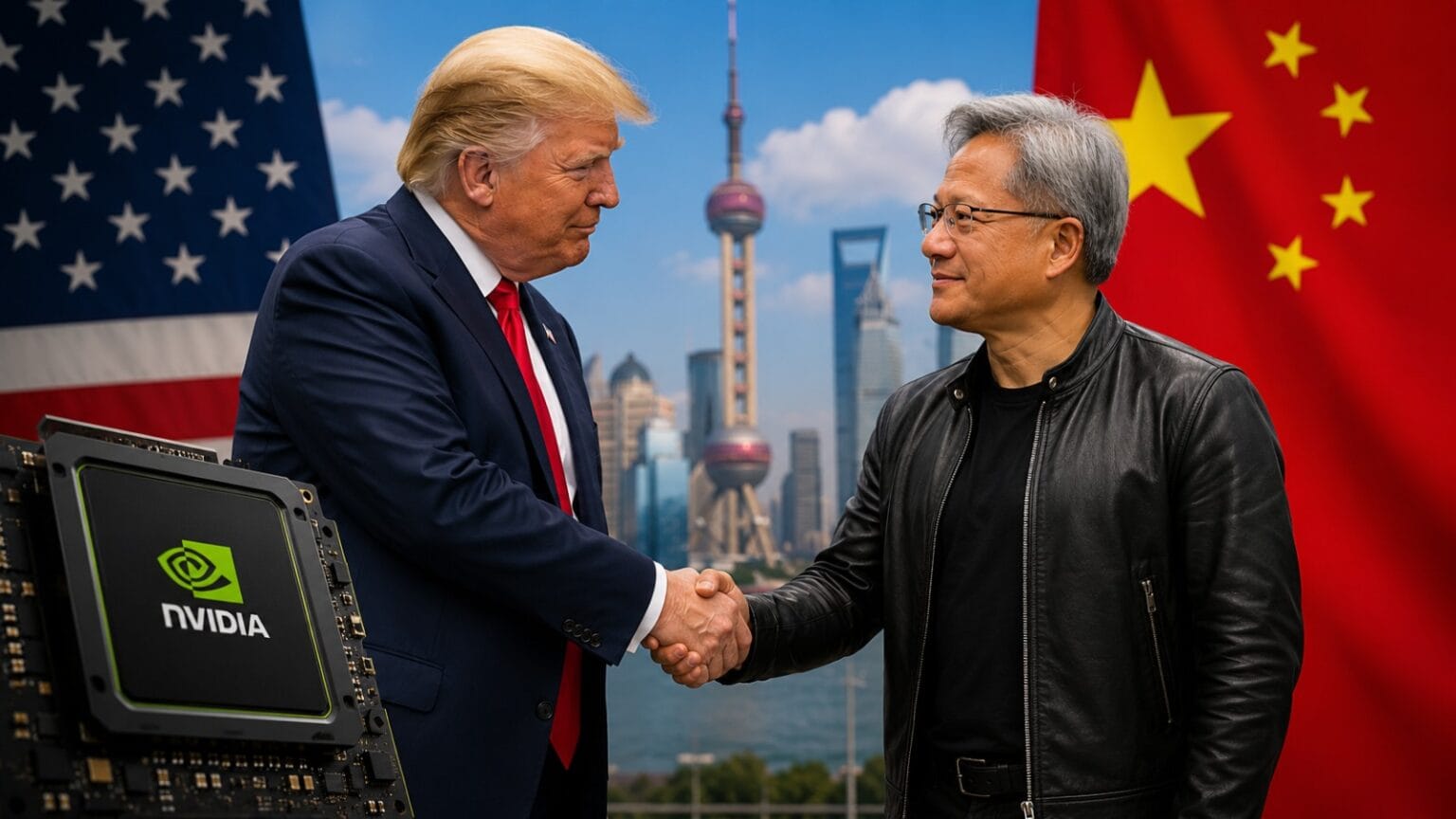
The global AI race has entered a dramatic new chapter after Nvidia CEO Jensen Huang joined former US President Donald Trump’s high-profile diplomatic and business mission to China.
The visit is being viewed as far more than a symbolic trade trip. It represents a major moment in the growing technological, economic, and geopolitical battle between the United States and China over artificial intelligence, semiconductors, and global innovation dominance.
Trump’s China mission, which includes several top American CEOs, is focused on pushing Beijing to “open up” its markets to US companies. But the inclusion of Nvidia CEO Jensen Huang has drawn the most attention because Nvidia sits at the center of the global AI revolution.
The development has immediately sparked worldwide interest around topics like:
- Nvidia China deal
- Jensen Huang China visit
- Trump China trade mission
- Nvidia AI chips China
- US-China AI war
- H200 chips China
Why Jensen Huang Joining Trump’s China Mission Matters
Nvidia is currently the most important AI chip company in the world.
Its GPUs power:
- ChatGPT and generative AI systems
- AI data centers
- Autonomous vehicles
- Robotics
- Military AI systems
- Scientific computing
- Advanced cloud infrastructure
Over the past three years, Nvidia has transformed from a gaming-focused chipmaker into the backbone of the global AI economy.
That is why Jensen Huang’s presence on Trump’s China mission is so significant.
According to Reuters, Trump personally asked Huang at the last minute to join the delegation while en route through Alaska. Huang later boarded Air Force One and joined the high-profile business group traveling to Beijing.
The move signals that AI and semiconductors are now central to US-China diplomacy.
What Is Trump Trying to Achieve in China?
Trump stated that he wants China to “open up” to American businesses and allow US companies to operate more freely in Chinese markets.
The broader goals of the visit reportedly include:
- Expanding US exports to China
- Securing business deals
- Reducing trade tensions
- Encouraging Chinese investment cooperation
- Managing AI and semiconductor disputes
- Discussing geopolitical issues like Iran and Taiwan
Several major US CEOs joined the delegation, including leaders from:
- Nvidia
- Tesla
- Apple
- Boeing
- BlackRock
- Citigroup
- Visa
- Qualcomm
However, Nvidia’s role stands out because semiconductor technology has become the single most sensitive issue in US-China relations.
Why China Is So Important for Nvidia
China is one of the world’s largest AI and semiconductor markets.
Before export restrictions intensified, China contributed roughly 13% of Nvidia’s total revenue.
Chinese tech giants rely heavily on Nvidia chips for:
- AI model training
- Data centers
- Cloud computing
- Autonomous systems
- AI research
Companies like Alibaba, Tencent, ByteDance, and Baidu have historically depended on Nvidia hardware to build advanced AI systems.
But US restrictions on advanced chip exports have severely complicated Nvidia’s China business.
The H200 AI Chip Controversy Explained
One of the biggest issues surrounding the China visit is Nvidia’s H200 AI chip.
The H200 is among Nvidia’s most advanced AI accelerators designed for high-performance AI training and inference.
China has been pushing for access to these chips because they are critical for competing in artificial intelligence.
However, Washington fears that advanced AI chips could help China:
- Accelerate military AI programs
- Strengthen cyber capabilities
- Build strategic AI infrastructure
- Reduce dependence on US technology
Because of these concerns, the US government imposed strict export controls on advanced semiconductor technologies going to China.
Reuters reported that negotiations around H200 chip sales have remained stuck despite partial approvals from Washington earlier this year.
That is one major reason why Huang’s participation in the trip is attracting so much attention.
The US-China AI War Is Bigger Than Trade
The Nvidia-China issue is not just about business.
It is about who controls the future of artificial intelligence.
AI is now considered critical for:
- Military superiority
- Economic dominance
- Scientific innovation
- Cybersecurity
- Global influence
Both the United States and China view AI leadership as strategically essential.
This has turned semiconductors into geopolitical weapons.
The US wants to slow China’s AI progress by restricting access to advanced chips.
China wants to reduce dependence on American technology and build its own semiconductor ecosystem.
Nvidia has found itself trapped between these two global powers.
Why Nvidia Is Walking a Diplomatic Tightrope
Jensen Huang has repeatedly tried to balance relations between Washington and Beijing.
On one side:
- Nvidia depends heavily on the Chinese market
- Chinese AI demand is enormous
- Losing China could cost billions
On the other side:
- Nvidia must comply with US export laws
- Washington sees AI chips as national security assets
- Political pressure around China is increasing
This creates a difficult balancing act for Huang.
Analysts believe Nvidia is trying to convince US policymakers that controlled sales to China may actually benefit American technological leadership by:
- Keeping global developers inside US ecosystems
- Maintaining Nvidia’s financial dominance
- Funding future AI research
- Preventing Chinese alternatives from taking over
Also read – Why Modi has Asked the citizens of India to NOT BUY GOLD for a year
Why Trump Wants Nvidia on the Mission
Trump appears to view major technology companies as strategic tools in economic diplomacy.
By bringing Nvidia into the delegation, Trump sends multiple signals:
1. AI Is America’s Biggest Strength
The US still dominates advanced AI hardware globally through Nvidia.
2. Economic Pressure Works Both Ways
China also needs access to American AI technology.
3. Business Diplomacy Matters
The trip is designed not just around politics, but around corporate influence and economic negotiations.
4. AI Is Now a National Security Issue
Semiconductor companies are no longer treated as ordinary private businesses.
They are now strategic geopolitical assets.
China’s Perspective on the Nvidia Issue
China faces a serious AI hardware problem.
Despite major advances in AI software and models, China still relies heavily on foreign semiconductor technology for cutting-edge AI training.
Chinese companies have accelerated efforts to build domestic alternatives, but Nvidia still remains years ahead in several areas.
This is why Beijing wants:
- Easier chip access
- Reduced export restrictions
- Semiconductor cooperation
- Stable technology supply chains
At the same time, China is investing aggressively in self-reliance.
Reports suggest Chinese regulators have also discouraged or restricted purchases of certain Nvidia products to strengthen local competitors.
The Bigger Economic Stakes
The AI chip market is expected to become one of the most valuable industries in human history.
Some analysts estimate the AI infrastructure economy could eventually reach trillions of dollars.
Nvidia is currently leading that race.
If Nvidia gains broader access to China again:
- Revenue could surge
- AI deployment in China could accelerate
- US tech influence may remain dominant
If restrictions tighten further:
- China may accelerate domestic chip development
- Global AI ecosystems could split
- Supply chains could become more fragmented
That is why the Nvidia-China story matters far beyond semiconductors.
Taiwan, Iran, and the Broader Geopolitical Context
The Trump-Xi discussions are also happening during an extremely volatile geopolitical moment.
The talks reportedly include discussions around:
- Taiwan arms sales
- The US-Iran conflict
- Rare earth supply chains
- Semiconductor exports
- Global trade tensions
This means Nvidia’s participation is occurring inside a much larger geopolitical negotiation involving economics, security, diplomacy, and technology.
Why This Visit Could Shape the Future of AI
This China mission may become a defining moment in the future of global AI politics.
Several major questions remain unresolved:
- Will China gain wider access to Nvidia chips?
- Will the US soften export restrictions?
- Can Nvidia continue balancing both superpowers?
- Will AI ecosystems split into separate US and Chinese blocs?
- Can business diplomacy reduce technology tensions?
The answers could shape the future of:
- Artificial intelligence
- Semiconductor markets
- Global trade
- Military technology
- International alliances
Final Thoughts
Jensen Huang joining Trump’s China mission is not just another corporate visit.
It represents the intersection of:
- AI dominance
- National security
- Semiconductor warfare
- US-China competition
- Global economic power
Nvidia has become far more than a chip company.
It is now one of the most strategically important corporations in the world.
As the United States and China compete for AI leadership, every Nvidia deal, export decision, and diplomatic appearance carries enormous geopolitical significance.
And this latest Beijing mission shows one thing very clearly:
The future of artificial intelligence will not be decided only in laboratories or boardrooms.
It will also be shaped by global politics, diplomacy, and power struggles between nations
Subscribe to our YouTube Channel The Logic Stick for more video insights