




Introduction
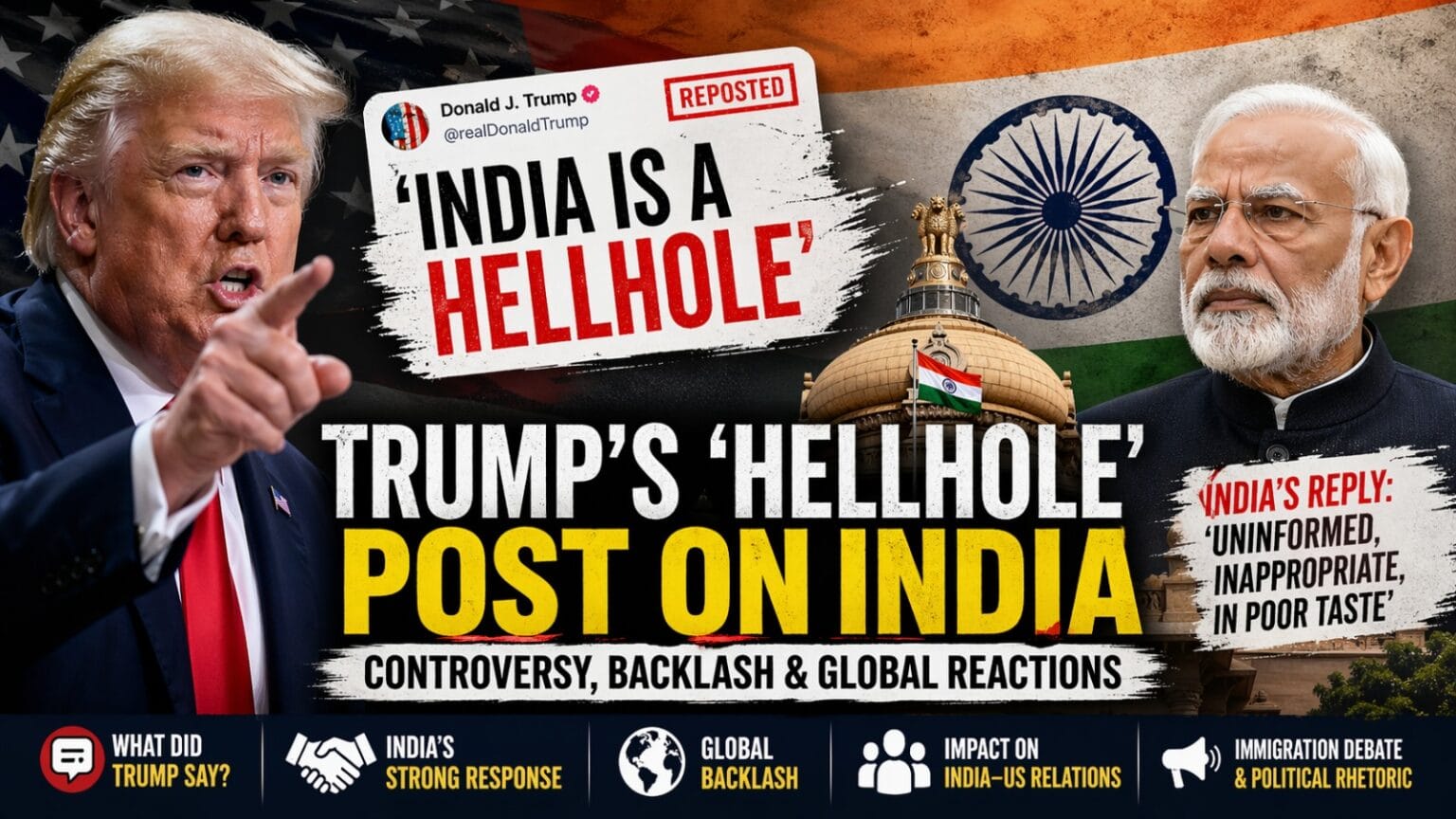
A major diplomatic controversy erupted in April 2026 after former U.S. President Donald Trump shared a controversial social media post referring to countries like India as “hellholes.” The remark—originally made by a conservative commentator and reshared by Trump—sparked strong backlash from India, triggered global criticism, and reignited debates around immigration, political rhetoric, and U.S.–India relations.
This article provides a complete, SEO-optimized breakdown of the controversy, including what Trump said, India’s response, geopolitical implications, and what it means for the future of bilateral relations.
What Did Trump Say About India?
The controversy began when Donald Trump reposted a transcript from a political commentator discussing birthright citizenship in the United States. In that transcript, countries such as India and China were described as “hellholes” in the context of immigration.
The post was shared on Trump’s platform Truth Social as part of a broader argument against immigration policies that allow automatic citizenship to individuals born in the U.S.
Although Trump did not author the original statement, his decision to amplify it triggered outrage globally—especially in India.
India’s Strong Reaction to the ‘Hellhole’ Remark
India responded swiftly and firmly. The Ministry of External Affairs (MEA) described the remarks as:
- “Uninformed”
- “Inappropriate”
- “In poor taste”
Indian officials emphasized that such statements do not reflect the reality of India–U.S. relations, which are based on mutual respect and shared strategic interests.
According to reporting from The Guardian, India formally criticized the post as inappropriate, particularly at a sensitive time when diplomatic efforts were underway to stabilize ties between the two countries.
Context: Immigration Debate in the United States
The controversy is deeply tied to Trump’s long-standing stance on immigration.
Key Issues Behind the Post
- Debate over birthright citizenship under the 14th Amendment
- Concerns about immigration from countries like India and China
- Claims—often disputed—that immigrants strain U.S. systems
Trump has consistently advocated restricting birthright citizenship, arguing that it is being “exploited” by immigrants.
However, legal experts widely maintain that the U.S. Constitution guarantees citizenship to anyone born on American soil, making policy changes difficult.
Global Backlash and Political Criticism
The backlash was not limited to India. Politicians, civil rights groups, and international voices criticized the rhetoric as xenophobic and harmful.
Key Reactions
- U.S. lawmakers warned that such language fuels anti-immigrant sentiment
- Civil rights groups highlighted the impact on Asian and immigrant communities
- International voices, including diplomatic entities, condemned the tone as disrespectful
Interestingly, even foreign diplomatic actors engaged in the debate. For instance, Iran’s consulate in Hyderabad publicly mocked the statement, defending India as a historic civilization.
Impact on India–U.S. Relations
Despite the controversy, both nations have tried to prevent long-term damage to their strategic partnership.
Why This Matters
- India and the U.S. are key partners in:
- Defense cooperation
- Trade and technology
- Indo-Pacific strategy
Indian officials reiterated that isolated remarks should not derail broader diplomatic ties.
However, such statements can:
- Create public perception challenges
- Complicate diplomatic engagements
- Influence political narratives in both countries
Also read – Claude Opus 4.7 Explained
Timing: A Sensitive Diplomatic Moment
The controversy comes at a particularly delicate time.
- High-level diplomatic visits were being planned
- The U.S. was seeking to ease tensions with key global partners
- Global geopolitical instability (especially involving Iran) already strained U.S. diplomacy
As noted by The Guardian, the timing of the post raised concerns about its potential to disrupt ongoing diplomatic efforts.
Political Communication and Social Media Risks
This incident highlights a growing global issue: the power—and danger—of political communication on social media.
Key Takeaways
- Reposting controversial content can be as impactful as creating it
- Political messaging now reaches instant global audiences
- Diplomatic consequences can arise from a single post
Trump’s communication style—direct, unfiltered, and often controversial—has repeatedly influenced global discourse during both his presidencies.
Broader Implications for Immigration Narratives
The “hellhole” controversy reflects a deeper ideological divide:
Two Competing Narratives
- Restrictionist View
- Immigration burdens national systems
- Stronger controls are necessary
- Inclusive View
- Immigration drives economic growth
- Diversity strengthens societies
The language used in political discourse plays a crucial role in shaping public opinion—and, ultimately, policy decisions.
Media, Perception, and Diplomacy
Media coverage of the controversy amplified its global reach.
- International outlets framed it as a diplomatic misstep
- Indian media emphasized national dignity and global standing
- Social media turned it into a viral political debate
The incident demonstrates how modern diplomacy is no longer confined to official statements—it is heavily influenced by real-time media narratives.
Conclusion
The “India hellhole” controversy involving Donald Trump is more than just a viral political moment—it is a case study in how language, politics, and diplomacy intersect in the digital age.
While India’s strong response reaffirmed its global standing and diplomatic maturity, the episode underscores several critical realities:
- Words from global leaders carry significant geopolitical weight
- Social media can instantly escalate diplomatic tensions
- Strong bilateral relationships must withstand political turbulence
Despite the backlash, India–U.S. relations remain strategically important. However, incidents like this serve as reminders that respectful dialogue is essential in maintaining global partnerships in an increasingly interconnected world.
Subscribe to our YouTube Channel The Logic Stick for more video insights